
ما بينبكى عا قبر ميت-اللهجة اللبنانية
استمع إلى القصة
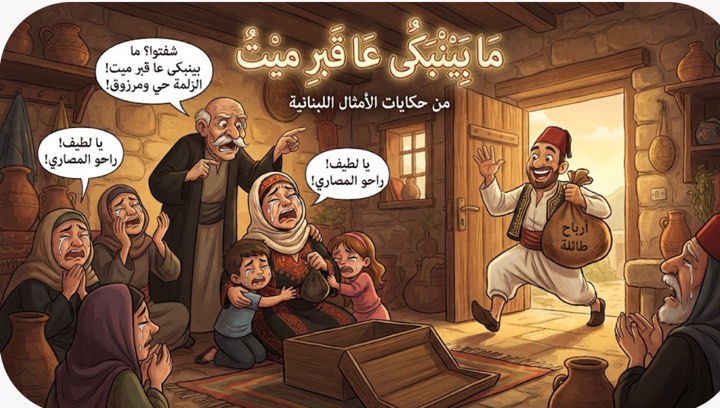
بضيعة لبنانية جبلية، كان عايش زلمي اسمه أبو سامر. أبو سامر معروف عنه بيخاف على القرش الأبيض من اليوم الأسود، وكل همه يجمع مصاري ويحطهم بالصندوق. بيوم من الأيام، طلعت إشاعة بالضيعة إنو "أبو سامر فلس وخسر كل أمواله وتجارته بسوق الحرير ببيروت بسبّب صفقة خسرانة". الناس استغربت، ومرته وأولاده قعدوا يبكوا ويندبوا حظهن، وصاروا يصرخوا: "يا مصيبتنا، راحت تحويشة العمر، ضاع الشقى والتعب!". حتى الجيران تأثروا لحاله وصاروا يعزوه وكأنه صار تحت التراب من كثر الهم اللي غرق فيه البيت. بس بعد تلات أيام بس، والكل قاعد بالبيت عم يبكي عا "أمواله الميتة"، فتح الباب فجأة وفات أبو سامر ومعه شنتة مليانة أرباح كبيرة، وقال بصوت عالي: "مين اللي مات؟ ليش هالبكي والنوح؟ أنا كنت ببغداد عم أنهي صفقة عمر، وربحت أضعاف مضاعفة والحمد لله!". لما شافوا أهله وجيرانه إنه المصاري رجعت ، تبدّل البكي فوراً لضحك وفرح. هون وقف واحد حكيم من الضيعة، وهز راسه بابتسامة وقالهم: "شايفين؟ اللي راح راح، وما بينبكى عا قبر ميت طول ما راعيها موجود وبخير!". ومن يومها، صارت هيدي الجملة مثل يقولوه اللبنانيين لكل حدا بضيع وقته وجهده بالحزن على شي انتهى وراح، وما بيستاهل، طالما الأمل والروح موجودين.
Lebanese Proverb: "Ma byinbaki 'a qabr mayyet" (There's no crying over a dead person's grave / What's gone is gone) In a mountain Lebanese village, there lived a man named Abu Samer. Abu Samer was known for being super careful with his money, saving every penny for a rainy day, and his whole life revolved around gathering cash and locking it away in his box. One day, a rumor spread through the village that "Abu Samer went bankrupt and lost all his money and business in the Beirut silk market because of a failed deal." People were shocked, and his wife and children sat down crying and mourning their luck, screaming: "Oh, our disaster! The savings of a lifetime are gone, all the hard work and fatigue vanished!" Even the neighbors felt bad for him and started offering condolences as if he had already ended up under the ground due to all the grief that flooded the house. But just three days later, while everyone at home was still crying over his "dead money," the door suddenly flew open and Abu Samer walked in carrying a bag full of huge profits, shouting out loud: "Who died? Why all this crying and wailing? I was just in Baghdad finishing the deal of a lifetime, and I made a fortune, thank God!" When his family and neighbors saw that the money was back, the crying instantly turned into laughter and joy. Right then, a wise man from the village stood up, shook his head with a smile, and told them: "You see? What's done is done, and there's no crying over a dead person's grave as long as the owner is alive and well!" Ever since that day, this phrase became a proverb used by the Lebanese for anyone who wastes their time and effort grieving over something that's over and done with, as long as hope and life are still there.