
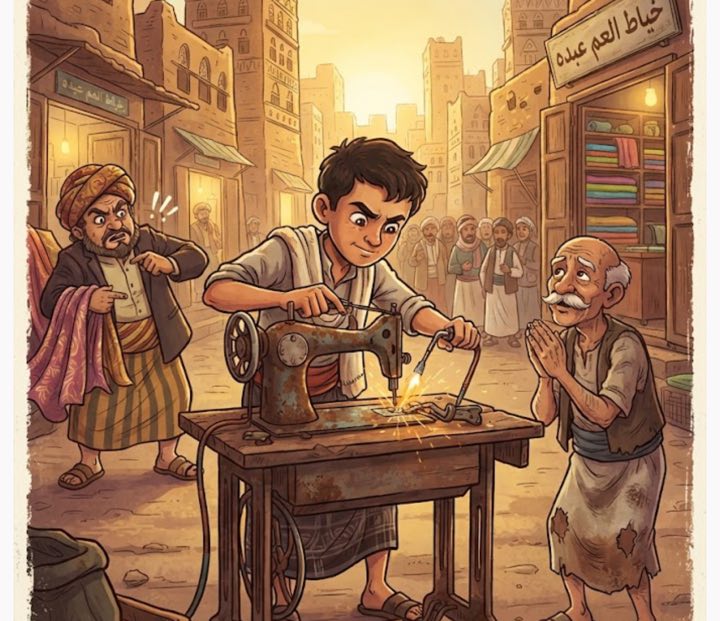
ماكينة عمّ عبده توقفت في ليلة العيد-اللهجة اليمنية
استمع إلى القصة
في حافة من حواري صنعاء القديمة، كان "عمّ عبده" راجل مسكين، جالس يشتغل "خياط" على ماكينة قديمة من النوع القديم اللي أكل الدهر عليها وشرب. ما عنده من الدنيا إلا دكان صغير، وثلاث بنات صغار يشتين يفرحن بكسوة العيد. قرب العيد، والدنيا زحمة، والناس رايحة جاية. دخل عليه واحد من هوامير الحافة، راجل متكبر ومعروف، وجاب معه قماش حرير أصلي وقال له بلهجة متعالية: يا عم عبده، هذا القماش ما يغلى عليك، تفصله لي مضبوط، وقبل يوم الوقف بيكون جاهز، وإذا خربت السكّة، تحاسبني بقيمته مضاعف! عم عبده بلع ريقه، وهز راسه وقال: أبشر يا طويل العمر، عيوني لك، وبيكون جاهز على الموعد، لا تقلقش. لكن المكتوب ما منه مهرب؛ في نفس الليلة، انقطع السير الرئيسي حق الماكينة، وانكسرت القطعة اللي جواتها. جلس عم عبده حيران، يفرك يديه ويدور في الدكان، والدمعة في عينه خايف يفشل قدام التاجر وتضيع سمعته اللي تعب عليها سنين. في ذي اللحظة، وأذان الفجر يذن، دخل عليه "باسم" - شاب من عيال الحارة، معروف إنه ذكي ويعرف يفك وربك أي حاجة مكسورة. شاف عم عبده حاط راسه بين يديه، وقال له: مالك يا عمي؟ ضاقت وتتفرّج بفرج الله، خير إن شاء الله؟ حكى له عم عبده الحكاية والوجع يقطع قلبه. ابتسم باسم وقال له بصوت يريح القلب: قُم يا عم عبده، صلي لك ركعتين، واعتبر الماكينة والقميص في وجهي! جاب باسم عدته، وجلس تحت سراج الدكان الضعيف يلحم ويضبط الحديد طول الليل، ويده ما توقفتش لحد ما طلعت شمس العيد، والماكينة رجعت تشتغل أحسن من أول! خلص القميص في وقته، ووصل للتاجر اللي تفاجأ بدقة الشغل، وما درى المسكين إن خلف الكواليس فيه شاب صنعاني شهم اسمه باسم، رفض إن كرامة شايب تنكسر في ليلة عيد.
"Uncle Abdo's Sewing Machine Stops My friend, listen to this story. In an alley of old Sana'a, "Uncle Abdo" was a poor man working as a tailor on an old, dilapidated sewing machine that time had worn out. He had nothing in this world except a small shop and three little daughters who wanted to rejoice in Eid clothes. As Eid approached, the streets were crowded and people were coming and going. One of the neighborhood’s tycoons—an arrogant and well-known man—walked into his shop bringing expensive, premium silk fabric, and said to him in a condescending tone: "Uncle Abdo, this fabric is too precious to waste. Tailor it for me precisely, and it must be ready before the Eve of Eid. If you mess up its path, you will pay me back double its value!" Uncle Abdo swallowed hard, nodded his head, and said: "Consider it done, my long-lived master. My eyes are yours, and it will be ready on time. Don't worry." But what is written cannot be escaped. That very night, the main belt of the machine snapped, and the internal piece broke. Uncle Abdo sat there bewildered, rubbing his hands and pacing around the shop, a tear in his eye for fear of failing before the merchant and losing the reputation he had spent years building. At that exact moment, as the dawn call to prayer echoed, "Basem"—a young lad from the neighborhood known for being clever and capable of fixing any broken machine—walked in. He saw Uncle Abdo with his head between his hands and asked: "What's wrong, Uncle? Things get tight, but relief comes from God. Is everything alright?" Uncle Abdo told him the story while the pain tore at his heart. Basem smiled and said in a reassuring voice: "Get up, Uncle Abdo, go pray two units of prayer, and consider the machine and the shirt on my head!" Basem brought his tools and sat under the dim shop lamp, welding and fixing the iron all night long. His hands didn't stop until the sun of Eid rose, and the machine was back to working better than ever! The shirt was finished on time and delivered to the merchant, who was stunned by the precision of the work. The poor merchant never knew that behind the scenes, a proud Sana'ani youth named Basem had refused to let an elderly man's dignity be broken on Eid eve.