
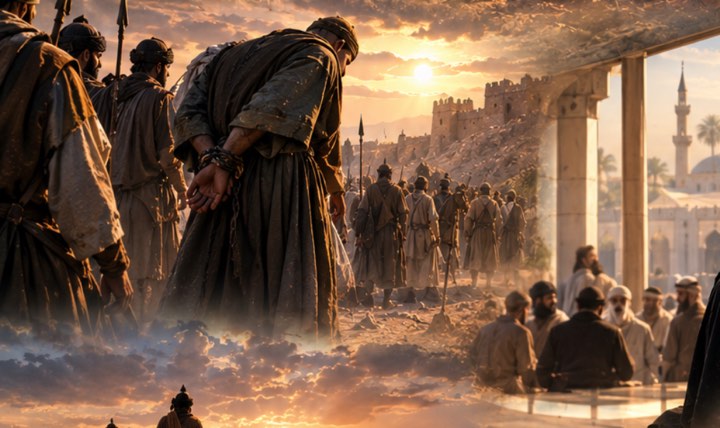
سريّة محمد بن مسلمة
في العام ٦ من الهجرة ويسمى هذا العام {{ عام السرايا }} لأنّ النبي عليه السلام أرسل في {{ ١١ شهر }} فقط {{ ١٦ سرية }} وخرج بنفسه أكثر من مرّة معهم و هذا يعني أنّه بمعدل كل ٢٠ يوم، كان هناك سريّة ووقعت في بعض هذه السرايا بعض المصادمات،، ووقع بعض القتلى والجرحى ،،، بينما لم يقع في بعضها أي مصادمات،،، وكان الهدف من هذه السرايا هو تخويف الأعراب والأعداء الذين ما زالوا يتطاولون ويتحالفون على المسلمين لإيذائهم و منهم الذين شاركوا في جيش الاحزاب في غزو المدينة ومنها سرية {{ محمد بن مسلمة}} الى {{ بني القرطاء }} و كانت ٣٠ راكباً و عندما انتهت السريّة بهروب بني القرطاء،، كان المسلمون في طريق العودة الى المدينة فرأى {{ محمد بن مسلمة }} راكب يعدو في الطريق فظن انه من الرجال الذين فروا من القوم فأنطلق المسلمون نحوه واخذوه اسيراً،،،والصحابة لا يعرفونه ،،،وهذا الرجل لم يعرّفهم عن نفسه ،،، ولم يكلمهم والسبب لأنه كان عند العرب قديماً عزة نفس،، ، لا يقبلون الذل ابداً ، فلم يُعرَّف الرجل القوم عن نفسه،،،و أسروه والصحابة لايعرفونه فلما قدموا به المدينة ليس معهم اسرى غيره فعندما رآه النبي،، عرفه فقال لاصحابه :_ أتدرون من الرجل ؟ قالوا :_ لا يا رسول الله فقال لهم :_ هذا {{ ثمامة بن أثال }} سيد بني حنيفة فأحسنوا إليه فربط الصحابة {{ ثمامة }} في أحد سواري المسجد ودخل الرسول إلى أحد بيوته وقال لأهله: اجمعوا ما كان عندكم من طعام فأبعثوا به إليه ثم مر به النبي وقال له :_ ماذا عندك يا ثمامة ؟ فقال ثمامة :_ عندي خيراً يا محمد إن تقتلني، تقتل ذا دمٍ [[ يعني ان قتلتني انا سيد القوم سيأتي قومي لأخذ الثأر ]]،،، وإن تُنعم، تُنعم على شاكر [[ يعني ان تنعمت علي وتركتني ستجدني شاكر لمعروفك ]]،،،وإن كنت تريد المال، فسل منه ما شئت [[ لأنه سيد قومه ومعه من المال الكثير ]] فتركه النبي ومضى ولم يكلمه في اليوم الثاني مر من عنده وقال له :_ ماذا عندك يا ثمامة ؟ فقال ثمامة :_ عندي خيراً يا محمد ، إن تقتلني تقتل ذا دمٍ ،،،، وإن تُنعم تُنعم على شاكر ،،،، وإن كنت تريد المال فسل منه ما شئت فتركه النبي ومضى ولم يكلمه في اليوم الثالث مر من عنده وقال له :_ ماذا عندك يا ثمامة ؟ فقال ثمامة :_ لك عندي ما قلته لك بالأمس رسول الله تركه هكذا عن قصد في المسجد ثلاثة ايام حتى يسمع بلال وهو يأذن،،، ، ويرى المسلمون كيف يحضرون للصلاة وعند الفجر ،،،، ويسمع القران من النبي وهو يصلي بهم ، ،،، وكيف يتعاملون مع بعضهم البعض بالحب والود والرحمة و المساواة،،، وحتى يسمع حديث وكلام النبي عن الله عزوجل وجماله وعظمته ورحمته ،،،، وعن حقيقة هذه الدنيا فقال النبي لأصحابه : أطلقوا سراح ثمامة (هكذا دون أن يطلب منه فداء ، مع أن ثمامة كان قد عرض أن يدفع فداء كبيرا عن نفسه، وكل ذلك كان طمعا في اسلام ثمامة ) فلما أطلقوا سراح [[ ثمامة ]] ،،،ذهب قريبا من المسجد ، ودخل بين النخيل والاشجار واغتسل ،،،ثم دخل الى المسجد و وقف في وسط المسجد ،،،والنبي بين اصحابه وقال :يا محمد ،،،والله ما كان على الأرض كلها ، وجهٌ أبغضَ إليَّ من وجهك ،،، فقد أصبح وجهك أحب الوجوه إلي ،،،،يا محمد !! والله ما كان على الأرض كلها دين أبغض إليَّ من دينك،،،،فأصبح دينك أحب الدين كله إليَّ ،،،،يا محمد !!! والله ما كان من بلد أبغض إليَّ من بلدك ،،،،فأصبح بلدك أحب البلاد إليَّ،،،،وإني يا محمد،،،، أعلن أمام الجميع غير مُكْرَه أني {{ أشهد أن لا إله إلا الله ، وأنك رسول الله }} ففرح النبي بإسلامه لأنه سيد قومه والناس تتبع اسيادهم وامر النبي أصحابه أن يقرؤوه القران ويفقهوه بالدين فلما قضى اياماً،،،قال للنبي :_ يا رسول الله إن خيلك أخذتني ، وأنا أريد العمرة [[ يعني عندما اسرني اصحابك، كنت ذاهباً للعمرة،،، و لم تكن الكعبة في ذلك الوقت للمسلمين بل كانت في يد قريش]]،،،فماذا ترى يا رسول الله ؟ اتأذن لي الآن في العمرة ؟؟ فأذن له الرسول ودعا له بخير فأنطلق {{ ثمامة }} سيد بني حنيفة لأداء العمرة فدخل مكة ورفع صوته بالتلبية (يعني قول لبيّك اللهم لبيّك) ولم يفعلها احد من المسلمين قبله ،،، فكان اول من اعتمر ورفع صوته بالتلبية ،،، حيث أن سعد بن معاذ قد اعتمر قبله سرا وليس جهرًا قام ثمامة بالعمرة بصوت مرتفع على مسمع قريش ،،، فتركوه حتى انتهى من عمرته،،، طاف وسعى ،،،، فأخذوه قال : أسلمت مع محمد رسول الله قالوا : وجئت تغيظنا بتلبية محمد فجاءت به قريش ليقتلوه،،فقام رجل من قريش وقال :_ ويحكم !!!! أنسيتم أنه سيد {{ بني حنيفة }} ؟؟ ومن أين تأتيكم الحبوب وأعلاف ماشيتكم ؟؟ ومن اين تأتيكم كذا وكذا ؟؟ [[فأخذ يعد لهم خيرات اليمامة التي كانت تأتيهم في رحلة الشتاء و الصيف ]] فتوقفوا عن عقوبته ولكن ثمامة وقف في صحن الكعبة معلناً وهو يقسم بالله فقال :_ لا والله وأقسم برب هذا البيت ، لا يأتيكم حبة حنطة حتى يأذن فيها النبي وخرج من عندهم وبر في قسمه ومنع قومه من اليمامة أن يرسلوا لقريش شيء ولايأذنوا لتاجرٍ في مكة ان يدخل اليمامة على الإطلاق [[وكانت اليمامة ريف مكة ]] فمنع قومه وأمرهم بمقاطعة قريش فكان أول من قام {{ بالمقاطعة الإقتصادية }} في الاسلام حتى جهدت قريش ، وضاقت احوال مكة بهذه المقاطعة ثم كتبت قريش إلى النبي، يسألونه بأرحامهم أن يكتب إلى {{ ثمامة }} أن يسمح بارسال المواد الغذائية الى مكة،،، فأرسل ابو سفيان رسالة الى النبي يقول فيها: يا محمد ،،، تزعم أن الله أرسلك رحمة للعالمين ،،، وإنك تأمر لصلة الرحم ،،، فما رأينا من رحمتك الا السيف ،،، وها انت تقطع ارحامك في مكة ،،، فإن رجل من أصحابك قد منعهم قوتهم فجاع العيال وهلك الكبار ومن كرم أخلاق النبي، ارسل الى {{ ثمامة}} أن لا يمنع من خيرات اليمامة عن مكة شيء ، وأن تبقى الأمور على ما كانت عليه قبل اسلامه بالرغم من أن قريش كانت قد حاصرت المسلمين في شِعَب (أودية) أبي طالب ثلاثة سنوات كاملة حتى كان المسلمون يأكلون أوراق الشجر،،، ولكن لم يرضى النبي أن تجوع قريش وأن يجوع الشيوخ والنساء والأطفال فلما رأى ثمامة خُلق النبي مع قريش الذين تحزبوا وجمعوا له {{ الأحزب }} بالأمس القريب وكيف يعاملهم النبي قام {{ ثمامة }} ودعا قومه الى الاسلام ، فأسلموا فلما أسلم قوم ثمامة، قام شاعر {{ بني حنيفة }} معتزا بأسلام سيده {{ ثمامة }} الذي كان اول من رفع صوته بالتلبية في مكة وقال : ومنا الذي لبى بمكة معلناً ... برغم أبي سفيان في الأشهر الحرمِ فبعد اشهر من اسلام {{ ثمامة }}،، شاع الخبر بين العرب كيف أحسن النبي إليه ،،، وظنوا أن المسلمين سوف يصفحون وينسون ما فعلوا بهم فجاء رجال من القبيلتين: {{ عُكَل وعُرَينة }} واعلنوا اسلامهم في مسجد النبي وبايعوه على السمع والطاعة فلما نظر فيهم النبي وجدهم مصفرة وجوههم ، ضعاف نحال ، لا يناسبهم جو المدينة ،،، فأمر أن يلحقوا بأبل الصدقة [[ وأبل الصدقة ترعى خارج المدينة في الهواء الطلق ]] وأمرهم ان يشربوا من ألبان تلك الإبل لكن هؤلاء كانوا يدّعون الإسلام وكانوا كاذبين منافقين،،،،فلما تعافوا وقوِيَت اجسادهم ، أعتدوا على راعي الابل [[ وهو من المسلمين من المدينة ]] و عذّبوه و شَوَّهوه قطعوا يده ، ورجله ، وقلعوا عينيه ، وغرزوا الشوك في لسانه ثم ألقوه في الحرة (في منطقة ارضها صخور وعرة من بركان انفجر و برد) واخذوا {{ أبل الصدقة }} كلها ، وهربوا فلما بلغ النبي ذلك ، أرسل خلفهم رجل من الصحابة عدّاء (سريع بالركض) لا يُسبق ، ورامياً لا يُخطأ اسمه {{ كرز بن جابر الفهري }} وارسل معه ٢٠ من الصحابة وأمره النبي أن يلحق بهم ،،، و أن يردهم الى المدينة احياء ولا يقتلهم فأدركوهم في الطريق و أحاطوا بهم ، وأسروهم ، وربطوهم وأردفوهم على الخيل حتى قدموا بهم المدينة فأمر النبي أن يُفعل بهم كما فعلوا بالرجل صاحب الناقة فأنزل الله على نبيه مؤيداً لفعله {{ إِنَّمَا جَزَاءُ الَّذِينَ يُحَارِبُونَ اللَّهَ وَرَسُولَهُ وَيَسْعَوْنَ فِي الْأَرْضِ فَسَادًا أَن يُقَتَّلُوا أَوْ يُصَلَّبُوا أَوْ تُقَطَّعَ أَيْدِيهِمْ وَأَرْجُلُهُم مِّنْ خِلَافٍ أَوْ يُنفَوْا مِنَ الْأَرْضِ ۚ ذَٰلِكَ لَهُمْ خِزْيٌ فِي الدُّنْيَا ۖ وَلَهُمْ فِي الْآخِرَةِ عَذَابٌ عَظِيمٌ }} فعلم العرب حول المدينة ، أن عند النبي والمسلمين لديهم الكرم والرحمة في موضعه ،،، والشدة والبطش في موضعه وان محمد صلى الله عليه وسلم ، لا يعامل الناس كلهم بمعاملة واحدة ، فكل إنسان يعامل حسب فعله
The Military Expedition of Muhammad ibn Maslamah In the sixth year after the Hijrah, that year was known as the “Year of the Expeditions”, because during only 11 months, the Prophet ﷺ sent out 16 military expeditions, and he personally went out with them more than once. This means that, on average, there was a military expedition every 20 days. Some of these expeditions involved clashes, resulting in some deaths and injuries, while others ended without any fighting. The purpose of these expeditions was to frighten the Bedouins and enemies who continued to challenge the Muslims and form alliances against them in order to harm them—including some of those who had participated in the army of the Confederates when they attacked Medina. One of these was the expedition of Muhammad ibn Maslamah to Banu al-Qurata, consisting of 30 horsemen. When the expedition ended with Banu al-Qurata fleeing, the Muslims were returning to Medina when Muhammad ibn Maslamah saw a rider racing along the road. He assumed that the man was one of those who had fled. The Muslims approached him and took him prisoner, but the Companions did not know who he was. The man did not identify himself or speak to them. The reason was that, among the Arabs at that time, there was a strong sense of pride and dignity, and they would not accept humiliation. So the man refused to reveal his identity, and the Companions took him prisoner without knowing who he was. When they brought him to Medina, he was the only prisoner with them. When the Prophet ﷺ saw him, he recognized him. He said to his Companions: “Do you know who this man is?” They said: “No, O Messenger of Allah.” He said: “This is Thumamah ibn Uthal, the chief of Banu Hanifah. Treat him well.” The Companions tied Thumamah to one of the pillars of the mosque. The Prophet ﷺ then went to one of his homes and said to his family: “Gather whatever food you have and send it to him.” Then the Prophet ﷺ passed by him and said: “What do you have to say, O Thumamah?” Thumamah replied: “I have good things to say, O Muhammad. If you kill me, you will have killed a man whose blood will be avenged”—meaning, if you kill me, I am the chief of my people, and my people will come seeking revenge. “And if you show me kindness, you will be showing kindness to one who is grateful.” Meaning: if you spare me and treat me kindly, you will find me grateful for your favor. “And if you want money, ask for whatever you wish.” Because he was the chief of his people and possessed considerable wealth. The Prophet ﷺ left him and did not speak to him further. On the second day, the Prophet ﷺ passed by him and said: “What do you have to say, O Thumamah?” Thumamah replied: “I have good things to say, O Muhammad. If you kill me, you will have killed a man whose blood will be avenged. If you show me kindness, you will be showing kindness to one who is grateful. And if you want money, ask for whatever you wish.” The Prophet ﷺ left him and did not speak to him further. On the third day, the Prophet ﷺ passed by him and said: “What do you have to say, O Thumamah?” Thumamah replied: “You have from me what I told you yesterday.” The Messenger of Allah ﷺ deliberately left him in the mosque for three days so that he could hear Bilal calling the prayer, see how the Muslims gathered for prayer, hear the Qur’an as the Prophet ﷺ led them in prayer, and observe how they treated one another—with love, affection, mercy, and equality. He could also hear the Prophet ﷺ speaking about Allah Almighty, His beauty, greatness, and mercy, and about the true nature of this worldly life. Then the Prophet ﷺ said to his Companions: “Release Thumamah.” He released him without asking him for a ransom, even though Thumamah had offered to pay a large ransom for himself. The Prophet ﷺ hoped that Thumamah would embrace Islam. When Thumamah was released, he went near the mosque, entered among the palm trees and other trees, and washed himself. Then he entered the mosque and stood in the middle of it, while the Prophet ﷺ was sitting among his Companions. He said: “O Muhammad! By Allah, there was no face on the entire earth that I hated more than your face, but now your face has become the most beloved of all faces to me, O Muhammad! By Allah, there was no religion on the entire earth that I hated more than your religion, but now your religion has become the most beloved of all religions to me, O Muhammad! By Allah, there was no land on the entire earth that I hated more than your land, but now your land has become the most beloved of all lands to me. O Muhammad, I declare before everyone, without being forced, that I bear witness that there is no god but Allah and that you are the Messenger of Allah.” The Prophet ﷺ was delighted by his conversion to Islam because Thumamah was the chief of his people, and people often followed their leaders. The Prophet ﷺ instructed his Companions to teach him the Qur’an and help him understand the religion. After he had spent several days with them, he said to the Prophet ﷺ: “O Messenger of Allah, your horsemen captured me while I was on my way to perform Umrah.” Meaning: when your Companions captured me, I was on my way to perform Umrah, and at that time the Kaaba was not yet under Muslim control; it was controlled by Quraysh. “What do you think, O Messenger of Allah? Will you give me permission to perform Umrah now?” The Prophet ﷺ gave him permission and prayed for him. So Thumamah, the chief of Banu Hanifah, set out to perform Umrah. He entered Mecca and raised his voice with the Talbiyah—saying, “Labbayka Allahumma Labbayk”—and no Muslim before him had done so publicly. He was the first to perform Umrah and raise his voice with the Talbiyah publicly, whereas Sa’d ibn Mu’adh had performed Umrah before him secretly, without raising his voice. Thumamah performed Umrah loudly, so that Quraysh could hear him. They left him alone until he completed his Umrah. He performed Tawaf and Sa’i, and then they seized him. He said: “I have accepted Islam with Muhammad, the Messenger of Allah.” They said: “Have you come here to provoke us by reciting Muhammad’s Talbiyah?” Quraysh then brought him forward intending to kill him. But one of the Quraysh men stood up and said: “Woe to you! Have you forgotten that he is the chief of Banu Hanifah? And where do you get your grain and the fodder for your livestock? Where do you get this and that?” He began listing all the goods from Al-Yamamah that came to Mecca during their trading journeys. So they stopped themselves from punishing Thumamah. But Thumamah stood in the courtyard of the Kaaba and declared, swearing by Allah: “No, by Allah! I swear by the Lord of this House: not a single grain of wheat will reach you until the Prophet gives permission.” Then he left them. He kept his oath and ordered his people in Al-Yamamah to stop sending anything to Quraysh. He also forbade any merchant in Mecca from entering Al-Yamamah. Al-Yamamah was the agricultural region that supplied Mecca. Thumamah ordered his people to boycott Quraysh. Thus, he became the first person in Islam to impose an economic boycott. Quraysh suffered greatly, and conditions in Mecca became extremely difficult because of the boycott. Eventually, Quraysh wrote to the Prophet ﷺ, appealing to him through their ties of kinship, asking him to write to Thumamah and tell him to allow food supplies to be sent to Mecca. Abu Sufyan sent a message to the Prophet ﷺ saying: “O Muhammad, you claim that Allah sent you as a mercy to all the worlds, and that you command people to maintain ties of kinship. Yet we have seen nothing of your mercy except the sword. Now you have cut off your own relatives in Mecca, because one of your Companions has prevented them from receiving their food. The children are hungry and the elderly are suffering.” Because of the Prophet’s ﷺ noble character, he sent word to Thumamah telling him not to withhold any of the produce of Al-Yamamah from Mecca, and to let matters return to the way they had been before his conversion to Islam. This was despite the fact that Quraysh had previously besieged the Muslims in the Valley of Abu Talib for three full years, until the Muslims were forced to eat tree leaves. Yet the Prophet ﷺ did not want Quraysh to go hungry, nor did he want the elderly, women, and children to suffer. When Thumamah saw how the Prophet ﷺ treated Quraysh—despite the fact that they had recently united against him and gathered the Confederates to attack him—he was deeply moved by the Prophet’s character. Thumamah then called his people to Islam, and they accepted Islam. After Thumamah’s people converted, a poet from Banu Hanifah, proud of the conversion of their leader Thumamah, who had been the first to raise his voice with the Talbiyah in Mecca, said: “Among us is the one who proclaimed the Talbiyah in Mecca, despite Abu Sufyan, during the sacred months.” Several months after Thumamah’s conversion, news spread among the Arabs about how kindly the Prophet ﷺ had treated him. They began to think that the Muslims would forgive them and forget what they had done to them. Then men from the two tribes of ’Ukl and ’Uraynah came and announced their conversion to Islam in the Prophet’s mosque, pledging allegiance to him to hear and obey. When the Prophet ﷺ looked at them, he found their faces pale and their bodies weak and thin, and they were not suited to the climate of Medina. So he ordered them to go to the charity camels—camels that grazed outside Medina in the open air—and instructed them to drink their milk. However, these men were merely pretending to be Muslims. They were liars and hypocrites. When they recovered and their bodies became strong, they attacked the camel herder, who was a Muslim from Medina. They tortured and mutilated him. They cut off his hand and foot, gouged out his eyes, and drove thorns into his tongue. Then they threw him into Al-Harrah, an area of rough volcanic land, took all the charity camels, and fled. When the Prophet ﷺ was informed of this, he sent one of his Companions after them—a man who was an exceptionally fast runner who could not be outrun, and an excellent archer who did not miss. His name was Kurz ibn Jabir al-Fihri. The Prophet ﷺ sent 20 Companions with him and ordered him to pursue them and bring them back to Medina alive, without killing them. They caught up with them on the road, surrounded them, captured them, tied them up, and placed them on horseback until they brought them back to Medina. The Prophet ﷺ ordered that they be dealt with in the same manner as they had dealt with the camel herder. Allah then revealed a verse supporting the ruling: “The penalty for those who wage war against Allah and His Messenger and strive to spread corruption in the land is that they be killed, crucified, have their hands and feet cut off on opposite sides, or be exiled from the land. That is their disgrace in this world, and for them in the Hereafter is a great punishment.” — Qur’an 5:33 Thus, the Arabs around Medina came to understand that the Prophet ﷺ and the Muslims showed generosity and mercy when it was appropriate, and firmness and severity when it was appropriate. Muhammad ﷺ did not treat everyone in exactly the same way. Each person was treated according to what they had done.