
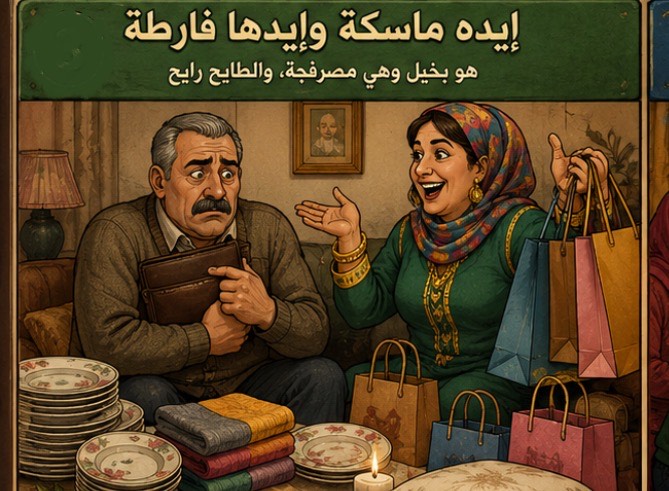
إيده ماسكة،، وإيدها فارطة… وصار الطايح رايح-اللهجة الفلسطينية الأردنية
كان في زلمة اسمه أبو سامر، معروف بالحارة إنه إيده ماسكة بشكل مش طبيعي. مش إنه فقير، بالعكس، وضعه منيح وعنده شغل ثابت، بس المصاري عنده إلها قيمة. إذا فات على محل ولقى البندورة أرخص بعشر قروش بمحل ثاني، بيروح عالمحل الثاني حتى لو بدّه يمشي ربع ساعة. مرة اشترى كنباية جديدة، و ضل أسبوعين مخلّي الكيس عليها. مرته الأولى كانت تحكي إله: “شيل الكيس، الناس بتقعد وبتزحلق!” كان يرد: “لما تخرب الكنباية، بنشيله.” بعد ما توفّت مرته بسنين، قرر أبو سامر يتزوج التانية أهل الحارة انصدموا لما عرفوا إنه اختار وحدة اسمها أمينة. أمينة كان كل إشي عندها بالعكس. إذا أبو سامر إيده ماسكة… أمينة إيدها فارطة. من أول يوم دخلت البيت، فتحت الخزانة وقالت: “يا ساتر! شو هاد؟” أبو سامر قال: “شو؟” قالت: “عندك طقم صحون من أيام جدّي!” قال: “وماله؟ لسه منيح.” ثاني يوم، طلعت أمينة عالسوق. رجعت ومعها أكياس. أبو سامر أول ما شافهم وقّف قلبه “شو كل هاد؟” قالت وهي مبسوطة: “ولا إشي، شغلات بسيطة.” فتح أول كيس: صحون جديدة. الثاني: بشاكير. الثالث: شموع. الرابع: مخدات وحرامات. أبو سامر صار يعدّ الأكياس بعينه وقال: “إنتِ ناوية تفتحي فندق؟” قالت: “يا زلمة، بدنا نعيش!” ولّعت بينهم ليلتها،،،،،، أبو سامر إذا بده يشتري إشي، بيقعد يدرس الموضوع أسبوع. بس أمينة إذا عجبها إشي، بتشتريه قبل ما تغيّر رأيها. مرة أبو سامر أعطاها مصاري البيت وقال: “هاي مصاريف الشهر، بدك تنتبهي عليها.” أمينة قالت: “أكيد.” بعد أسبوع، قعد يحسب المصاري و سألها: “أمينة… وين الباقي؟” قالت: “أي باقي؟” “مصاري الشهر!” قالت: “صرفناهم.” أبو سامر فتح عيونه: “صرّفناهم؟ إحنا مين؟” قالت: “أنا.” “طيب على شو؟” بلّشت تعد: “جبنا غدا لدارك… وجبنا هدايا لولاد أختي… واشترينا برداية … وبعدين شفت طنجرة عليها تنزيلات وما قدرت أتركها…” أبو سامر وقف عند آخر جملة. “طنجرة؟” “آه.” “وإحنا عنا أربع طناجر!” قالت: “بس هاي لونها بيج.” أبو سامر قعد عالكرسي وحط إيده على صدره. قال: “أنا طول عمري بحوّش.” أمينة قالت: “وأنا طول عمري بصرف.” رد: “طيب ليش اتزوجنا؟” قالت: “عشان نكمّل بعض.” قال: “آه، إنتِ بتكمّلي صرف وأنا بكمّل انهيار.” بس المشكلة الحقيقية صارت لمّا أبو سامر نفسه بلّش يتغيّر. أول فترة كان كل ما أمينة تصرف، بيعصب و بيحاول يوقّفها. بس بعدها صار يحكي: “خلص… الحياة قصيرة.” ومرة طلع معها عالسوق. أمينة شافت جاكيت وقالت: “حلو!” أبو سامر قال: “اشتريه.” تطلعت فيه: “إنت؟ بتحكي اشتريه؟” قال: “آه… بس لا تحكي لحدا.” ومن يومها صار إشي غريب. أمينة تشتري، وهو يدفع. أمينة تعزم، وهو يقول: “جيبوا كمان.” أمينة تقول: “خلص، بكفي.” و هو بيرد: “مرة وحدة بنعيش!” أهل الحارة صاروا مش فاهمين شو اللي صار. أبو سامر، اللي كانت الناس تحلف إنه مستحيل يفتح محفظته، صار يدفع الحساب قبل ما حدا يطلب. مرة صاحبه شافه طالع من مطعم مع أمينة، فسأله: “إنت اللي دفعت؟” أبو سامر قال: “آه.” صاحبه رجع خطوتين لورا من الصدمة وقال: “يا ساتر… شو عملت فيك هاي المرا؟” أبو سامر تنهد وقال: “اتجوزت وحدة إيدها فارطة… وصار الطايح رايح.” أمينة سمعت الحكي وضحكت وقالت: “لا يا زلمة، أنا بس علّمتك تعيش.” قال: “عيّشتيني… بس دفنتي المصاري.” “الله يرحم أيام إيدي كانت ماسكة. إيد ماسكة …. شخص بخيل إيد فارطة…. شخص مصرفجي/شخص بيصرف المصاري كتير و بدون ما يفكّر …. بيصرف و بس الطايح رايح،،، يعني كل المضارب اللي بتيجي بتنصرف،،، ما في توفير،،، صرف صرف صرف
His Wallet Is Tight, Hers Is Wide Open… and Soon, Every Penny Was Gone There was a man named Abu Samer who was known around the neighborhood for being extremely tight with his money. It wasn’t because he was poor. Quite the opposite—he was doing well and had a steady job. He just believed that every penny had value. If he walked into a shop and found that tomatoes were ten qirsh cheaper at another store, he would walk all the way to the other store, even if it meant walking for fifteen minutes. Once, he bought a new sofa and left the plastic cover on it for two whole weeks. His first wife would tell him: “Take the plastic off! People are going to sit on it and slip!” He would reply: “We’ll take it off when the sofa gets damaged.” Years after his first wife passed away, Abu Samer decided to get married again. Everyone in the neighborhood was shocked when they found out that he had chosen a woman named Amina. Amina was the complete opposite of him. If Abu Samer was tight with money, Amina’s wallet was wide open. From the very first day she moved into the house, she opened the cupboard and said: “Oh my God! What is this?” Abu Samer asked: “What?” She said: “You still have a dinnerware set from my grandfather’s time!” He replied: “So what? It’s still perfectly good.” The next day, Amina went shopping. She came back carrying bags. The moment Abu Samer saw them, his heart nearly stopped. “What is all this?!” She happily replied: “Nothing! Just a few little things.” He opened the first bag: new dishes. The second: towels. The third: candles. The fourth: cushions and blankets. Abu Samer started counting the bags with his eyes. “Are you planning to open a hotel?” She laughed: “Come on! We’re supposed to enjoy life!” That night, the war began. Whenever Abu Samer wanted to buy something, he would spend a whole week thinking about it. But whenever Amina liked something, she would buy it before she even had time to change her mind. One day, Abu Samer gave her the household money and said: “This is the money for the whole month. Be careful with it.” Amina said: “Of course.” A week later, he sat down to count the money and asked her: “Amina… where’s the rest?” She looked at him: “What rest?” “The money for the month!” She said: “We spent it.” Abu Samer’s eyes widened. “We spent it? Who’s ‘we’?” She calmly replied: “Me.” “Okay… and what did you spend it on?” She started counting: “We ordered lunch for your family… bought gifts for my sister’s kids… bought a new curtain… and then I saw a cooking pot on sale and I couldn’t leave it behind…” Abu Samer stopped at the last sentence. “A cooking pot?” “Yes.” “But we already have four!” She shrugged: “But this one is beige.” Abu Samer sat down and put his hand on his chest. “I’ve spent my whole life saving money.” Amina said: “And I’ve spent my whole life spending it.” He looked at her. “Then why did we even get married?” She smiled: “So we could balance each other out.” He sighed: “Yeah… you balance out the spending, and I balance out the financial collapse.” But the real problem started when Abu Samer himself began to change. At first, every time Amina spent money, he would get angry and try to stop her. But eventually, he started saying: “Forget it… life is short.” One day, he went shopping with her. Amina saw a jacket and said: “Nice!” Abu Samer said: “Buy it.” She stared at him. “You? You’re telling me to buy it?” “Yes… but don’t tell anyone.” And from that day on, something strange happened. Amina would buy things, and he would pay. Amina would invite people over, and he would say: “Get some more.” Amina would say: “That’s enough.” And he would reply: “We only live once!” People in the neighborhood couldn’t understand what had happened to him. Abu Samer—the man everyone swore would never open his wallet—was now paying the bill before anyone even asked. One day, his friend saw him leaving a restaurant with Amina and asked: “You paid?” Abu Samer said: “Yes.” His friend took two steps backward in shock. “Oh my God… what did this woman do to you?” Abu Samer sighed and said: “I married a woman whose hand is wide open… and now every penny that comes in goes right back out.” Amina heard him and laughed. “No, you old miser. I just taught you how to live!” He shook his head and said: “You taught me how to live… but you buried my money.” Then he looked at his empty wallet and sighed: “God, I miss the days when my hand was tight.” ⸻ Expressions: * إيده ماسكة — His hand is tight: A person who is stingy and hates spending money. * إيدها فارطة — Her hand is wide open: A person who spends a lot of money, often without thinking. She just keeps spending. * الطايح رايح — Whatever comes in, goes right back out: There is no saving at all. Money comes in and immediately gets spent—spend, spend, spend.