
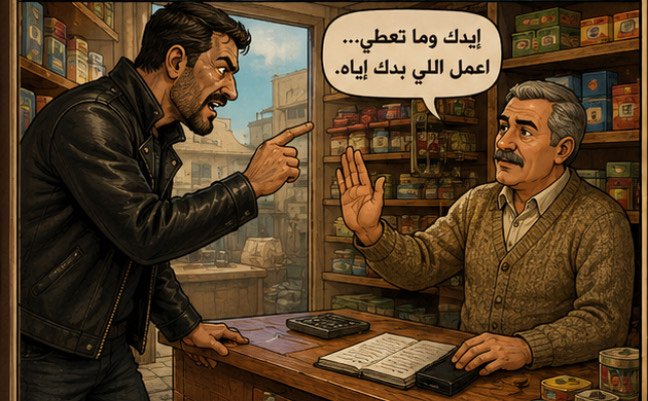
إيدك وما تعطي-اللهجة الفلسطينية الأردنية
كان أبو فادي فاتح محل صغير لبيع الأدوات الكهربائية في الحارة من أكثر من عشرين سنة. المحل كان معروف، والناس كلهم بيحبو يشترو منه: لمبة، سلك، أو حتى أي شغلة بسيطة لو ما عرفو اسمها، بيروحو لعند أبو فادي و بيحكوله: «هاي شكلها هيك… بدنا زيّها.» وكان أبو فادي بيفهم عليهم من الإشارة. في يوم من الأيام، إجى واحد اسمه رائد، وكان معروف بالحارة إنه بيحب يعمل حاله قوي. صوته عالي ،،،و كثير كلام ،، و وجهه بارد،،، وكل ما اختلف مع حدا، بدل ما يناقشه، بيبلّش يهدده. دخل رائد على محل أبو فادي وقال: أبو فادي، وين الفاتورة اللي حكيتلك عنها مبارح؟ رفع أبو فادي راسه عن الدفتر وقال: — أي فاتورة؟ — فاتورة البضاعة اللي رجّعتها إلك. — آه، هاي…. طلع إلك عندي عشرين دينار. رائد ضحك ضحكة مستفزة وقال: — عشرين دينار؟ أنا إلي عندك؟ إنت شكلك مش عارف مع مين بتحكي. أبو فادي سكّر الدفتر وقال: — عارف مع مين بحكي، ،،، وعارف شو داخل وشو طالع. ،،،، هاي الفاتورة، ،،، وهاي البضاعة اللي رجّعتها،،،،، وهاي العشرين دينار إلَك. رائد قرب من الطاولة وقال بصوت أوطى: — اسمعني منيح… لا تخلّيني أفرجيك شو بقدر أعمل. أبو فادي سكت لحظة. الزبون اللي كان واقف بالمحل صار يطلع عليهم. رائد كمل: — أنا مش واحد بتحاسبه على عشرين دينار وبعدين بتقلي حسابات ودفاتر. إذا ما بدك مشاكل، انسَ الموضوع. أبو فادي رجع مسك القلم وقال: — يعني شو المطلوب؟ — المطلوب تنسى العشرين دينار. — ليش؟ — لأنه أنا حكيت. أبو فادي رفع عينه عليه وقال: — وإذا ما نسيت؟ رائد ابتسم وقال: — ساعتها… إنت بتعرف. الكل سكت…. الزبون طلع على الباب، وبعدين رجع دخل. واضح إنه فضولي بيحب يعرف شو رح يصير. رائد وقف عند الباب وقال: — وبرضه نصيحة… لا تختبر صبري. أبو فادي ما رد. رائد طلع من المحل وهو متأكد إنه خوّف الزلمة. بعد خمس دقائق، دخل أبو فادي على غرفة صغيرة ورا المحل، ورجع حامل آلة حاسبة. حطها على الطاولة وقال للزبون: — تعال شوف. الزبون استغرب: — أشوف شو؟ — بدي أتأكد إذا العشرين دينار لسه موجودين بالجرّار. الزبون ضحك: — موجودين. أبو فادي هز راسه وقال: — ممتاز. أنا فكرت يمكن من الخوف طارو… بعد يومين، رجع رائد. دخل المحل وهو مكشر، وقال: — أبو فادي! — أهلين. — شكلك ما فهمت كلامي المرة الماضية. — فهمته. — طيب ليش لسه بتحكي عن العشرين دينار؟ — لأنهم لسه عشرين دينار. رائد ضرب بإيده على الطاولة: — لا تخليني أعصّب! أبو فادي وقف، و إتطلّع فيه بهدوء. وبدل ما يتراجع، قال: — إيدك وما تعطي…. اعمل اللي بدك إياه. رائد سكت…. ضل يتطلّع فيه ثواني، وكأنه كان متوقع أبو فادي يعتذر…. ضل واقف شوي،،، ، وبعدها أخذ العشرين دينار وطلع. ومن يومها، كل ما رائد بيحاول يخوّف حدا بالحارة، كانوا الناس يردوا عليه: — إيدك وما تعطي…. اعمل اللي بدك إياه. ومن وقتها، صارت جملة «إيدك وما تعطي» تنحكى بالحارة كل ما حدا حاول يخوّف الثاني أو يهدده، بمعنى: اعمل اللي بدك إياه، أنا مش خايف منك، وتهديدك ما رح يخليني أتراجع
“Your Move — Do Your Worst” Abu Fadi had been running a small electrical supplies shop in the neighborhood for more than twenty years. The shop was well-known, and everyone loved buying from him. Whether they needed a light bulb, a wire, or even some simple thing they didn’t know the name of, they would go to Abu Fadi and say, “It looks like this… we want one just like it.” And Abu Fadi somehow understood exactly what they meant, even from a hand gesture. One day, a man named Raed came in. He was known around the neighborhood for always trying to act tough. He had a loud voice, talked a lot, and had an incredibly shameless expression on his face. Whenever he disagreed with someone, instead of discussing the matter, he would start threatening them. Raed walked into Abu Fadi’s shop and said: “Abu Fadi, where’s the invoice I asked you about yesterday?” Abu Fadi looked up from his notebook. “Which invoice?” “The invoice for the goods I returned to you.” “Oh, that one… It turns out you have twenty dinars with me.” Raed gave an irritating laugh. “Twenty dinars? I have money with you? You clearly don’t know who you’re talking to.” Abu Fadi closed the notebook and said: “I know exactly who I’m talking to, and I know what came in and what went out. Here’s the invoice, here are the goods you returned, and here are your twenty dinars.” Raed leaned closer to the table and lowered his voice. “Listen to me carefully… Don’t make me show you what I can do.” Abu Fadi fell silent for a moment. The customer standing in the shop started looking back and forth between them. Raed continued: “I’m not someone you can argue with over twenty dinars and then start talking to me about invoices and accounts. If you don’t want trouble, forget about it.” Abu Fadi picked up his pen again. “So what exactly do you want?” “I want you to forget about the twenty dinars.” “Why?” “Because I said so.” Abu Fadi looked up at him. “And what if I don’t forget?” Raed smiled. “Then… you’ll find out.” Everyone went silent. The customer walked toward the door, then came back inside. Clearly, he was curious and wanted to see what was going to happen. Raed stood at the door and said: “And another piece of advice… Don’t test my patience.” Abu Fadi didn’t answer. Raed walked out of the shop, convinced that he had scared the man. Five minutes later, Abu Fadi went into a little room behind the shop and came back carrying a calculator. He put it on the table and said to the customer: “Come here. Look.” The customer looked confused. “Look at what?” “I want to make sure the twenty dinars are still in the drawer.” The customer laughed. “They’re still there.” Abu Fadi nodded. “Excellent. I thought they might have disappeared because of fear…” Two days later, Raed came back. He walked into the shop looking angry. “Abu Fadi!” “Hey.” “Looks like you didn’t understand what I told you last time.” “I understood.” “Then why are you still talking about the twenty dinars?” “Because they’re still twenty dinars.” Raed slammed his hand on the table. “Don’t make me lose my temper!” Abu Fadi stood up and calmly looked at him. Instead of backing down, he said: “Your move. Do your worst… Do whatever you want.” Raed went silent. He stared at Abu Fadi for a few seconds, as if he had expected him to apologize. He stood there for a little while, then took the twenty dinars and walked out. From that day on, whenever Raed tried to scare someone in the neighborhood, people would say: “Your move. Do your worst… Do whatever you want.” And that’s how the phrase “إيدك وما تعطي” became a common expression in the neighborhood whenever someone tried to intimidate or threaten someone else. It means: “Do whatever you want. I’m not afraid of you, and your threats aren’t going to make me back down.”