
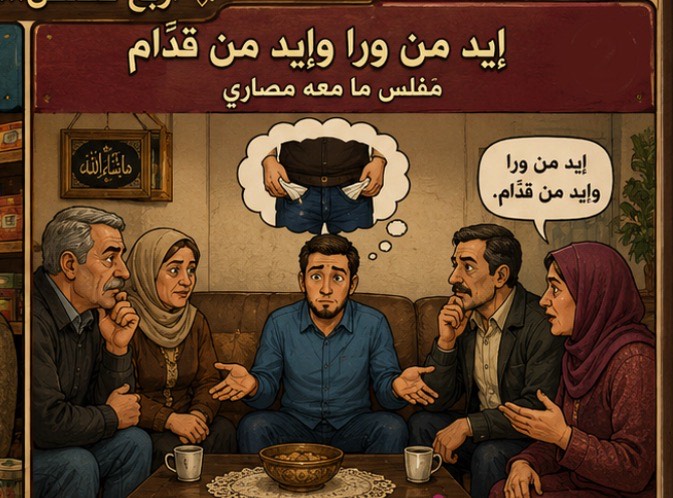
إيد من ورا و إيد من قدّام-اللهجة الفلسطينية الأردنية
لما خطب نادر ليان،،، أهلها ما كانو مستعجلين يوافقو أو يرفضو. الشب شكله مرتب، شغله محترم، وكلامه هادي، وأهله معروفين بالحارة. و أبو ليان كان من النوع اللي ما كان بيهمّه يكون العريس غني، بس بيهمّه يعرف: إذا الشب قادر يفتح بيت؟ عليه ديون؟ شغله ثابت؟ بيتحمّل مسؤولية؟ بعد أول قعدة، أبو ليان قال لمرته: — الشب منيح… بس بدنا نسأل عنه. أم ليان قالت: — أكيد. اسألو عنه منيح، مش بس من أهله. وفعلًا، أبو ليان بلّش يسأل. راح عند صاحب محل قريب من بيت نادر، وقال له: — أبو أحمد، بتعرف نادر ابن أبو سليم؟ أبو أحمد سكت شوي، وحكّ راسه. — بعرفه، ليش؟ — متقدّم لبنتي… شو رأيك فيه؟ أبو أحمد حكّ راسه مرة ثانية وقال: — والله يا أبو ليان… الشب محترم، وما عليه حكي. أبو ليان ارتاح. — يعني أموره منيحة؟ أبو أحمد تردّد. — يعني… حسب شو قصدك بأموره. — قصدي شغله، مصاريه، بيقدر يفتح بيت. أبو أحمد أخذ نفس وقال: — شوف… من ناحية الأخلاق، ما عليه كلام. بس من ناحية المصاري… سكت. أبو ليان قال: — من ناحية المصاري شو؟ أبو أحمد قرب منه وقال: — إيد من ورا وإيد من قدّام. أبو ليان سأله: شو يعني؟ — يعني الزلمة مفلّس،،، ما معه مصاري رجع أبو ليان على البيت، وأم ليان كانت بتستنّاه. — شو حكولك؟ — حكولي إنه الشب محترم، بس… — بس شو؟ — إيد من ورا وإيد من قدّام. أم ليان سكتت. — يعني مفلس؟ — وسيارته؟ — ما عنده سيارة. — بيت؟ — ساكن مع أهله. أم ليان تنهدّت وقالت: — يا أبو ليان، يعني الشب بده يتزوج وهو ما معه مصاري؟ أبو ليان قال: — عشان هيك منيح سألنا وكل ما سأل حدا،،، كانوا يحكو الشب مفلّس،،، ما معه مصاري،، إيد من ورا و إيد من قدّام. أبو ليان حتّى سأل تبع الدّكانة،،،، و الزلمة حكاله: — من شهرين،،، كل ما يمر من هون بقول إلي: «اكتبها عليّ.» — وقديش صار عليه؟ صاحب البقالة فتح الدفتر وقال: — لا تسأل. أبو ليان رجع على البيت وهو مقتنع إن الموضوع انتهى. قال لمرته: — الشب محترم، بس وضعه صعب جدًا. ليان كانت سامعة من الغرفة، وطلعت وقالت: — بابا، إنت شو رأيك فيه؟ أبو ليان قال: — أنا ما عندي مشكلة يكون فقير…. المشكلة إذا كان ما معه مصاري وما عنده خطة. ليان سكتت شوي، وبعدين قالت: — وأنا حكيت معه عن الموضوع. أبو ليان استغرب: — وشو حكى؟ — حكى إنه ما معه مصاري،،، بس عنده شغل ثابت، وناوي يستأجر بيت صغير، و يبلّش يوفّر من هسا. وبعد يومين، أبو ليان طلب من نادر ييجي لعنده و قاله: — يا ابني، أنا سألت عنك كثير. نادر ابتسم وقال: — وعرفتوا إني مفلس؟ نادر ضحك وقال: — والله يا عمي، مش مفلس لهالدرجة. أبو ليان قال: — طيب احكيلي بصراحة. شو معك؟ نادر سكت لحظة، وبعدين قال: — معي شغلي، ومعي صحتي، ومعي أخلاقي… بس أكيد مش غني. أبو ليان قال: — وأنا ما طلبت منك تكون غني. بس بدي أعرف إنك فاهم شو يعني زواج ومسؤولية. نادر هز راسه: — فاهم. وبعد كم شهر، تزوج نادر من ليان. عملوا عرس بسيط على قد إمكانياتهم، واستأجروا بيت صغير، وبلشوا حياتهم. وبعد سنة، مرّ أبو ليان من الحارة، وشاف نادر داخل على بيته حامل أكياس أغراض. ناداه: — نادر! نادر وقف: — نعم يا عمي؟ أبو ليان ضحك وقال: — شو أخبارك؟ لسه إيد من ورا وإيد من قدّام؟ نادر حط الأكياس على الأرض وقال: — والله يا عمي، لسه الإيدين موجودات… بس هالأيام وحدة منهم صارت تمسك المصاري قبل ما الثانية تصرفها! ضحك أبو ليان وقال: — هيك بدي إياك. وبعدها صار كل ما حدا يسأل أبو ليان عن نادر، يقول: — صحيح يومها قالولي عنه إيد من ورا وإيد من قدّام… بس الشب كان فقير، مش قليل أصل. والمصاري بتروح وبتجي، أما الزلمة إذا كان قد المسؤولية، هاد الأهم
“Empty-Handed” When Nader proposed to Layan, her family wasn’t in a hurry to accept or reject him. The young man looked well-groomed, had a respectable job, spoke calmly, and came from a family that was well-known in the neighborhood. Layan’s father wasn’t the type of man who cared whether the groom was rich. What mattered to him was knowing: Was the young man capable of supporting a household? Did he have debts? Was his job stable? Could he handle responsibility? After the first meeting, Layan’s father said to his wife: — The young man seems good… but we need to ask around about him. Layan’s mother said: — Of course. Ask about him properly, not just his family. And so, Layan’s father started asking around. He went to the owner of a shop near Nader’s house and asked him: — Abu Ahmad, do you know Nader, Abu Salim’s son? Abu Ahmad was quiet for a moment and scratched his head. — I know him. Why? — He’s proposed to my daughter… What do you think of him? Abu Ahmad scratched his head again and said: — Well, Abu Layan… the young man is respectable. No one has anything bad to say about him. Layan’s father felt relieved. — So, is he doing well? Abu Ahmad hesitated. — Well… it depends what you mean by “doing well.” — I mean his job, his money… Can he support a household? Abu Ahmad took a breath and said: — Look… when it comes to his character, there’s nothing to complain about. But when it comes to money… He stopped. Layan’s father asked: — When it comes to money, what? Abu Ahmad leaned closer and said: — He’s empty-handed. Layan’s father asked: — What does that mean? — It means the man is broke. He doesn’t have any money. Layan’s father went home, and his wife was waiting for him. — What did they tell you? — They said the young man is respectable, but… — But what? — He’s empty-handed. Layan’s mother went quiet. — You mean he’s broke? — And his car? — He doesn’t have a car. — A house? — He lives with his family. Layan’s mother sighed and said: — Abu Layan, so the young man wants to get married when he doesn’t have any money? Layan’s father said: — That’s exactly why it was good that we asked around. And everyone he asked told him the same thing: the young man was broke, had no money—empty-handed. Layan’s father even asked the owner of the neighborhood grocery store, and the man told him: — For the past two months, every time he comes in here, he tells me, “Put it on my tab.” — And how much does he owe you? The shopkeeper opened his notebook and said: — Don’t ask. Layan’s father went home convinced that the matter was over. He told his wife: — The young man is respectable, but his financial situation is very difficult. Layan had been listening from the other room. She came out and said: — Dad, what do you think of him? Layan’s father said: — I don’t mind him being poor. The problem would be if he has no money and no plan. Layan was quiet for a moment, then said: — I talked to him about it. Her father was surprised. — And what did he say? — He said he doesn’t have much money, but he has a stable job. He plans to rent a small house and start saving from now on. Two days later, Layan’s father asked Nader to come over and said to him: — Son, I’ve asked a lot of people about you. Nader smiled and said: — And you found out I’m broke? Nader laughed and added: — Honestly, Uncle, I’m not that broke. Layan’s father said: — Okay, tell me honestly. What do you have? Nader was quiet for a moment, then said: — I have my job, my health, and my good character… but I’m definitely not rich. Layan’s father said: — I never asked you to be rich. I just want to know that you understand what marriage and responsibility mean. Nader nodded. — I do. A few months later, Nader and Layan got married. They had a simple wedding within their means, rented a small house, and started their life together. A year later, Layan’s father was walking through the neighborhood when he saw Nader walking into his house carrying bags of groceries. He called out: — Nader! Nader stopped. — Yes, Uncle? Layan’s father laughed and said: — How are you doing? Still empty-handed? Nader put the bags down and said: — Well, Uncle, I still have these two hands… but these days, one of them holds on to the money before the other one spends it! Layan’s father laughed. — That’s what I like to hear. After that, whenever someone asked Layan’s father about Nader, he would say: — It’s true, people told me he was empty-handed back then… but the young man was poor, not a bad person. Money comes and goes. What really matters is that a man is capable of taking responsibility.