
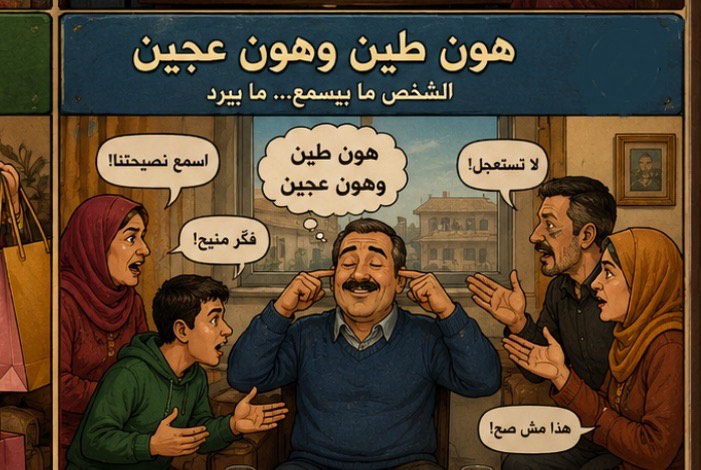
هون طين وهون عجين-اللهجة الفلسطينية الأردنية
كان أبو عادل عنده محل صغير لبيع الأدوات المنزلية في الحارة، وكان معروف بشغلة غريبة كتير و هي إنّه ما بيسمع النصيحة. مش لأنه ما بيسمع منيح، ولا لأنه ما بفهم… بالعكس، كان بيسمع كل كلمة وبيفهمها كويّس بس المشكلة إنه إذا حط براسه شغلة، خلص. مرّة مرته حكتله: — أبو عادل، لا تطلع اليوم بالسيارة،،، الدنيا مطر والطريق زحاليق. رد عليها: — عادي. — بقولك لا تطلع. — طيب مش طالع. وبعد خمس دقايق لبس جاكيته و مسك مفاتيح السيارة. مرته إتطلعت فيه و قالت: — والله يا أبو عادل، إنتا هون طين وهون عجين. يعني بنحكي معاك،،، و بتسمع من هون، والكلام بطلع من هون، ولا إشي بدخل براسك. ومرة ثانية، كان بده يشتري تلفون جديد. مرته حكتله: — لا تشتريه هسا، استنى شوي، يمكن ينزل سعره. بعد يومين، رجع ومعه تلفون جديد. مرته حكت إله: — مش قلتلك استنى؟ — والله استنيت. — قديش؟ — يومين. — أنا قصدي تستنى شهر! — ما حكيتي شهر. — وأنا عرفت إنه الحكي معك هون طين وهون عجين. حتى جيرانه صاروا يعرفوا طبيعته. مرة أبو عادل قرر يشتري محل أكبر، وكان السعر عالي جدًا. صاحبه أبو سامي قال له: — المحل بده تصليحات، وإنت لسا عليك أقساط. أبو عادل قال: — عارف. — يعني لا تشتري. — طيب. — جد بحكيلك، لا تشتري. — حاضر. بعد أسبوع، أبو سامي شاف أبو عادل واقف قدام المحل الجديد، ومعه عامل دهان. وقف مصدوم وقال: — اشتريته؟! أبو عادل ابتسم: — آه. — مش حكيتلك لا تشتري؟ — آه. — ومش وافقتني؟ — آه. — طيب ليش اشتريته؟ أبو عادل بكل برود: — لأنه عجبني. — بس إنت ما سمعت كلامي! وصارت الحارة كلها تعرف إنه شو ما حكو لأبو عادل، و قد ما نصحوه، و شو ما حاولو يقنعوه، إذا هو مقتنع بشغلة، مستحيل يغيّر رأيه. — هون طين وهون عجين. بنحكي “هون طين وهون عجين.” لمّا نكون مع شخص و بنحاول ننصحه، بس كلامنا ما إله تأثير عليه؛ بيسمعنا، بس ما بيرد، و لو رد بيعمل يلي براسه
“Here’s Mud, and Here’s Dough” — Palestinian-Jordanian Dialect Abu Adel had a small shop selling household goods in the neighborhood. He was known for one very strange thing: he never listened to advice. It wasn’t because he couldn’t hear well, or because he didn’t understand. On the contrary, he heard every word and understood it perfectly. The problem was that once he made up his mind about something, that was it. One day, his wife told him: — Abu Adel, don’t go out in the car today. It’s raining, and the roads are slippery. He replied: — It’s fine. — I’m telling you, don’t go out. — Okay, I’m not going. Five minutes later, he put on his jacket and grabbed the car keys. His wife looked at him and said: — Honestly, Abu Adel, you’re like mud here and dough there. In other words, we talk to you, you hear us from one ear, and the words go right out the other. Nothing gets through to you. Another time, he wanted to buy a new phone. His wife told him: — Don’t buy it now. Wait a little. The price might go down. Two days later, he came home with a brand-new phone. His wife said: — Didn’t I tell you to wait? — I did wait. — How long? — Two days. — I meant wait for a month! — You didn’t say a month. — And that’s exactly why talking to you is like mud here and dough there. Even his neighbors had gotten used to the way he was. One day, Abu Adel decided to buy a bigger shop, and the price was very high. His friend Abu Sami told him: — The shop needs a lot of repairs, and you still have installments to pay. Abu Adel said: — I know. — Then don’t buy it. — Okay. — I’m serious. Don’t buy it. — Sure. A week later, Abu Sami saw Abu Adel standing in front of the new shop with a painter. He stopped in shock. — You bought it?! Abu Adel smiled. — Yep. — Didn’t I tell you not to buy it? — Yep. — And didn’t you agree with me? — Yep. — Then why did you buy it? Abu Adel calmly replied: — Because I liked it. — But you didn’t listen to me! And soon, everyone in the neighborhood knew that no matter what they told Abu Adel, no matter how much they advised him, and no matter how hard they tried to convince him, if he had already made up his mind about something, there was no way he would change it. “Here’s mud, and here’s dough.” We say “Here’s mud, and here’s dough” when we’re dealing with someone and trying to advise them, but our words have no effect on them. They listen to us, but they don’t really respond—and even if they do, they still go ahead and do whatever they had already decided to do.