
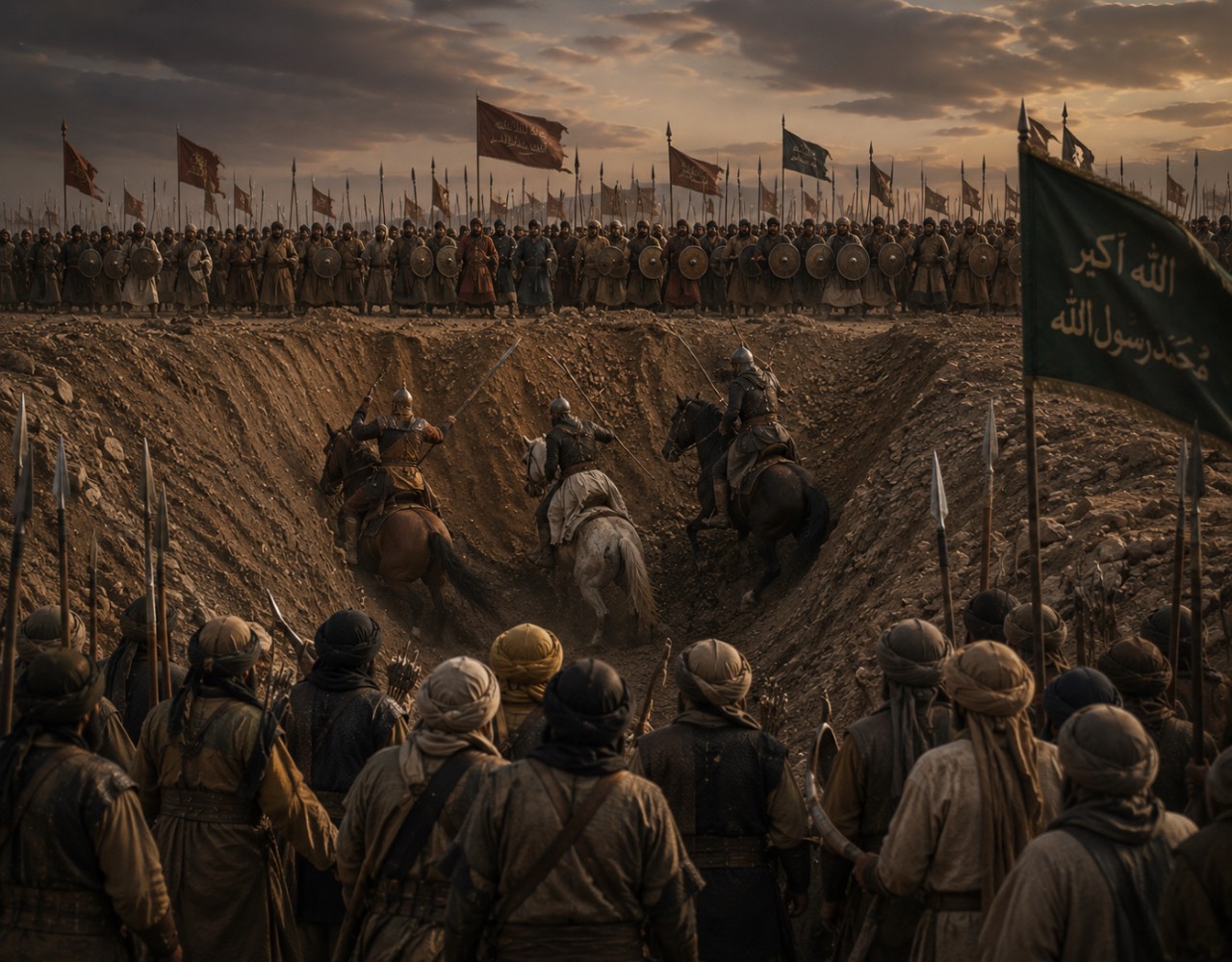
محاولة أختراق الخندق/ غزوة الخندق
وصل جيش الأحزاب للمدينة المنورة ، و ذُهِلوا عندما رآوا الخندق فكان طول الخندق حوالي {{ ٦ كم }} وعرضه {{ ٨ متر }} وعمقه {{ ٤ متر }} فلا يستطيع أحد اذا سقط فيه أن يخرج منه وبلغت المُخَلَّفات الناتجة من حفره من تراب وحجارة وصخور حوالي {{ ٣٠٠ ألف متر مكعب }} وجعل المسلمون مخلفات الحفر ناحية المدينة،،، ، فشَكَّلت ساترا يمكن للمسلمين الإختباء خلفه بدأ جنود العدو برمي السهام محاولين العبور و الإقتراب من الخندق فتوزّع المسلمون أمام الخندق ليمنعوا المشركين من أي محاولة للتخطي وعبور الخندق أو أي محاولة لردم جزء من الخندق ومن ثم العبور عليه والوصول الى المدينة دُهِش الأحزاب من الخندق ووقف {{ أبو سفيان بن حرب }} سيد قريش وقال : هذه حيلة لم تعرفها العرب !!!! فقال له حيي بن أخطب سيد يهود قال : سمعت أن بين أصحاب محمد رجل فارسي،، ، وهذه مكيدته،،، وأظن هو الذي أشار عليهم بحفر الخندق و عندما رأى المسلمون هذا الجيش الضخم {{ ١٠ آلاف مقاتل }}، وهو عدد لم تشهده الجزيرة العربية من قبل،،،،،، قال المسلمون : هذا ما وعدنا الله ورسوله وصدق الله ورسوله فأنزل الله قوله تعالى {{ وَلَمَّا رَأَى الْمُؤْمِنُونَ الْأَحْزَابَ قَالُوا هَذَا مَا وَعَدَنَا اللَّهُ وَرَسُولُهُ وَصَدَقَ اللَّهُ وَرَسُولُهُ ۚ وَمَا زَادَهُمْ إِلَّا إِيمَانًا وَتَسْلِيمًا }} وتمركز المسلمون خلف الخندق ،،، وكانت مقر قيادة النبي عند جبل {{ سلع }} وأمر النبي أن تكون النساء والأطفال داخل الحصون بحيث اذا حدث اقتحام للخندق ، ووقعت {{ حرب شوارع }} تكون النساء والأطفال داخل الحصون محمِيِّين أخذ فرسان المشركين يدورون حول الخندق غضبا ، يحاولون أن يجدوا نقطة ضعف ينفذون منها الى المدينة وأخذ المسلمون يرمونهم بالسهام حتى لا يقتربوا من الخندق أو أن يحاولوا أن يردموا جزء من الخندق فيبنون طريقا يعبرون عليه وبدأت مناوشات بين الطرفين….. كان المشركون فيها مُصِرُّون على اقتحام الخندق واستبسل المسلمون في المقابل في منع المشركين من ذلك عزّ على قريش أن تقف خيّالَتُها وفرسانها وقادتها ، مكتوفي الأيدي أمام الخندق ،،،، فأخذوا يستفزون بعضهم بعضاً ما بين ١_خالد بن الوليد ٢_عكرمة بن ابي جهل ٤_ صفوان بن امية ٥_ عمرو بن ود واستطاع رجال من فرسان المشركين ، اقتحام الخندق في أحد الأماكن الضيقة،،،، فَجالوا بخيلهم (يعني تمختروا غرورًا عندما استطاعوا العبور) و هم: عكرمة بن أبي جهل ،،، عمرو بن ود ،،، و رجل من ربيعة من هو {{ عمرو بن ود }} ؟؟ رجل كبير في العمر قارب على ٩٠ عام،،،ولكنه مضرب الامثال في الشجاعة والبطولة في قريش،،،كان أقوى فارس في الجزيرة العربية ويطلق عليه {{ فارس العرب }} ،،،{{ بطل العرب}} ،،،،{{ فارس الليل }} و ذلك بسبب تمَكُنِّه من التصدّي لعشرة فرسان من قطّاع الطرق لوحده في أحد الليالي دون مساعدة أحد بعد هروب أصحابه ،،، كان شجاع و قوي و تمكن من قتلهم جميعًا و قد شهد أيضًا هذا الرجل غزوة بدر ،،،، وقاتل قتال الابطال ،،،، وأصابته الجراح ولكنه لم يمت وعندما فرّ قومه فرّ معهم ، ولم يشهد غزوة أحُد لأن جراحه في بدر ما زالت تؤثر به فجاء اليوم مع الاحزاب وكان قد حرّم على نفسه منذ يوم غزوة بدر الدهن [[ يعني لم يمس راسه الدهن الزيت ]] حتى يأخذ بثأره من المسلمين و هذا يعني ٣ سنوات لم يمس رأسه الدهن يقول الصحابة عندما رأوه، كان ثائر الرأس شعره منفوش منكوش وكان قد أقسم قبل أن يخرج من مكة أنّه لن يرجع إلا منتصراً ... او محمولاً لذلك رغم عمره (٩٠ عام) كان أول من اقتحم الخندق وكان اول من يصل الى ارض المدينة من بين {{ ١٠ آلاف مقاتل }} اقتحم الرجال الثلاثة الخندق ،،،، فأصبح موضعهم داخل ارض المدينة بين الخندق وجبل سلع نادى عمرو بن ود المسلمين للمبارزة مستفزًا لهم بقوله: أين جنتكم التي تزعمون أن من قُتِل منكم دخلها؟ هل فيكم من أُرسِله إلى الجنة ، أو يدفعني إلى النار؟ فوثب له فورًا {{ علي بن أبي طالب }} وكان عمره ٢٣ عام ثم اخذ النبي سيفه عن جنبه و أعطاه لعلي ،،،وقال له : هذا سيف محمد رسول الله ،،، ثم اخذ قطعة قماش وجدلها على رأس علي ،، وقال له :قم على بركة الله ،،،، اللهم احفظه من بين يديه ومن خلفه وعن يمينه وعن شماله ومن فوقه ومن تحته،،،، ثم قال له النبي: تقدم يا علي فانطلق اليه {{ علي بن أبي طالب }} وهو يقول شعرا لا تعجلنّ فقد أتاك مجيب صوتك غير عاجز ذو نيّة وبصيرة والصدق منجي كلّ فائز إنّي لأرجو أن أقيم عليك نائحة الجنائز من ضربة نجلاء يبقى صوتها بعد الهزاهز لما سمع النبي شعر علي قال: {{ قام الإيمان كله،،، ، الى الكفر كله }} مشى إليه علي على قدميه و لم يركب فرس و كان عمرو بن ود على فرسه يجول ويصول ثمّ قال عليّ:_ يا عمرو ، إنك كنت تقول لا يدعوني أحد إلى اثنتين ،،، إلا اخترت خيرهما ،،، وإني مخيرك بين ثلاث قال عمرو:_ أجل فقال علي :_فإني أدعوك أن تشهد أن لا إله إلا الله وأن محمداً رسول الله وتسلم لرب العالمين فقال عمرو :_ يا ابن أخي، أخر عني هذه (يعني طلبك مرفوض) فقال له علي :_ أما أنها خير لك لو أخذتها،،،، أما الثانية أن ترجع إلى بلادك،،، وتحمل قومك على العودة،،، ، وتدع (تترك)محمدا فإنه رجل منكم و عزّه عزكم وشأنه شأنكم ،،، فإن يك محمد صادقا، كنت أسعد الناس به، ،،، وإن يك غير ذلك، كان الذي تريد فقال: _هذا ما لا تتحدث به نساء قريش أبداً ثم قال علي : فالثالثة،،، ، أدعوك إلى المبارزه فقال عمرو :_فمن أنت يا ابن اخي ؟؟ قال :_ أنا {{ علي بن أبي طالب بن عبدالمطلب بن عم رسول الله }} قال عمرو:يا فتى،،، إن أباك كان وداً لي ( صديقي المقرب)،،، وإني اكره ان اقتلك،،،، وإن من أعمامك من هو أسنّ (أقوى) منك ،،، فأرجع من حيث أتيت وليبرز لي غيرك ،،، و إني لأكره أن أقتل الرجل الكريم مثلك ،،، ، وقد كان أبوك لي نديماً (صديق مقرب) فردَّ علي وقال :_ أما انا،،، فإني أبغض الكفر فيك ،،،، وإن أحب شيء الى قلبي اليوم مبارزتك،،، فأستفزه وثار،،، وغضب غضباً شديداً ،،، فجال بالحصان جولتين ،،، ثم أسرع ،،، و سلّ سيفه كأنه شعلة نار وأقبل عمرو مهاجماً علي،،، ، ورفع السيف فوق علي يريد أن يضربه،،، فتلقاها علي بالتِّرس،،، فعلق سيف عمرو في ترس علي ،،، فضربه علي ضربةً واحدة .... فإذا هو قتيل فكبّر النبي (قول الله أكبر) ،،، وكبّر الصحابة وعلا صوتهم بالتكبير عندما رأى الذين اقتحموا الخندق من المشركين مَقْتَل عمرو بن ود بهذا الشكل،،، أسرعوا بالفرار فأما {{ عكرمة بن ابي جهل }}،،، ألقى السيف والرمح من يده لكي لا يعيقه الهرب من الخندق و هرب بشكل جنوني فَلَحِقَه {{ الزبير بن العوام}} ،،، أدركه عند حافة الخندق ،،، وعلاه بالسيف،،، فضربه ،،، فقتله فقال الصحابة للزبير تعجُبًا: ياله من سيف !!! قال لهم : الله أعانني و استمرّت المناوشات بين المسلمين والمشركين… قال ابو سفيان : هذا يوم ليس لنا به نصيب ،،، امطروهم سهامكم ،،،فأخذوا يتراشقون النبال (السهام) واخذ الصحابة يردوا عليهم حتى شغلوهم عن صلاة الظهر والعصر والمغرب غابت الشمس ولم يصلوا وهم ثابتين مكانهم ولم تكن صلاة الخوف قد شُرِّعت بعد،،،. حتى كادت أن يسقط قرص الشمس،،،، قاموا للصلاة،،، فأمر النبي بلال ان يؤذن،، فصلى بهم النبي الظهر ركعتين ،،، و العصر ركعتين ،،، ثم المغرب ثلاث وكان قد دخل العشاء فقام وصلى بهم العشاء
Attempting to Breach the Trench The army of the Confederates arrived at Medina and were astonished when they saw the trench. The trench was approximately 6 km long, 8 meters wide, and 4 meters deep, making it extremely difficult for anyone who fell into it to climb back out. The excavated earth, stones, and rocks removed during its construction amounted to approximately 300,000 cubic meters. The Muslims placed these excavated materials on the side facing Medina, creating a barrier behind which they could take cover. The enemy soldiers began firing arrows, attempting to get closer to and cross the trench. The Muslims spread out along the trench to prevent the polytheists from making any attempt to cross it, fill in part of it and create a passage, or otherwise reach Medina. The Confederates were astonished by the trench. Abu Sufyan ibn Harb, the leader of Quraysh, said: “This is a strategy that the Arabs have never known!” Then Huyayy ibn Akhtab said: “I heard that among Muhammad’s companions there is a Persian man. This must be his strategy. I believe he was the one who suggested that they dig this trench.” When the Muslims saw this enormous army of 10,000 fighters—a number the Arabian Peninsula had never witnessed before—they said: “This is what Allah and His Messenger promised us, and Allah and His Messenger spoke the truth.” Then Allah revealed: “And when the believers saw the Confederates, they said, ‘This is what Allah and His Messenger promised us, and Allah and His Messenger spoke the truth.’ And it only increased them in faith and submission.” The Muslims took their positions behind the trench, while the Prophet’s command headquarters was near Mount Sal’. The Prophet ordered the women and children to remain inside the fortified buildings so that, if the trench were breached and street fighting broke out, they would be protected inside the fortresses. The polytheist cavalrymen began riding around the trench angrily, searching for a weak point through which they could enter Medina. The Muslims fired arrows at them to prevent them from approaching the trench or attempting to fill part of it and build a path across it. Skirmishes began between the two sides. The polytheists were determined to breach the trench, while the Muslims fought fiercely to prevent them from doing so. It was difficult for Quraysh to accept that their cavalry, horsemen, and commanders were standing helplessly before the trench. They began challenging and provoking one another. Among them were: 1. Khalid ibn al-Walid 2. Ikrimah ibn Abi Jahl 3. Safwan ibn Umayyah 4. Amr ibn Abd Wudd A group of polytheist horsemen managed to cross the trench at one of its narrower points. They rode their horses around proudly after succeeding in crossing. They included Ikrimah ibn Abi Jahl, Amr ibn Abd Wudd, and a man from Rabi’ah. Who was Amr ibn Abd Wudd? Amr ibn Abd Wudd was an elderly man, nearly 90 years old, yet he was legendary in Quraysh for his courage and bravery. He was considered one of the strongest horsemen in the Arabian Peninsula and was known by titles such as: * The Horseman of the Arabs * The Hero of the Arabs * The Knight of the Night He earned these titles because, on one occasion, he confronted ten mounted bandits by himself during the night after his companions fled. He was courageous and powerful, and he managed to kill them all. He had also fought at the Battle of Badr and fought with great bravery. He was wounded but survived. When his people fled, he fled with them. He did not participate in the Battle of Uhud because his wounds from Badr were still affecting him. Now, on the day of the Battle of the Confederates, he came with the army. Since the Battle of Badr, he had sworn not to put oil on his hair until he had taken revenge on the Muslims. This meant that for three years, he had not put oil on his head. The Companions said that when they saw him, his hair was wild, unkempt, and disheveled. Before leaving Mecca, he had sworn that he would not return unless he was either victorious or carried back. Therefore, despite being around ninety years old, he was among the first to cross the trench and the first to reach the land of Medina from among the 10,000 fighters. The three men crossed the trench and found themselves inside the area between the trench and Mount Sal’. Amr ibn Abd Wudd called out to the Muslims, challenging them to a duel and provoking them by saying: “Where is the Paradise that you claim those who are killed among you will enter? Is there anyone among you who will send me to Paradise, or whom I will send to Hell?” Immediately, Ali ibn Abi Talib stepped forward. He was 23 years old. The Prophet took his sword from his side and gave it to Ali, saying: “This is the sword of Muhammad, the Messenger of Allah.” Then he took a piece of cloth and wrapped it around Ali’s head and said: “Go with the blessing of Allah. O Allah, protect him from before him, behind him, to his right, to his left, above him, and beneath him.” Then the Prophet said: “Advance, O Ali.” Ali went toward him while reciting poetry: Do not be hasty, for one has come to answer your call, not weak or unable. A man of determination and insight, for truthfulness saves every successful person. I hope to make the women mourn for you with funeral lamentations. With a mighty strike whose sound will remain after the battles have passed. When the Prophet heard Ali’s words, he said: “All of faith has gone forth to face all of disbelief.” Ali walked toward Amr on foot and did not ride a horse, while Amr rode his horse, moving back and forth proudly. Ali said: “O Amr, you used to say that whenever someone called you to choose between two things, you would choose the better of them. I am offering you three choices.” Amr replied: “Yes.” Ali said: “First, I invite you to testify that there is no god but Allah and that Muhammad is the Messenger of Allah, and to submit to the Lord of the worlds.” Amr replied: “My nephew, leave this matter. I reject your request.” Ali said: “It would be better for you if you accepted it. The second choice is that you return to your land, persuade your people to return, and leave Muhammad alone. He is one of your own people; his honor is your honor, and his status is your status. If Muhammad is truthful, you will be among the happiest people because of him. And if he is not, then you will have what you seek.” Amr replied: “This is something that the women of Quraysh would never stop talking about.” Then Ali said: “Then the third choice: I challenge you to a duel.” Amr asked: “And who are you, my nephew?” Ali replied: “I am Ali ibn Abi Talib ibn Abd al-Muttalib, the cousin of the Messenger of Allah.” Amr said: “Young man, your father was a close friend of mine, and I dislike the idea of killing you. Among your uncles are men stronger and older than you. Return from where you came and send someone else to face me. I would hate to kill a noble man like you. Your father was once my close companion.” Ali replied: “As for me, I hate the disbelief that is within you, and the thing I desire most today is to fight you.” This provoked Amr. He became furious with intense anger, rode his horse around twice, then rushed forward and drew his sword, which looked like a flame of fire. Amr charged toward Ali and raised his sword above him, intending to strike him. Ali received the blow with his shield, and Amr’s sword became lodged in Ali’s shield. Then Ali struck him one blow—and Amr was killed. The Prophet proclaimed: “Allahu Akbar!” The Companions also proclaimed “Allahu Akbar,” and their voices rose in celebration. When the polytheists who had crossed the trench saw Amr ibn Abd Wudd killed in this manner, they hurried to flee. As for Ikrimah ibn Abi Jahl, he threw away his sword and spear so that they would not slow him down as he fled from the trench. Al-Zubayr ibn al-Awwam pursued him and caught up with him near the edge of the trench. He struck him with his sword and killed him. The Companions said to al-Zubayr in amazement: “What an incredible sword!” He replied: “Allah helped me.” The skirmishes between the Muslims and the polytheists continued. Abu Sufyan said: “This is not a day in which we have any share of victory. Shower them with your arrows!” The two sides began exchanging volleys of arrows, and the Companions returned fire. The fighting became so intense that it occupied them and caused them to miss the Dhuhr, Asr, and Maghrib prayers. The sun had set, and they had not prayed while remaining at their positions. At that time, the prayer of fear had not yet been prescribed. When the sun was close to disappearing, they stood to pray. The Prophet instructed Bilal to make the call to prayer. The Prophet then led them in: * Dhuhr: two rak’ahs * Asr: two rak’ahs * Maghrib: three rak’ahs By then, the time for Isha had entered, and he then led them in the Isha prayer.