
الحَجَرُ في الحَقيبَةِ
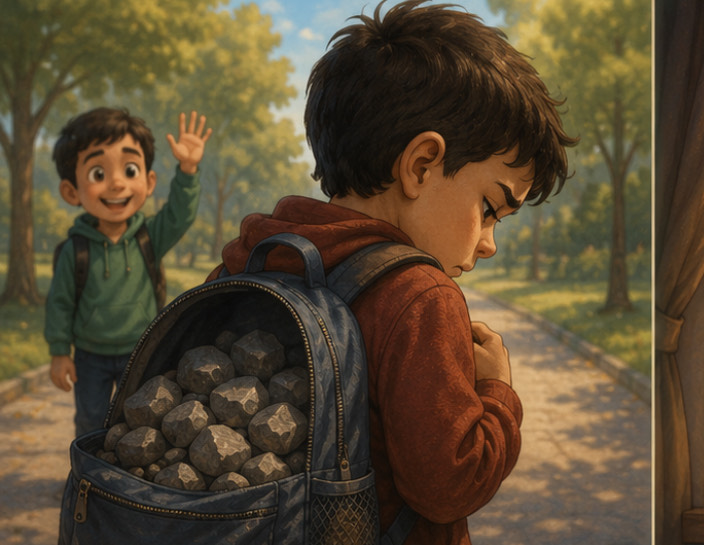
كانَ هُناكَ طِفْلٌ اسْمُهُ سَليمٌ، وكانَ لَهُ صَديقٌ مُقَرَّبٌ اسْمُهُ رامي. كانا يَلْعَبانِ مَعًا كُلَّ يَوْمٍ، وَيَذْهَبانِ إِلى المَدْرَسَةِ مَعًا، وَيَضْحَكانِ عَلَى أَصْغَرِ الأَشْياء. وَفي يَوْمٍ مِنَ الأَيَّامِ، حَدَثَ بَيْنَهُما خِلافٌ. قالَ رامي كَلِمَةً أَزْعَجَتْ سَليمًا كَثيرًا. شَعَرَ سَليمٌ بِالغَضَبِ، وَعادَ إِلى بَيْتِهِ وَهُوَ يُفَكِّرُ في كَلامِ صَديقِهِ. قالَ لِنَفْسِهِ: «لَنْ أُسامِحَهُ أَبَدًا!» في اليَوْمِ التَّالي، رَأَى سَليمٌ حَجَرًا صَغيرًا عَلَى الأَرْضِ. أَخَذَهُ وَوَضَعَهُ في حَقيبَتِهِ. وَقالَ: «سَأَحْمِلُ هٰذا الحَجَرَ كُلَّما تَذَكَّرْتُ ما فَعَلَهُ رامي.» مَرَّ يَوْمٌ، ثُمَّ يَوْمٌ آخَرُ. وَكُلَّما تَذَكَّرَ سَليمٌ كَلِمَةً قالَها رامي، وَضَعَ حَجَرًا آخَرَ في حَقيبَتِهِ. بَعْدَ أُسْبوعٍ، أَصْبَحَتِ الحَقيبَةُ ثَقيلَةً. وَعِنْدَما كانَ يَذْهَبُ إِلى المَدْرَسَةِ، كانَ يَشْعُرُ بِالتَّعَبِ. قالَتْ لَهُ أُمُّهُ: «لِماذا حَقيبَتُكَ ثَقيلَةٌ يا سَليم؟» فَأَخْبَرَها بِما يَفْعَلُهُ. ابْتَسَمَتْ أُمُّهُ، وَقالَتْ: «وَمَنْ يَتْعَبُ مِنْ حَمْلِ هٰذِهِ الحِجارَةِ؟ أَنْتَ أَمْ رامي؟» سَكَتَ سَليمٌ. نَظَرَ إِلى حَقيبَتِهِ، ثُمَّ قالَ: «أَنا…» قالَتْ أُمُّهُ: «الغَضَبُ يا بُنَيَّ يُشْبِهُ هٰذِهِ الحِجارَةِ. نَحْنُ نَحْمِلُهُ في قُلوبِنا، وَنَظُنُّ أَنَّهُ يُؤْذِي الشَّخْصَ الآخَرَ، لٰكِنَّهُ في الحَقيقَةِ يُثْقِلُنا نَحْنُ.» في اليَوْمِ التَّالي، أَخَذَ سَليمٌ حَقيبَتَهُ وَخَرَجَ. عِنْدَ كُلِّ مَنْعَطَفٍ في الطَّريقِ، أَخْرَجَ حَجَرًا وَوَضَعَهُ عَلَى الأَرْضِ. حَتَّى أَصْبَحَتْ حَقيبَتُهُ خَفيفَةً مِنْ جَديدٍ. وَعِنْدَما وَصَلَ إِلى المَدْرَسَةِ، وَجَدَ رامي يَنْتَظِرُهُ. اقتَرَبَ رامي مِنْهُ وَقالَ: «أَنا آسِفٌ يا سَليم. لَمْ أَكُنْ أَقْصِدُ أَنْ أُحْزِنَكَ.» نَظَرَ سَليمٌ إِلى حَقيبَتِهِ الخَفيفَةِ، وَابْتَسَمَ. قالَ: «وَأَنا لا أُريدُ أَنْ أَحْمِلَ حُزْنًا في قَلْبي بَعْدَ اليَوْمِ.» وَمِنْ ذٰلِكَ اليَوْمِ، تَعَلَّمَ سَليمٌ أَنَّ بَعْضَ الأَحْمالِ لا تُرى… لٰكِنَّها قَدْ تَكونُ أَثْقَلَ مِنْ أَيِّ حَقيبَةٍ. العِبْرَةُ: الغَضَبُ وَالحِقْدُ يُثْقِلانِ قُلُوبَنا، وَالتَّسامُحُ لا يَعْني أَنْ نَنْسى ما حَدَثَ، بَلْ أَنْ نَتَوَقَّفَ عَنْ حَمْلِ أَلَمِهِ مَعَنا كُلَّ يَوْمٍ
The Stone in the Backpack There was once a boy named Salim, who had a close friend named Rami. They played together every day, went to school together, and laughed at the smallest things. One day, an argument happened between them. Rami said something that hurt Salim very much. Salim felt angry and went home thinking about his friend’s words. He said to himself: “I will never forgive him!” The next day, Salim saw a small stone on the ground. He picked it up and put it in his backpack. Then he said: “I will carry this stone whenever I remember what Rami did to me.” One day passed, then another. Whenever Salim remembered something hurtful that Rami had said, he put another stone into his backpack. After a week, the backpack had become heavy. Whenever Salim walked to school, he felt tired. His mother asked him: “Why is your backpack so heavy, Salim?” So he told her what he had been doing. His mother smiled and asked: “And who becomes tired from carrying all these stones? You or Rami?” Salim became quiet. He looked at his backpack and then said: “Me…” His mother said: “Anger, my son, is like these stones. We carry it in our hearts and think that it hurts the other person, but in truth, it makes us heavy.” The next day, Salim picked up his backpack and left home. At every turn along the road, he took out one stone and placed it on the ground. Until his backpack became light again. When he arrived at school, he found Rami waiting for him. Rami walked toward him and said: “I’m sorry, Salim. I didn’t mean to hurt you.” Salim looked at his now-light backpack and smiled. He said: “And I don’t want to carry sadness in my heart anymore.” From that day on, Salim learned that some burdens cannot be seen… But they can be heavier than any backpack. The Lesson: Anger and resentment can weigh down our hearts. Forgiveness does not mean forgetting what happened; it means choosing not to carry its pain with us every day.