
مقدمة غزوة الأحزاب/ غزوة الخندق
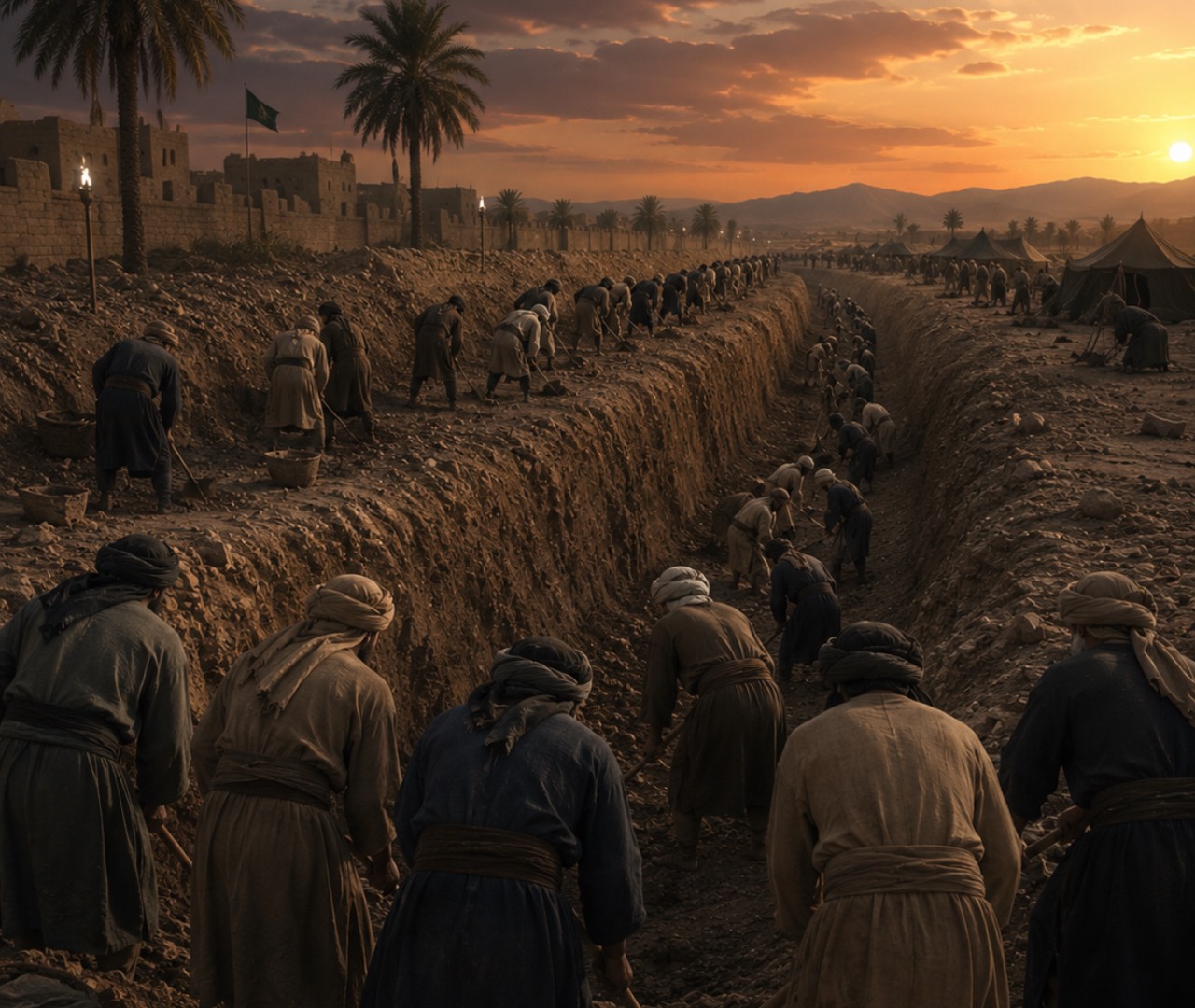
قام النبي بطرد يهود {{ بني النضير }} من المدينة بعد نقضهم العهد مع المسلمين و محاولتهم قتل النبي بعد ان اشار إليهم كبيرهم {{ حيي بن أخطب }} أن يلقوا عليه حجرًا كبيرًا من على سطح دارهم اتجه يهود {{ بني النضير }} بعد طردهم الى الشام وذهب البعض الآخر ورؤسائهم مثل {{ حيي بن أخطب }} وغيره الى {{ خيبر }} وهي مدينة يهودية تبعد عن المدينة حوالي {{ 170 كم }} وأصبحت {{ خيبر }} بعد انتقال {{ بني النضير }} اليهم هي أكبر تجمع لليهود في الجزيرة ظل اليهود في {{ خيبر }} يراقبون الصراع بين المسلمين في المدينة من جهة، وقريش وغيرهم من المشركين من جهة أخرى وكانت قلوبهم تمتلئ غيظاً وحقداً على النبي و المسلمين وهم يتمنون أن ينتهي الصراع لصالح الكفار وأن يتم القضاء على الإسلام ، وعلى النبي ولكن اليهود وجدوا أن المسلمون بعد غزوة أُحُد، اصبحوا يحققون انتصارات متتالية (حادثة الرجيع و حادثة بئر المعونة) و تزداد أعدادهم ، خاصة بعد دخول {{ بني المصطلق }} جميعاً بالإسلام وفشل قريش في {{ بدر الآخرة }} وانسحابهم وخوفهم من مواجهة المسلمون مرة أخرى فقال اليهود: الى متى نقف مكتوفي الأيدي ؟؟ يجب أن نتحرك….. فقرروا أن يجمعوا كل القبائل العربية في جيش ضخم يتوجه الى المدينة ويوجه ضربة للمسلمين تكون ضربة قاضية وقاتلة لا حياة بعدها. فخرجوا من خيبر وكان عددهم {{ ٢١ رجلا }} من سادات يهود {{ خيبر }}وسادات {{ بني النضير }} الى قريش وعلى رأسهم {{ حيي بن أخطب }} فوصلوا لمكة وجلسوا مع {{ سادة قريش }}،،، وأخذوا يحرضونهم على غزو المدينة،،، ووعدوهم بأن يكون معهم كل العرب،،، واخذوا يذكرون قريش في قتلى بدر ،،، وانهم لم يحققوا نصراً في {{ احد }} ،،،، ويقولون لهم :_ ليتكم قتلتم محمدا واصحابه يوم احد وأخذ {{ حيي بن أخطب }} ينفث فيهم سمومه للثأر من جديد واصفًا الرسول والمسلمين بأنّهم إما يغزووا فينتصروا،، وإما تدخل الناس في دينهم لحسن معاملتهم قالت قريش : ماذا ترى يا حَيَّي ؟؟ قال : أرى أن نكون نحن وأنتم يداً واحدة عليه ، فنحزب الأحزاب ، ونباغته في مدينته فقال له ابو سفيان :_ يا حيي ،،، أنتم اهل الكتاب الأول ، وأنتم على دين سماوي كما يزعم محمد قال .:_نعم قال :_ اناشدك (أسألك بالله) الله الذي تعبد ، والكتاب المقدس الذي تقرأ ،،،، أديننا خيرٌ ام دينُ محمد ؟؟ (ابو سفيان يريد أن يستوثق أي دين افضل: دين قريش أو دين محمد ) فأقسم حيي بالله و بالكتاب المقدس أن دين قريش (عبادة الأصنام) خير من الدين الذي جاء به محمد ففضحه الله في القران الكريم بآيتين من سورة النساء قال تعالى {{أَلَمْ تَرَ إِلَى الَّذِينَ أُوتُواْ نَصِيبًا مِّنَ الْكِتَابِ يُؤْمِنُونَ بِالْجِبْتِ وَالطَّاغُوتِ وَيَقُولُونَ لِلَّذِينَ كَفَرُواْ هَؤُلاء أَهْدَى مِنَ الَّذِينَ آمَنُواْ سَبِيلاً *أُوْلَئِكَ الَّذِينَ لَعَنَهُمُ اللَّهُ وَمَن يَلْعَنِ اللَّهُ فَلَن تَجِدَ لَهُ نَصِيرًا}} {{ أَلَمْ تَرَ إِلَى الَّذِينَ أُوتُواْ نَصِيبًا مِّنَ الْكِتَابِ }} لأنّ اصل التوراة من السماء اعطاه الله لليهود ولكن يهود حرفوه وبدلوا كلام الله وعصوا الله على علم {{يُؤْمِنُونَ بِالْجِبْتِ وَالطَّاغُوتِ وَيَقُولُونَ لِلَّذِينَ كَفَرُواْ هَؤُلاء أَهْدَى مِنَ الَّذِينَ آمَنُواْ سَبِيلاً }}… يقصد اليهود قائلين لقريش بأنّ دينهم بعبادة الأصنام أفضل أُوْلَئِكَ الَّذِينَ لَعَنَهُمُ اللَّهُ ( اليهود ) {{ وَمَن يَلْعَنِ اللَّهُ فَلَن تَجِدَ لَهُ نَصِيرًا }} فشجع قريش كلام حيي واطمئنت قلوبهم ان دينهم خير من دين محمد ،،، فأجابتهم قريش ... أننا معكم قريش وجدت في ذلك 1. انقاذ لسمعتها وهيبتها بعد أن فقدتها قريش في غزوة بدر الآخرة 2. إنقاذ تجارتها بعد أن نجح المسلمين في قطع طريق تجارة قريش الى الشام نهائيا ثم توجه وفد {{ خيبر }} بعد ذلك الى قبائل {{ غطفان }} وهي من أكبر القبائل العربية، ودعوهم الى حرب النبي مقابل أن يعطوهم نصف ثمار خيبر لمدة عامين ،،،، فاستجابت لهم عدد كبير وكان قائد غطفان اسمه {{ عيينة بن حصن الفزاري }} و هو الذي قام بعمل صلح مع رسول الله عندما رجع النبي من{{ بني المصطلق }} منتصراً خوفًا منه من ملاحقة المسلمين قومه،،، فطلب الصلح مع الرسول،، فأعطاه النبي ارضاً يرعى بها حول المدينة وعندما سأل الصحابة النبي عن سبب معاملته بهذه الطريقة،،فقال لهم النبي أن هذا رجل يحكم قومه و هم يطيعونه لكنّه لا يعرف مصلحة رعيته ولا عشيرته،،، اذا غضب، غضب لغضبه ألف سيف دون ان يعرفوا سبب غضبه (يعني أنّ قومه يطيعونه دون تفكير انقيادًا أعمى) ثم قال النبي : إن شر الناس من ودعه (تركه) الناس اتقاء شره انضم عينية و قومه مع اليهود في الحرب رغم الصلح و العهد بينهم وبين المسلمين وأخذ هذا الوفد من اليهود و على رأسهم حيي بن أخطب ، يطوفون على كل قبائل العرب الكبيرة فاستجاب لهم البعض ،،،ولم يستجب البعض الآخر واتفقوا على موعد لقاء كل هذه الجيوش للتوجه لغزو المدينة خرجت قريش وحلفائها بقيادة أبو سفيان بن حرب في ٤ آلاف مقاتل منهم ٣٠٠ فرس وخرجت غطفان في ٣ آلاف مقاتل وخرجت باقي القبائل العربية حتى وصل مجموع الأحزاب كلهم ١٠ آلاف مقاتل و كانوا يفتخرون بأنّهم من القبائل القوية ولم يكن الهدف من هذا الجيش هو مجرد الانتصار على المسلمين في معركة عابرة ولكن الهدف هو 1. غزو المدينة 2. قتل النبي وقتل الصحابة 3. القضاء على الاسلام نهائيا وفي ذلك الوقت، كان عدد اهل المدينة كلهم {{ ٣ آلاف }} منهم المؤمنون والمنافقون و المدسوسين بينهم والذي ثبت و قاتل في ذلك اليوم ١٣٠٠ فقط يوم الخندق تحركت جيوش العرب لغزو المدينة،،،، و وصل خبرهم للنبي عن طريق عمه {{ العباس بن عبد المطلب }} الذي كان مؤمن سراً و يكتم ايمانه ووصلت هذه الأخبار المرعبة الى المدينة وعلمت أن جيوش الأحزاب أمامها حوالي ١٥ يوم لتصل الى المدينة فجمع أصحابه وأطلعهم على الأمر ،،،فقال :_ أشيروا علي ؟ و لأنّ الصحابة مازالوا يحسون بألم مخالفة إوامر النبي في غزوة أُحُد، ،،، فقالوا :الأمر اليوم لله ورسوله ماذا ترى يارسول الله ؟؟ قال :_ أرى ان نتحصن في المدينة فأمتثل الصحابة لأمر النبي،،، و ذلك بسبب طبيعتها الجغرافية لأنها تقع بين {{ حرتان }} و الحرّة هي منطقة فيها صخور ملساء حادة نشأت بسبب بركانين قديمين انفجرا و أخرجا حمم بركانية بردت و شكّلت هذه الصخور (الحرّة) المدينة مُحصنة بسبب وجودها بين حرّتان في شرقها وغربها ،،، و من الجنوب مساكن يهود من {{ بني قريظة }} ويوجد فيها جزء من الحرة الغربية ايضا فمن الصعب جدا ان يدخل جيش {{ الأحزاب }} من الجنوب بقي لهم مدخل واحد وهو من {{ الشمال }} و لذلك، أجمع الصحابة على رأي النبي في عدم الخروج لقتال المشركين وانما التحصن في المدينة و لكن ما هي خطة الدفاع عن شمال المدينة ؟ أشار الصحابي سليمان الفارسي على النبي وكان معروفا بالحكمة بحفر خندق فقال سلمان :_ يا رسول الله،،، إنا كنا بأرض فارس ، إذا تخوفنا الخيل خندقنا علينا،،،، يبدأ هذا الخندق من الحرة الشرقية الى الحرة الغربية فسُر النبي بهذه الفكرة واستحسنها هو والصحابة وقرروا تنفيذ هذه الفكرة على الفور فاختاروا مكان الخندق وكان في أضيق مكان بين {{ الحرة الشرقية والحرة الغربية }} وحدد النبي مواصفات الخندق كالآتي 1. الطول من الحرة الشرقية الى الحرة الغربية ، والمسافة تبلغ بينهما {{ ٦ كم }} 2. عرض الخندق {{ ٨ متر }} بحيث لا تستطيع فرسان العدو عبوره بالقفز 3. العمق يكون {{ ٤متر }} بحيث اذا سقط فيه أحد لايستطيع أن يخرج منه و وزع النبي العمل على أصحابه فجعل من الصحابة مجموعات ،،،، كل مجموعة عددها {{ ١٠ }} رجال ،،،، واعطى كل مجموعة مسافة {{ ٢٠ متر }} لحفرها ،،، و وضع خط لكل مجموعة ، في الجزء المسؤلين عن حفره وبدء المسلمون العمل فوراً ، وكان العمل صعباً جداً وشاقاً لأسباب عديدة 1. أن المشروع ضخم جداً،،، ووقت اتمام المشروع قصير فكان الصحابة يعملون في النهار لمدة {{ ١٦ ساعة }} في اليوم ثم يعودون لبيوتهم في الليل ولا يسمح لأحد بالإنصراف إلا بإذن النبي 2. أن أرض المدينة أرض صخرية يصعب جدا الحفر فيها 1. أنّ أدوات الحفر لم تكن تكفي كل هذا العدد، فكانوا يستخدمون أحيانا أدوات يصعب الحفر بها وكان العمل باليد 1. أن الموسم كان شتاء ، والبرد كان قارصاً، والمدينة تعاني من نقص شديد في المواد الغذائية، فكانت تمر الأيام والصحابة يعملون ولا يجدون ما يأكلونه وبدأ الصحابة العمل و كان النبي يعمل معهم كأي واحد منهم جاء سليمان الفارسي يستأذن الرسول بأن يعمل جزءه لوحده لأنّها طبيعة عمله و يعرفه فلقد حفر كثيراً في مدائن فارس ،،، فلما نظر الصحابة ان سلمان كان يحفر لوحده جزءه، قال الصحابة هذا عمل مُشَّرف و أخذ الأنصار والمهاجرين يتنافسون لمن ينتمي هذا الرجل قائلين هذا منّا،،، و هذا منّا ،،، وهكذا حتى ارتفعت اصوات المنافسة بين مهاجرين وانصار فوقف النبي بينهم ورفع كلتا يديه بينهم وهو يقول ،،، لا عليكم ،، ، لا عليكم (يعني لا تتنافسوا)،،، لا عليكم {{ سلمان من أهل البيت }}
Introduction to the Battle of the Confederates / The Battle of the Trench The Prophet expelled the Jews of Banu al-Nadir from Medina after they broke their covenant with the Muslims and attempted to kill the Prophet, following the suggestion of their leader, Huyayy ibn Akhtab, that they drop a large stone on him from the roof of one of their houses. After their expulsion, some of the Jews of Banu al-Nadir went to Syria, while others, including their leaders such as Huyayy ibn Akhtab, went to Khaybar, a Jewish city located approximately 170 km from Medina. After the arrival of Banu al-Nadir, Khaybar became the largest Jewish settlement in the Arabian Peninsula. The Jews in Khaybar continued to observe the conflict between the Muslims in Medina on one side and Quraysh and other polytheists on the other. Their hearts were filled with resentment and hatred toward the Prophet and the Muslims, and they hoped that the conflict would end in favor of the disbelievers and lead to the destruction of Islam and the Prophet. However, the Jews saw that after the Battle of Uhud, the Muslims were achieving successive victories, including the incidents of al-Raji’ and Bi’r Ma’unah. Their numbers were also increasing, especially after Banu al-Mustaliq entered Islam entirely. Quraysh had also failed at Badr al-Maw’id, withdrawing and becoming afraid to confront the Muslims again. The Jews said: “How long will we stand by with our arms folded? We must take action.” They decided to gather all the Arab tribes into a massive army and march toward Medina, intending to strike the Muslims with a decisive and devastating blow from which they would never recover. They left Khaybar, and a delegation of 21 men, consisting of the leaders of the Jews of Khaybar and the leaders of Banu al-Nadir, headed to Quraysh. At their head was Huyayy ibn Akhtab. When they arrived in Mecca, they met with the leaders of Quraysh and began encouraging them to invade Medina. They promised them that all the Arabs would stand with them. They reminded Quraysh of those who had been killed at Badr and told them that they had not achieved a true victory at Uhud. They said: “If only you had killed Muhammad and his companions on the day of Uhud.” Huyayy ibn Akhtab continued to spread his poison among them, calling for revenge once again. He described the Prophet and the Muslims as people who either went out to fight and achieved victory, or won people over to their religion through their good treatment and character. Quraysh asked: “What do you think, Huyayy?” He replied: “I believe that we should stand together against him, you and us as one hand. Let us gather the confederates and surprise him in his own city.” Then Abu Sufyan said: “O Huyayy, you are the People of the Book, and you follow a heavenly religion, as Muhammad claims. Is that correct?” He replied: “Yes.” Abu Sufyan said: “I ask you by the God you worship and by the Holy Scripture you read: Is our religion better, or the religion of Muhammad?” Abu Sufyan wanted reassurance about which religion was better: the religion of Quraysh or the religion brought by Muhammad. Huyayy swore by God and by the Scripture that the religion of Quraysh—worshipping idols—was better than the religion brought by Muhammad. Allah exposed them in two verses from Surah An-Nisa: “Have you not seen those who were given a portion of the Scripture, who believe in false gods and idols and say of those who disbelieve, ‘These are better guided in the way than those who believe’? They are the ones whom Allah has cursed, and whoever Allah curses—you will never find for him a helper.” “Have you not seen those who were given a portion of the Scripture?” The Torah was originally a revelation from Heaven, given by Allah to the Jews. However, the text states that they altered and changed the words of Allah and knowingly disobeyed Him. “They believe in false gods and idols and say of those who disbelieve, ‘These are better guided in the way than those who believe.’” This refers to the Jews telling Quraysh that their religion of idol worship was better. “They are the ones whom Allah has cursed.” And: “Whoever Allah curses—you will never find for him a helper.” Huyayy’s words encouraged Quraysh, and their hearts were reassured when they were told that their religion was better than Muhammad’s religion. Quraysh responded: “We are with you.” Quraysh saw two major benefits in this: 1. Saving their reputation and restoring their prestige, which they believed they had lost after their failure at Badr al-Maw’id. 2. Saving their trade, after the Muslims had successfully cut off Quraysh’s trade route to levant. Afterward, the delegation from Khaybar went to the tribes of Ghatafan, one of the largest Arab tribes. They invited them to fight the Prophet in exchange for half of the fruits of Khaybar for two years. A large number of them accepted. The leader of Ghatafan was Uyaynah ibn Hisn al-Fazari. He had previously made a treaty with the Prophet when the Prophet returned victorious from Banu al-Mustaliq, fearing that the Muslims might pursue his people. He therefore sought peace with the Prophet, who granted him land for grazing around Medina. When the Companions asked the Prophet why he treated him in this way, the Prophet explained that this was a man who ruled his people and whose people obeyed him, but he did not understand what was best for his people or his tribe. If he became angry, a thousand swords would become angry because of his anger without even knowing the reason for it. In other words, his people followed him blindly, without thinking. The Prophet also said: “The worst of people is the one whom people leave alone to avoid his evil.” Uyaynah and his people joined the Jews in the war despite the treaty and agreement that existed between them and the Muslims. The Jewish delegation, led by Huyayy ibn Akhtab, then began traveling among the major Arab tribes. Some tribes responded to their call, while others refused. Eventually, they agreed upon a date when all of these armies would gather and march together to invade Medina. Quraysh and their allies marched under the leadership of Abu Sufyan ibn Harb with 4,000 fighters, including 300 cavalrymen. Ghatafan marched with 3,000 fighters. Other Arab tribes also joined them. Eventually, the total number of the Confederate forces reached 10,000 fighters, and they were proud of the strength of their tribes. The purpose of this army was not merely to defeat the Muslims in an ordinary battle. Their goals were: 1. To invade Medina. 2. To kill the Prophet and the Companions. 3. To eliminate Islam completely. At that time, the total population of Medina was approximately 3,000 people, including believers, hypocrites, and infiltrators among them. Only 1,300 people remained firm and fought on the day of the Battle of the Trench. The Arab armies began moving toward Medina, and news of their approach reached the Prophet through his uncle, al-Abbas ibn Abd al-Muttalib, who had secretly embraced Islam and concealed his faith. These terrifying reports reached Medina, and the Muslims learned that they had approximately 15 days before the armies of the Confederates arrived. The Prophet gathered his Companions and informed them of the situation. He said: “Advise me. What do you think?” Because the Companions still felt the pain of having disobeyed the Prophet’s instructions during the Battle of Uhud, they replied: “Today, the decision belongs to Allah and His Messenger. What do you think, O Messenger of Allah?” The Prophet said: “I believe that we should fortify ourselves inside Medina.” The Companions obeyed the Prophet’s decision because of Medina’s geographical nature. Medina was located between two harrahs. A harrah is an area covered with sharp, smooth volcanic rocks, formed by ancient volcanic eruptions whose lava eventually cooled and hardened into rock. Medina was naturally protected by these two rocky volcanic areas to its east and west. To the south were the settlements of the Jews of Banu Qurayzah, as well as part of the western harrah, making it extremely difficult for the army of the Confederates to enter from the south. Only one major entrance remained: the north. Therefore, the Companions agreed with the Prophet’s decision not to go out and confront the polytheists in an open battle, but instead to fortify themselves inside Medina. But what would be their plan to defend the northern side of the city? The Companion Salman al-Farsi suggested digging a trench. Salman said: “O Messenger of Allah, in Persia, whenever we feared the enemy’s cavalry, we would dig a trench around ourselves.” The trench would extend from the eastern harrah to the western harrah. The Prophet was pleased with this idea, and both he and the Companions approved of it. They immediately decided to put the plan into action. They chose the location of the trench at the narrowest point between the eastern and western harrahs. The Prophet specified the trench as follows: 1. Length: From the eastern harrah to the western harrah, a distance of approximately 6 km. 2. Width: Approximately 8 meters, so that the enemy’s cavalry would be unable to jump across it. 3. Depth: Approximately 4 meters, so that anyone who fell into it would be unable to climb out easily. The Prophet divided the work among his Companions. He organized them into groups, with 10 men in each group, and assigned each group a section of 20 meters to dig. A line was marked for every group, indicating the section for which they were responsible. The Muslims began working immediately. The work was extremely difficult and exhausting for several reasons: 1. The project was enormous, while the time available to complete it was very short. The Companions worked for approximately 16 hours a day, returning to their homes at night. No one was allowed to leave without the Prophet’s permission. 2. The ground of Medina was rocky, making digging extremely difficult. 3. There were not enough digging tools for such a large number of people, so they sometimes had to use inadequate tools and carry out much of the work by hand. 4. It was winter, and the weather was bitterly cold. Medina was also suffering from a severe shortage of food. Days would pass while the Companions continued working without finding enough to eat. The Companions began their work, and the Prophet worked alongside them like any one of them. Salman al-Farsi came to ask the Prophet for permission to work on his section by himself because digging trenches was familiar work to him. He had dug many trenches in the cities of Persia. When the Companions saw Salman digging his section alone, they considered it an honor to claim him as one of their own. The Ansar and the Muhajirun began competing over which group Salman belonged to. One group said: “He is one of us!” And the other said: “No, he is one of us!” Their voices rose as the Muhajirun and the Ansar competed over him. The Prophet stood between them, raised both of his hands, and said: “Do not argue, do not argue.” Then he said: “Salman is one of the People of the Household.”