
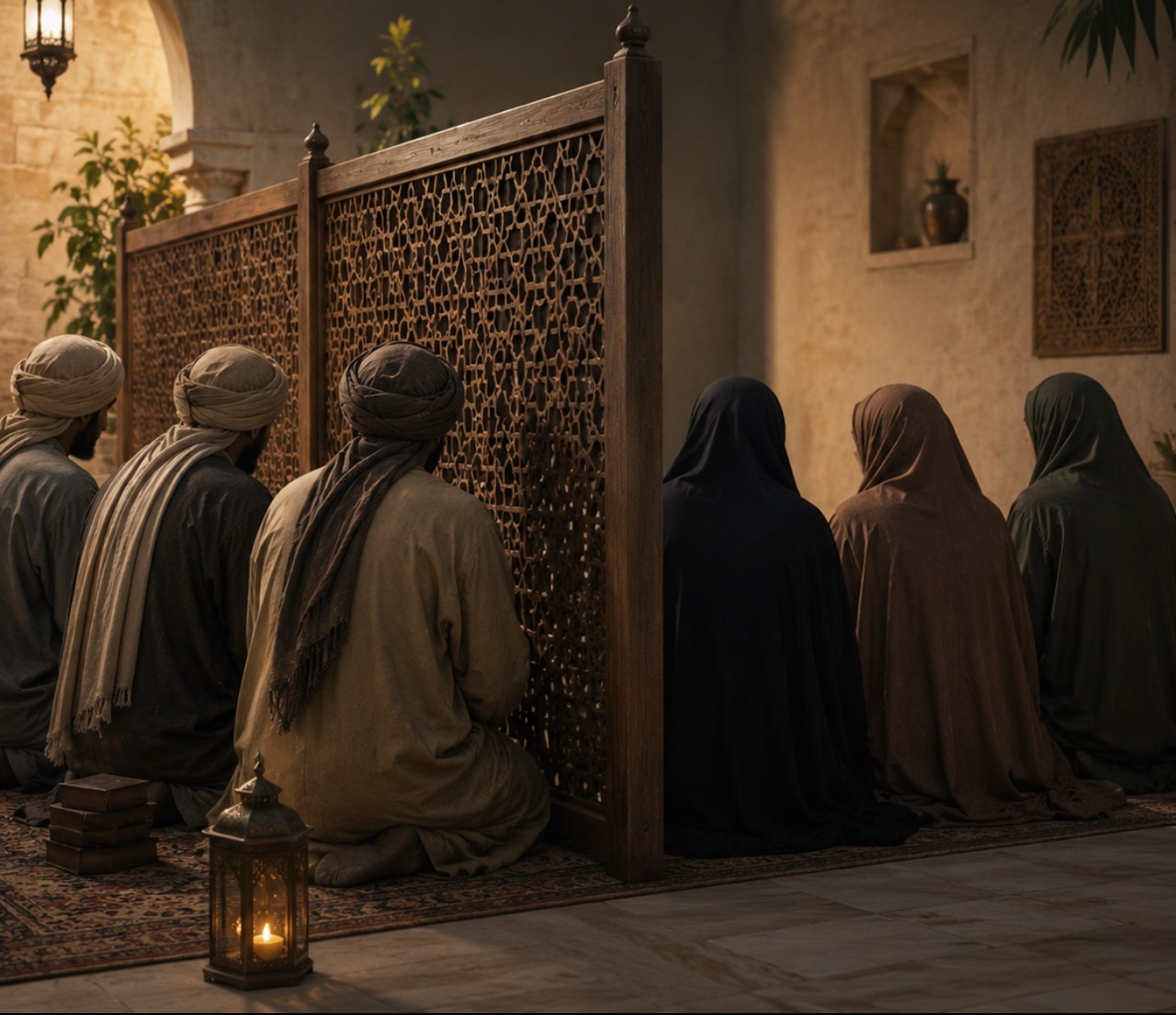
فرض الحجاب
هنا ليس المقصود بالحجاب أي تغطية ما إمر الله تغطيته،،، بل وجود حاجز عند مخاطبة النساء الرجال كان زواج النبي من ام المؤمنين زينب بنت جحش مناسبة لفرض الحجاب كانت زوجات النبي محتشمات ساترات الراس والذراعين مستورات ،،،، ولكن كنّ يجلسنّ يكلمنَّ الصحابة ،،، والصحابة يكلموهنَّ دون أي ينظر الصحابة الى ازواج النبي وكان هذا يغيض عمر بن الخطاب كثيراً وكان عمر مؤيد بالحق و كان الحق يجري على لسانه لذا لُقِب بالفاروق لأنّه كان يفرق بين الحق والباطل قال عمر:_ لقد وافقني الله في خمس مواطن (مواقف) من فوق سبع سماوات بقرآن يُتْلى كان النبي يقول له أن الله لم يأمره بذلك بعد و الرسول لا ينطق عن الهوى {{وما ينطِقُ عَنِ الهَوَى * إنْ هُوَ إلاّ وَحْيٌ يُوحَى }} و أنّ هذا التشريع من عند الله و هو يُبَلِّغه و يطبقه كان النبي عندما يتزوج، كان يجمع التمر ويُطعم أصحابه و هذه كانت وليمة العرس ،،،، إلا في زواجه من زينب تكريماً لها لأن الله زَوّجَه أياها من فوق سبع سماوات، فذبح شاة وقال لأنس :_ ادعو أصحابنا للطعام ( في وقت الظهيرة) يقول انس :_ فأخذت ادعو كل من ألقاه في طريقي،،، فأخذ الناس يأتون افواجاً افواجاً،،، نضع الطعام فيأكلون ويخرجون ، ويأتي افواج يأكلون فيخرجون فلما انتهى الناس،،، وبقي ثلاث رجال يتكلمون في حجرة النبي التي اتخذها لزينب، وكان النبي شديد الحياء فنزل القرآن معاتباً الذين بقوا جالسين يتحدثون في بيت النبي وفارضاً الحجاب على ازواج النبي [[ بأن لا يظهرن على احد من الصحابة بعد اليوم ]] {{ يَا أَيُّهَا الَّذِينَ آمَنُوا لا تَدْخُلُوا بُيُوتَ النَّبِيِّ إِلاَّ أَن يُؤْذَنَ لَكُمْ إِلَى طَعَامٍ غَيْرَ نَاظِرِينَ إِنَاهُ }} {{غَيْرَ نَاظِرِينَ إِنَاهُ }} الله يؤدّب المؤمنين بأن إذا دُعو إلى طعام، إن لا يأتوا مبكّرا و ينتظروا طويلًا،،، بل أن يحترموا حرمة البيوت و يكونو ضيوف خفاف يأتون ويغادرون مسرعين {{ وَلَكِنْ إِذَا دُعِيتُمْ فَادْخُلُوا فَإِذَا طَعِمْتُمْ فَانتَشِرُوا }} {{ وَلا مُسْتَأْنِسِينَ لِحَدِيثٍ إِنَّ ذَلِكُمْ كَانَ يُؤْذِي النَّبِيَّ فَيَسْتَحْيِي مِنكُمْ وَاللَّهُ لا يَسْتَحْيِي مِنَ الْحَقِّ }} {{ وَإِذَا سَأَلْتُمُوهُنَّ مَتَاعًا فَاسْأَلُوهُنَّ مِن وَرَاء حِجَابٍ }}،،، من وراء حجاب تعني من وراء حاجز {{ذَلِكُمْ أَطْهَرُ لِقُلُوبِكُمْ وَقُلُوبِهِنَّ }} فعزّ ذلك على ضعاف النفوس ،،،فقالوا : سبحان الله أنُمْنَع من الكلام مع بنات عمنا وخالنا ؟!!! فقال احد المنافقين : والله لئن مات محمداً ، لأتزوجن عائشة فأنزل الله تمام الآيات {{ وَمَا كَانَ لَكُمْ أَن تُؤْذُوا رَسُولَ اللَّهِ وَلا أَن تَنكِحُوا أَزْوَاجَهُ مِن بَعْدِهِ أَبَدًا إِنَّ ذَلِكُمْ كَانَ عِندَ اللَّهِ عَظِيمًا ، إِن تُبْدُوا شَيْئًا أَوْ تُخْفُوهُ فَإِنَّ اللَّهَ كَانَ بِكُلِّ شَيْءٍ عَلِيمًا }} و لمّا نزلت الايات، سألت زوجات النبي: حتى اذا أهلنا ؟ فأنزل الله تعالى {{ لّا جُنَاحَ عَلَيْهِنَّ فِي آبَائِهِنَّ وَلا أَبْنَائِهِنَّ وَلا إِخْوَانِهِنَّ وَلا أَبْنَاء إِخْوَانِهِنَّ وَلا أَبْنَاء أَخَوَاتِهِنَّ وَلا نِسَائِهِنَّ وَلا مَا مَلَكَتْ أَيْمَانُهُنَّ وَاتَّقِينَ اللَّهَ إِنَّ اللَّهَ كَانَ عَلَى كُلِّ شَيْءٍ شَهِيدًا إِنَّ اللَّهَ وَمَلائِكَتَهُ يُصَلُّونَ عَلَى النَّبِيِّ يَا أَيُّهَا الَّذِينَ آمَنُوا صَلُّوا عَلَيْهِ وَسَلِّمُوا تَسْلِيمًا }} لما نزلت هذه الاية دخل المهاجرين والانصار على رسول الله افواجا افواجا يهنئونه ،،،، حيث بدأ الله بنفسه ثم ملائكته ثم المؤمنين
The Imposition of Hijab Here, the word hijab does not refer to covering what Allah commanded women to cover. Rather, it refers to the presence of a physical barrier or partition when women spoke to men. The marriage of the Prophet to the Mother of the Believers, Zaynab bint Jahsh, became the occasion for the revelation concerning hijab. The Mothers of the Believers were modest and covered their hair and arms, but they would sit and speak with the Companions, and the Companions would speak with them without seeing the Prophet’s wives. This used to concern Umar ibn al-Khattab greatly. Umar was known for his strong sense of truth and justice, and he was called Al-Faruq, meaning the one who distinguishes between truth and falsehood. Umar said: “Allah agreed with me in five matters through Qur’an revealed from above the seven heavens.” The Prophet would tell him that Allah had not yet commanded him to do so, because the Prophet did not speak according to his own desires: “Nor does he speak from his own inclination. It is nothing but revelation revealed.” This legislation came from Allah, and the Prophet’s role was to convey and implement it. When the Prophet married, he would usually gather dates and feed his Companions as a wedding feast. However, at his marriage to the Mother of the Believers, Zaynab bint Jahsh, a special wedding feast was prepared in her honor, because Allah had married her to the Prophet from above the seven heavens. The Prophet slaughtered a sheep and said to Anas: “Invite our companions to the meal.” This was around midday. Anas said: “I began inviting everyone I met along the way. People came in groups. We would place the food before them, they would eat and leave, and then another group would come, eat, and leave.” When the people had finished eating, three men remained sitting and talking in the Prophet’s room, which had become the residence of the Mother of the Believers, Zaynab. The Prophet was extremely shy. Then the Qur’an was revealed, gently reproaching those who remained sitting and talking in the Prophet’s home and establishing the ruling of hijab for the Mothers of the Believers: “O you who believe, do not enter the houses of the Prophet unless permission is given to you for a meal, without waiting for its preparation.” The words: “Without waiting for its preparation” teach believers that when they are invited to a meal, they should not arrive too early and wait for a long time. They should respect the privacy of people’s homes and be considerate guests—arriving at the appropriate time and leaving without unnecessary delay. Allah then says: “But when you are invited, then enter; and when you have eaten, disperse.” And: “And do not remain for conversation. Indeed, that used to annoy the Prophet, but he was shy of dismissing you. But Allah is not shy of the truth.” Then Allah revealed: “And when you ask them for something, ask them from behind a hijab.” Here, “from behind a hijab” means from behind a barrier or partition. Allah then says: “That is purer for your hearts and for their hearts.” This ruling upset some people of weak faith. They said: “Subhan Allah! Are we to be prevented from speaking to the daughters of our uncles and aunts?” One of the hypocrites even said: “By Allah, if Muhammad dies, I will marry Aisha.” Then Allah revealed the rest of the verses: “And it is not for you to harm the Messenger of Allah or to marry his wives after him, ever. Indeed, that would be a tremendous matter in the sight of Allah. Whether you reveal something or conceal it, indeed Allah is ever Knowing of all things.” After these verses were revealed, the Mothers of the Believers asked whether this ruling also applied in the presence of their close relatives. Then Allah revealed: “There is no blame upon them concerning their fathers, their sons, their brothers, their brothers’ sons, their sisters’ sons, their women, or those whom their right hands possess. And fear Allah. Indeed, Allah is Witness over all things.” Then came the verse: “Indeed, Allah and His angels send blessings upon the Prophet. O you who believe, send blessings and peace upon him.” When this verse was revealed, the Muhajirun and the Ansar came to the Prophet in groups to congratulate him, because Allah began by mentioning Himself, then His angels, and then commanded the believers to send blessings and peace upon the Prophet.