
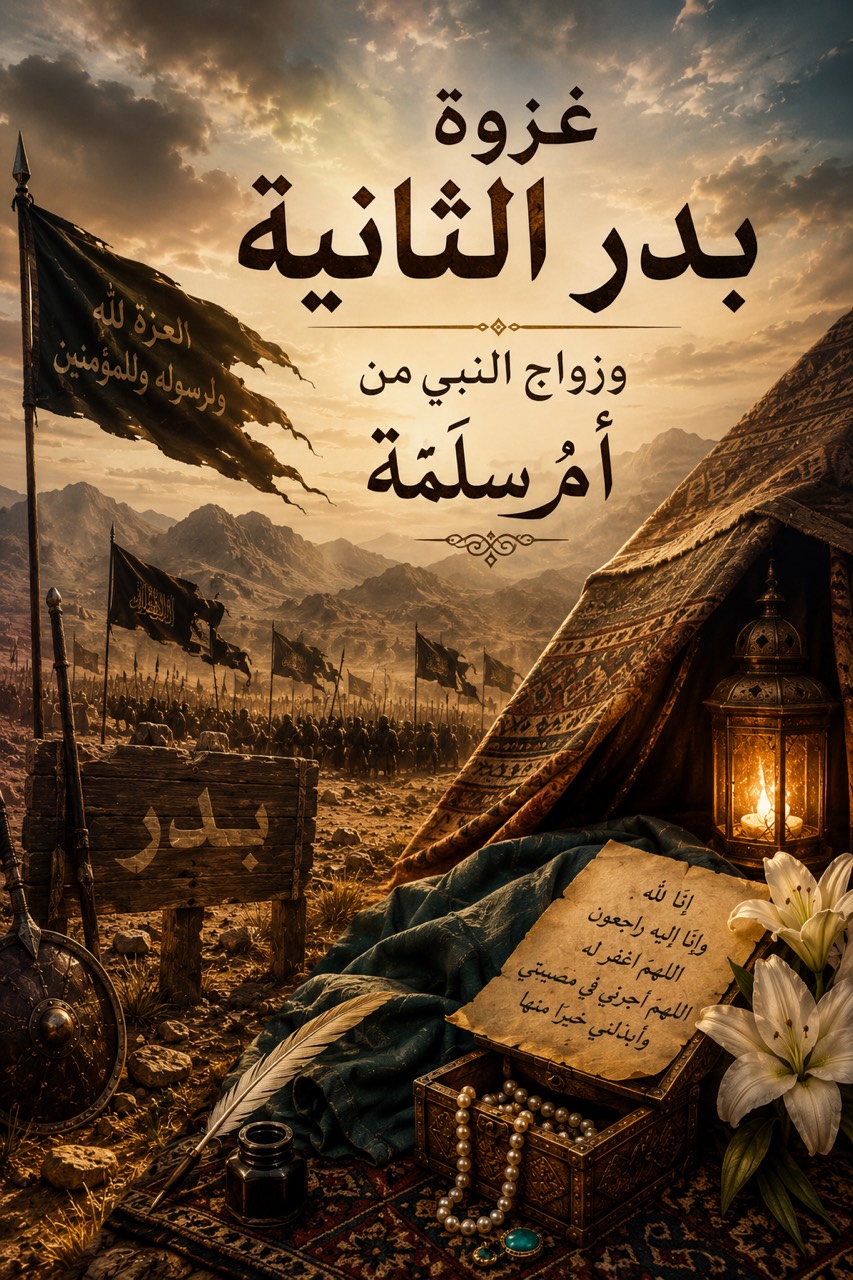
غزوة بدر الثانية و زواج النبي من أم سلمة
كان آخر مشهد في معركة أُحُد عندما قام أبو سفيان بن حرب سيد قريش بالنداء والتوَعُّد للمسلمين قائلًا: إن موعدكم بدر العام القابل ( يعني العام المقبل في موعد معركة بدر سوف يأتي جيش المسلمين وجيش قريش الى بدر ويكون هناك قتال) فقال الرسول لعمر بن الخطاب:- قل نعم ،،،، هو بيننا وبينك موعد ، ان شاء الله تعالى،،،،،ومر عام على أُحُد،،،، وجاء شهر شعبان في السنة الرابعة من الهجرة،،،، وجاء موعد اللقاء عند بدر فأخذ المسلمون يتهيؤا و يستعدوا للخروج الى بدر و على الجانب الأخر في مكة ، كان أبو سفيان لا يريد مواجهة المسلمين،،، ويخشى هذه المواجهة،،،وفي نفس الوقت لا يستطيع أن لا يخرج لأن ذلك يسقط هيبة قريش عند المسلمين وفي الجزيرة كلها وكان في مكة في ذلك الوقت رجل اسمه نعيم بن مسعود وهو من قبيلة غطفان فاتفق معه أبو سفيان أن يذهب الى المدينة،،،ويخوف أهل المدينة من جيش قريش ويقول لهم :_ أن أعداد جيش قريش كثيرة ،،،ووعده بعشرين من الإبل ان نجح في مهمته قال ابو سفيان لنعيم: إنه بدا لي أن لا أخرج،،، وأكره أن يخرج محمد ولا أخرج أنا ،،،فيزيدهم ذلك جراءة،،،،،فلأن يكون التخلف من قبلهم أحب إليّ من أن يكون من قبلي،،،فاذهب يا نعيم الى يثرب ( اي المدينة المنورة )،،،،وأعلمهم أننا في جمع كثير ولا طاقة لهم بنا ، ولك عندي عشرين من الإبل أدفعها لك وصل نعيم بن مسعود الى المدينة فوجد المسلمون يتهيئون للخروج فبدأ في أداء مهمته وأخذ يطوف بالمسلمين ويتحدث عن كثرة جموع قريش واخذ المنافقون يُخَوِّفون المسلمون من قول نعيم فيقول المسلمون {{ حسبنا الله ونعم الوكيل }} وكان عدد المسلمون {{ ١٥٠٠ }} على الجانب الآخر، خرج أبو سفيان بجيش قريش وهو يعتقد أن نعيم بن مسعود قد نجح في اخافة المسلمين،،، ، وأن المسلمين لن يخرجوا ،،، فخرج بجيشه حتى يبدوا أمام المسلمين وأمام كل العرب أنه قد خرج للقاء المسلمين وأن المسلمين خافوا وجبنوا ولم يخرجوا كان جيش قريش عدده ٢٠٠٠ وسار جيش قريش لمدة يومين فقط حتى وصل الى منطقة {{ مجِنَّة }} وهي سوق معروفة تبعد عن مكة حوالى {{ ٨٠ كم }} ثم وصلت الى {{ أبو سفيان}} الأخبار أن المسلمون قد وصلوا بالفعل الى بدر،،،فخاف ابو سفيان من مواجهة المسلمون مرة أخرى فقال أبو سفيان: يا معشر قريش ،،، لا يصلحكم الا عام خصب ، وإن عامكم هذا عام جدب ، واني راجع فارجعوا فرجع جيش قريش ،،،وكان ابو سفيان مثار سخرية في الجزيرة كلها،،،وسخروا على ابو سفيان في مكة نفسها حتى أن أهل مكة أخذوا يقولون لهم: انما خرجتم لتشربوا السويق، وسموهم {{جيش السويق }} ( والسويق هو طعام اعتاد العرب أكله في السفر، وهو مدقوق القمح والشعير، سمي سويق لانسياقه في الحلق) كان تراجع المشركون وانسحابهم بالرغم من أن أعداد جيش المشركين كان أكبر المشركون {{ ٢٠٠٠ }} والمسلمون {{ ١٥٠٠ }} أي أن هناك تفوق في جيش المشركين ، ومع ذلك خافوا وجبنوا من مواجهة المسلمين وأقام المسلمون في بدر ٨ أيام وقد أطلق على هذه الغزوة {{ غزوة بدر الآخرة }} و كانت هامة جدا 1. لأنها أعادت للمسلمين كثير من الهيبة التي فقدوها في أُحُد و الأحداث التي حصلت بعدها وهي {{ بئر الرجيع وبئر معونة}} 2. أعادت الى المسلمين ثقتهم بأنفسهم ،بينما أحبطت المشركين، واصبحوا مثار للسخرية، في الجزيرة كلها بل وفي داخل مكة نفسها،،، وأيقن المشركون أن أهل مكة غير قادرين على مواجهة المسلمين، وأنهم أضعف منهم كثيرا وفي هذه السنة {{ ٤ للهجرة }} ، تزوج النبي من أم المؤمنين {{ أم سلمة }} رضي الله عنها كان ابو سلمة أخو النبي في الرضاعة ،،،وكان أول من هاجر الى الحبشة مع زوجته أم سلمة فعندما توفى زوج أم سلمة {{ أبو سلمة }} بعد ٧ شهور من معركة احد بسبب جراحه بأحد قال النبي لها: إذا حضرتم الميت فقولوا خيراً فإن الملائكة تؤمن على ما تقولون فقالت أم سلمة:_ يا رسول الله كيف أقول ؟ فقال لها : قولي انا لله وانا اليه راجعون ،،،،اللهم اغفر له ،،،،اللهم اجرني في مصيبتي وابدلنى خيرا منها فقالت مثلما قال لها النبي وكانت تقول في نفسها : ومن خير من أبي سلمة ؟ ولكن الله تعالى استجاب دعائها، وتزوجت النبي بعد انقضاء عدتها وفي زواج النبي من {{أم سلمة }} كان تشريع ديني بجواز (عدم منع) زواج من زوجة أخيه بعد وفاته
The Second Battle of Badr and the Prophet’s Marriage to Umm Salamah The final scene of the Battle of Uhud came when Abu Sufyan ibn Harb, the leader of Quraysh, called out to the Muslims with a challenge: “Our next meeting will be at Badr next year.” In other words, at the time of the next Battle of Badr, both the Muslim army and the Quraysh army would return to Badr for another confrontation. The Prophet ﷺ said to ʿUmar ibn al-Khattab: “Tell him: ‘Yes. There is an appointment between us and you, if Allah wills.’” A full year passed after Uhud. Then came the month of Shaʿban in the fourth year after the Hijrah, and the agreed time for the meeting at Badr arrived. The Muslims began preparing to march to Badr. Meanwhile in Makkah, Abu Sufyan had no desire to face the Muslims again. He feared another confrontation. Yet at the same time, he felt he could not simply stay behind, because doing so would damage the prestige of Quraysh in the eyes of both the Muslims and the rest of Arabia. At that time, there was a man in Makkah named Nuʿaym ibn Masʿud from the tribe of Ghatafan. Abu Sufyan reached an agreement with him: he would travel to Madinah and frighten the Muslims by exaggerating the size of the Quraysh army. In return, Abu Sufyan promised him twenty camels if he succeeded. Abu Sufyan said to him: “I have decided that I do not wish to march, but I dislike the idea that Muhammad would march while I remain behind, for that would only make his followers bolder. I would rather they be the ones who stay back than us. Go to Yathrib (Madinah) and tell them that we are coming with a massive army beyond their ability to face. If you succeed, you shall have twenty camels.” Nuʿaym arrived in Madinah and found the Muslims preparing for departure. He immediately began spreading fear among them, speaking of the enormous strength of Quraysh. The hypocrites also repeated his claims in an attempt to discourage the believers. The Muslims, however, responded only by saying: “Allah is sufficient for us, and He is the best Disposer of affairs.” The Muslim force numbered 1,500 men. On the other side, Abu Sufyan marched out with an army of 2,000 men, believing that Nuʿaym had succeeded in frightening the Muslims and that they would not come. His intention was to appear before all Arabia as though Quraysh had honored the challenge while the Muslims had been too afraid to show up. The Quraysh army traveled for only two days until it reached Majannah, a well-known market approximately 80 kilometers from Makkah. There, Abu Sufyan received news that the Muslims had indeed arrived at Badr. Once he learned this, he became afraid of facing them again. He addressed Quraysh: “People of Quraysh, this is only a suitable year for campaigning when there is abundance. This year is a year of drought, so I am returning. Return with me.” The Quraysh army turned back. Abu Sufyan became the subject of ridicule throughout Arabia—even in Makkah itself. The people of Makkah mocked them, saying: “You only went out to drink sawiq.” As a result, they became known as “The Army of Sawiq.” (Sawiq was a common travel food among the Arabs, made from roasted and ground wheat or barley. It was called sawiq because it was easy to swallow.) Despite having the larger army— * Quraysh: 2,000 soldiers * Muslims: 1,500 soldiers —the polytheists still withdrew, demonstrating their fear of confronting the Muslims. The Muslims remained at Badr for eight days. This battle became known as the Second Battle of Badr. It was especially significant because: 1. It restored much of the prestige the Muslims had lost after Uhud and the tragedies that followed, including the Incident of al-Rajiʿ and the Tragedy of Bi’r Ma’unah. 2. It restored the Muslims’ confidence in themselves, while deeply discouraging the Quraysh, who became an object of ridicule throughout Arabia—even among their own people in Makkah. The idolaters realized that the people of Makkah were no longer capable of confronting the Muslims and were, in reality, far weaker than they had imagined. The Prophet’s Marriage to Umm Salamah Also during the fourth year after the Hijrah, the Prophet ﷺ married Umm Salamah, one of the Mothers of the Believers. Her husband, Abu Salamah, was the Prophet’s foster brother. He had been among the very first Muslims to migrate to Abyssinia together with Umm Salamah. About seven months after the Battle of Uhud, Abu Salamah passed away from wounds he had sustained during the battle. The Prophet ﷺ said: “When someone dies, speak only good words, for the angels say ‘Āmīn’ to what you say.” Umm Salamah asked: “O Messenger of Allah, what should I say?” He replied: “Say: Indeed, we belong to Allah, and to Him we shall return. O Allah, forgive him. O Allah, reward me in my affliction and replace it with something better.” She repeated the supplication exactly as the Prophet ﷺ had taught her. Yet she thought to herself: “Who could possibly be better than Abu Salamah?” Allah answered her prayer, and after her waiting period (ʿiddah) had ended, she married the Prophet ﷺ. According to the source text, the Prophet’s marriage to Umm Salamah also established the legal permissibility of marrying the widow of one’s foster brother after his death.