
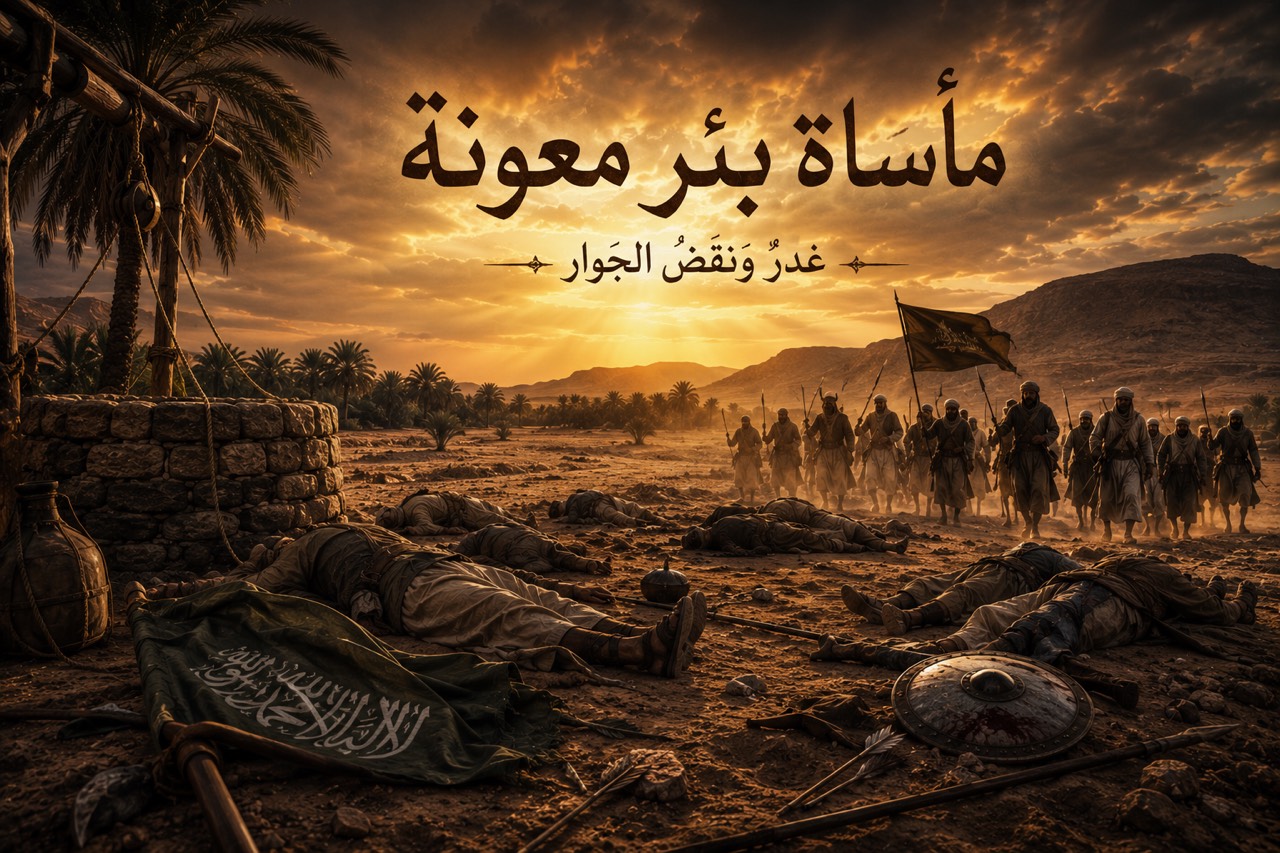
مأساة بئر معونة
بعد غدر قبيلتي {{ عضل و القارة }} بالمسلمين بحادثة {{ الرجيع }} بعد أن اتفقوا ما قريش على خداع المسلمين والتظاهر بالإسلام وطلبهم من الرسول من يعلّمهم الدين حتّى يُسَلِّموا المسلمين لقريش و على أثر ذلك، استشهد عدد من الصحابة وكان ذلك بعد ٤ أشهر فقط من غزوة أُحُد وقبل أن يخرج هؤلاء الصحابة الذين استشهدوا، كان ايضاً قد جاء إلى النبي رجل آخر من {{ بني عامر }} من اهل نجد كنيته {{ ابو البراء }} و اسمه الحقيقي {{ عامر بن مالك }} ويلقب بأسم {{ مُلاعبِ الأسنَّة}} لانه كان ماهر جداً في القتال و بالتلاعُب بالسلاح فكان يقاتل بسيفين وكان يقاتل بالسيف والحربة ،،، حتى عُرِف بين العرب بهذا اللقب وكان قد شاخ هذا الرجل وتقدم بالعمر ،،، فأخذ الزعامة منه أبن أخيه واسمه {{ عامر بن الطفيل }} فلمّا ذهب الرجل إلى المدينة، قدم هدية الى الرسول،،، ودعاه النبي الى الإسلام، فلم يسلم ولكنّه لم يرفض الاسلام فقد كان مقتنع به ولكنه لم يسلم ، خوفاً على مكانته في قبيلته لأنه من سادة قومه فقال ابو البراء : يا محمد إني أرى أمرك (دينك) هذا حسنٌ شريف،،، فلو بعثت رجالاً من أصحابك الى أهل نجد يدعونهم الى أمرك (دينك) فإني أرجو أن يستجيبوا لك ( هو يريد لقومه أن يسلموا ويسلم معهم هو ايضاً ) فقال له النبي : إني أخشى عليهم أهل نجد فقال له ابو البراء : أنا جارٌ لهم ( لانه كبير قومه وله كلمة مسموعة فقال هم في حمايتي ) وكان انتهاك الجِوار (انتهاك الحماية بعد التعهد بها) عار و معروف عند العرب جميعاً فاستجاب الرسول له،،،ثم أنطلق ابو البراء وسبقهم الى نجد،، ، واخبر ابن اخوه سيد قومه {{ عامر بن الطفيل }} قال له : يا أبن أخي سيحضر أصحاب محمد وإني قد أجرتهم حتى يُبَلِغُوا دعوته وأختار النبي من اصحابه ٧٠ من شباب الصحابة ، ليخرجوا لنجد يدعوهم الى الإسلام و أُطْلِق عليهم اسم {{ القراء }} لأنهم كانوا إذا صلوا العشاء مع النبي، لا يذهبوا لبيوتهم،،، بل ينطلقوا الى أطراف المدينة عند البساتين و يتخذوا معلم لهم للقران من كبار الصحابة فيحفظون القران حتى يتقنونه كما أُنْزِل،،، فلا يتركون آية تنزل إلا حفظوها ، وتفقّهوه فيها وقاموا الليل يصلون بها،،، ، حتى إذا كان الفجر استعذبوا من الماء قبل أن تخلطه أيدي الناس ( اي قبل ما يتعكر ) فملؤوا القربة ،،،، وأحتطبوا ( أي جمعوا الحطب )،،، وجاؤوا به الى حجرات أزواج النبي ( فكانوا يتطوعون من أنفسهم لخدمة بيوت النبي دون أن يشعر بهم أحد) فما أن يطلع الفجر كانت أوعية الماء أمام حجرات أزواج النبي وإذا بالحطب امام الحجرات ايضاً ويشهدون الفجر جماعة مع رسول الله أنتدب الرسول هذه الفئة الطيبة ، التي تقوم الليل وتقرأ القران ليكونوا خير دعاة {{ لبني عامر }} وكتب لهم النبي كتاب {{ لبني عامر }} وأرسله معهم (النبي اختار ١٠ من الصحابة لقبيلتي عضل والقارة،،، واختار ٧٠ لبني عامر ) فخرجوا في الوقت الذي خرج به اصحاب عضل والقارة،،،، فأصحاب عضل والقارة خرجوا الى جهة مكة ،،، وهؤلاء القراء اخذوا طريق نجد الى بني عامر حتى وصلوا عند بئر يطلق عليه {{ بئر معونة}} ومن أدب الصحابة ،،، وقفوا عند البئر ،،،ولم يدخلوا كلهم دفعة واحدة الى {{ بني عامر }}،،، بل ارسلوا حامل الكتاب {{ حرام بن ملحان }} الى سيد القوم {{ عامر بن الطفيل }} ليخبروه أنهم أصحاب محمد،،، وان ابو البراء عمه اخذ لهم العهد والجوار فلما دخل حامل الكتاب على {{ عامر بن الطفيل }} فلما دخل عليه ، و عَرَّف بنفسه ومد الكتاب إليه ،،،،وكان عامر هذا سيء الخلق جداً،،، فلم يلتفت إليه وقال : ما حاجتكم ؟؟ قال له : لسنا أصحاب حاجة،،، ولكننا أُرْسِلنا بأمر من نبينا الى قومكم ندعوهم الى هذا الدين وقد اخذ لنا عمك ابو البراء عهداً وجوار ،،،، جئنا ندعوكم الى لا إله إلا الله ، محمد عبده ورسوله،،،، فآمنوا بالله ورسوله فبينما هو يتكلم معه، أشار {{ ابن الطفيل }} الى أحد رجاله واسمه {{ جبار بن سلمي }} فطعنه بالحربة في ظهره وخرجت من بطنه،،،، فأخذ هذا الصحابي الجليل {{ حرام بن ملحان }} يمسح الدم الذي ينزف منه بيده ،،،، ويدهن به وجهه وهو يقول : الله أكبر الله أكبر ،،، فُزْتُ وربِ الكعبة حتى فاضت روحه فأستغرب الذي طعنه يقول فزت ؟!!! فتعجب الذي قتله من كلامه وأخذ يسأل: ما الذي فاز به ؟ أولستُ قد قتلته؟ فقالوا له: إنها الشهادة عند المسلمين ! فقال: نعم فاز والله ثم ذهب {{ جبار }} الى المدينة وأسلم فكان قَتْل الصحابي من سوء أخلاق {{ عامر بن طفيل }} لأنه أولاً انتهك جوار (حماية) عمه {{ ابو البراء}} الذي وعد به ثانياً قتل رسول،،،، والرسل لا تُقْتل،،وكانت هذه قاعدة عند العرب ، وعند كل الدول وحتى الآن وبعد قتل هذا الصحابي،،، خرج {{ عامر بن الطفيل }} الى قومه وهو سيد القوم و زعيمهم ثم قال لهم : استعدوا معي لنذهب لبئر معونة ونقتل أصحاب محمد ،،، فرفض قومه الخروج معه لأنهم يحترموا عمه ابو البراء جميعا ويحبونه ولا ينقضون عهده وجواره فلما رفض القوم دعوة سيدهم عامر بن الطفيل، ذهب الى القبائل حوله وجمع ثلاثة قبائل معه وانطلقوا الى المسلمين عند {{بئر معونة }} وأخذوا يقاتلونهم وأخذ المسلمون سيوفهم ودافعوا عن أنفسهم، ولكنهم قتلوهم و لم يبق إلا {{ كعب بن زيد}} الذي جُرِح وظنوه قد قُتِل ولكنه عاش،،، ثم مات شهيدا بعد ذلك بعام واحد في غزوة الخندق كان اثنين من الصحابة قد تأخرا عنهما في الطريق وهما {{ المنذر بن عقبة ، وعمرو بن أمية }} فوجدوا الطيور تحوم في السماء فوق معسكر المسلمين عند بئر معونة فقالا: والله ان لهذه الطيور لشأن ،،،، وأسرعا الى أصحابهم،،،، فوجدوهم قد قتلوا فانطلقا يقاتلان هما أيضا فقُتِل {{ المنذر بن عقبة}} ووقع {{عمرو بن أمية }} في الأسر ثم أعتقه عامر بن طفيل ولم يقتله وانطلق {{ عمرو بن أمية }} راجعاً الى المدينة وفي الطريق لقي، رجلين وعلم أنهما من {{بني عامر }} ونزلا تحت ظل شجرة فلما ناما، قتلهما عمرو بن أمية ثأرا للصحابة ولكن هذان الرجلين كان معهما عهداً من النبي وهو كان لا يعلم بذلك،،،، فلما عاد الى النبي وأخبره قال النبي له: قد قتلت قتيلين ،،، سأدفع ديتهم (و الدِيّة هي مبلغ يدفعه أهل القاتل لأهل المقتول الذي قُتِل عن طريق الخطأ) كان خبر قتل رُسُل النبي فاجعة ومأساة،،، عضل والقارة ، وبئر معونة ، في نفس التوقيت وغلب الحزن الشديد على الرسول لأنّ هؤلاء الصحابة قُتِلوا بالغدر ومن شدة حزن الرسول ،،، اخذ يدعوا عليهم شهرا كاملاً اما {{ ابو البراء }} أصابه غيض شديد لانها انْتُهِك جواره من ابن اخيه فهناك روايات الرواية الأولى انه رجع للنبي يعتذر عن ما فعله ابن اخيه،،، فقبل النبي عذره ،،،، ثم أسلم وكان من الصحابة الرواية الثانية أنه ارسل من طرفه رسولاً يعتذر ويعلن اسلامه،،، ثم مات غيظاً وقهراً لانه انْتُهِك جواره
The Tragedy of Bi’r Ma‘unah Only four months after the Battle of Uhud, and shortly after the betrayal of the tribes of ‘Adal and Al-Qārah in the Incident of Al-Rajī‘, another devastating tragedy struck the Muslims. Following the treachery at Al-Rajī‘—where the two tribes had conspired with Quraysh, pretended to embrace Islam, and asked the Prophet to send teachers so they could hand them over to Quraysh—a number of the Prophet’s Companions were martyred. Before those Companions had departed, another visitor had come to the Prophet ﷺ. He was a nobleman from Banū ‘Āmir in Najd, known by his kunyah Abū al-Barā’, whose real name was ‘Āmir ibn Mālik. He was famously nicknamed Mulā‘ib al-Asinnah (“The Player with Spears”) because of his extraordinary skill in combat. He fought with two swords and was equally proficient with the spear, earning great fame among the Arabs. By this time, Abū al-Barā’ had grown old, and leadership of the tribe had passed to his nephew, ‘Āmir ibn al-Ṭufayl. When Abū al-Barā’ arrived in Madinah, he presented the Prophet with a gift. The Prophet invited him to Islam. Although he did not embrace Islam, neither did he reject it. He admired the religion but feared losing his status among his people. He said: “O Muhammad, I see that your religion is noble and honorable. If you were to send some of your companions to the people of Najd to call them to your faith, I hope they would respond.” The Prophet replied: “I fear for them because of the people of Najd.” Abū al-Barā’ answered: “They are under my protection.” Among the Arabs, violating a pledge of protection (jiwār) was considered one of the gravest disgraces. Trusting his guarantee, the Prophet accepted his request. Abū al-Barā’ returned ahead of the Muslims to Najd and informed his nephew, the tribal chief ‘Āmir ibn al-Ṭufayl: “The companions of Muhammad will soon arrive, and I have granted them my protection until they deliver their message.” The Prophet then selected seventy of his finest young Companions for this mission. They became known as Al-Qurrā’ (the Reciters) because of their devotion to the Qur’an. After praying the night prayer with the Prophet, they would not return home. Instead, they gathered in the outskirts of Madinah to study the Qur’an under senior Companions. They memorized every verse as it was revealed, reflected upon its meanings, and spent their nights in worship. Before dawn, they would fetch fresh water before it became disturbed by people, fill water skins, collect firewood, and quietly place both outside the homes of the Prophet’s wives—serving the Prophet’s household voluntarily without seeking recognition. Then they would pray Fajr with the Prophet. The Prophet chose these righteous men to be the best callers to Islam for Banū ‘Āmir. He also wrote them a letter addressed to the tribe and entrusted it to them. (The Prophet had sent ten Companions with ‘Adal and Al-Qārah, while seventy were sent to Banū ‘Āmir.) The two groups departed around the same time. The delegation accompanying ‘Adal and Al-Qārah traveled toward Makkah, while the seventy Qur’an reciters headed toward Najd. When they reached a place known as Bi’r Ma‘unah, they stopped before entering Banū ‘Āmir’s territory. Following proper etiquette, they did not all enter together. Instead, they sent Ḥarām ibn Milḥān, carrying the Prophet’s letter, to meet the tribal leader ‘Āmir ibn al-Ṭufayl. He introduced himself, presented the letter, and reminded him: “We are the companions of Muhammad. Your uncle Abū al-Barā’ granted us protection. We have come to invite you to worship Allah alone and to believe that Muhammad is His servant and Messenger.” But ‘Āmir ibn al-Ṭufayl, who was notorious for his arrogance and harsh character, paid no attention to the letter. He interrupted him, asking: “What do you want?” Ḥarām replied: “We seek nothing for ourselves. Our Prophet sent us to invite your people to this religion. Your uncle granted us protection. We invite you to believe in Allah and His Messenger.” While Ḥarām was speaking, ‘Āmir ibn al-Ṭufayl secretly signaled one of his men, Jabbār ibn Sulmā, who suddenly thrust a spear into Ḥarām’s back until it emerged through his chest. As blood poured from his wound, Ḥarām wiped it across his face and exclaimed: “Allāhu Akbar! By the Lord of the Ka’bah, I have succeeded!” Then he fell as a martyr. The man who had stabbed him was astonished. “Succeeded? I just killed him!” He was told: “He has attained martyrdom.” Jabbār replied: “Then indeed, by Allah, he has succeeded.” This moment deeply affected him, and he later traveled to Madinah and embraced Islam. The murder of Ḥarām reflected the disgraceful conduct of ‘Āmir ibn al-Ṭufayl, for two reasons: 1. He violated the pledge of protection granted by his own uncle, Abū al-Barā’. 2. He murdered an official messenger, even though killing envoys was considered forbidden among the Arabs—and remains a recognized principle between nations today. After killing the Prophet’s envoy, ‘Āmir ibn al-Ṭufayl called upon his own tribe to march with him to Bi’r Ma‘unah and kill the rest of the Prophet’s companions. His people refused. Out of respect for Abū al-Barā’, they would not violate his guarantee. So ‘Āmir gathered warriors from three neighboring tribes instead and marched toward Bi’r Ma‘unah. They attacked the Muslims. The Companions drew their swords and defended themselves bravely, but nearly all of them were martyred. Only Ka‘b ibn Zayd survived initially. Severely wounded, he was left for dead. He later recovered, only to attain martyrdom one year later during the Battle of the Trench (Khandaq). Meanwhile, two Companions had fallen behind on the journey: * Al-Mundhir ibn ‘Uqbah * ‘Amr ibn Umayyah As they approached, they noticed birds circling above the area. One said: “These birds must be gathering for a reason.” They hurried forward and found their fellow Companions lying slain. Both immediately entered the fight. Al-Mundhir ibn ‘Uqbah was martyred. ‘Amr ibn Umayyah was captured alive but was later released by ‘Āmir ibn al-Ṭufayl. On his journey back to Madinah, ‘Amr encountered two men from Banū ‘Āmir resting beneath a tree. Believing they were connected to the massacre, he killed them in retaliation. However, he was unaware that the two men had been granted safe conduct by the Prophet. When he informed the Prophet of what had happened, the Prophet said: “You have killed two men who were under my protection. I will pay their blood money.” The twin tragedies of Al-Rajī‘ and Bi’r Ma‘unah, occurring within the same period, were among the most painful events the Muslims endured. The Prophet was overwhelmed with grief because so many of his Companions had been murdered through treachery. Out of his deep sorrow, he supplicated against the perpetrators for an entire month. As for Abū al-Barā’, he was devastated that his pledge of protection had been violated by his own nephew. The historical reports differ regarding what happened afterward: * According to one narration, he personally went to the Prophet, apologized for his nephew’s actions, the Prophet accepted his apology, and he later embraced Islam. * According to another narration, he sent a messenger to apologize and declare his acceptance of Islam, but soon afterward died, heartbroken and distressed that his pledge of protection had been dishonored.