
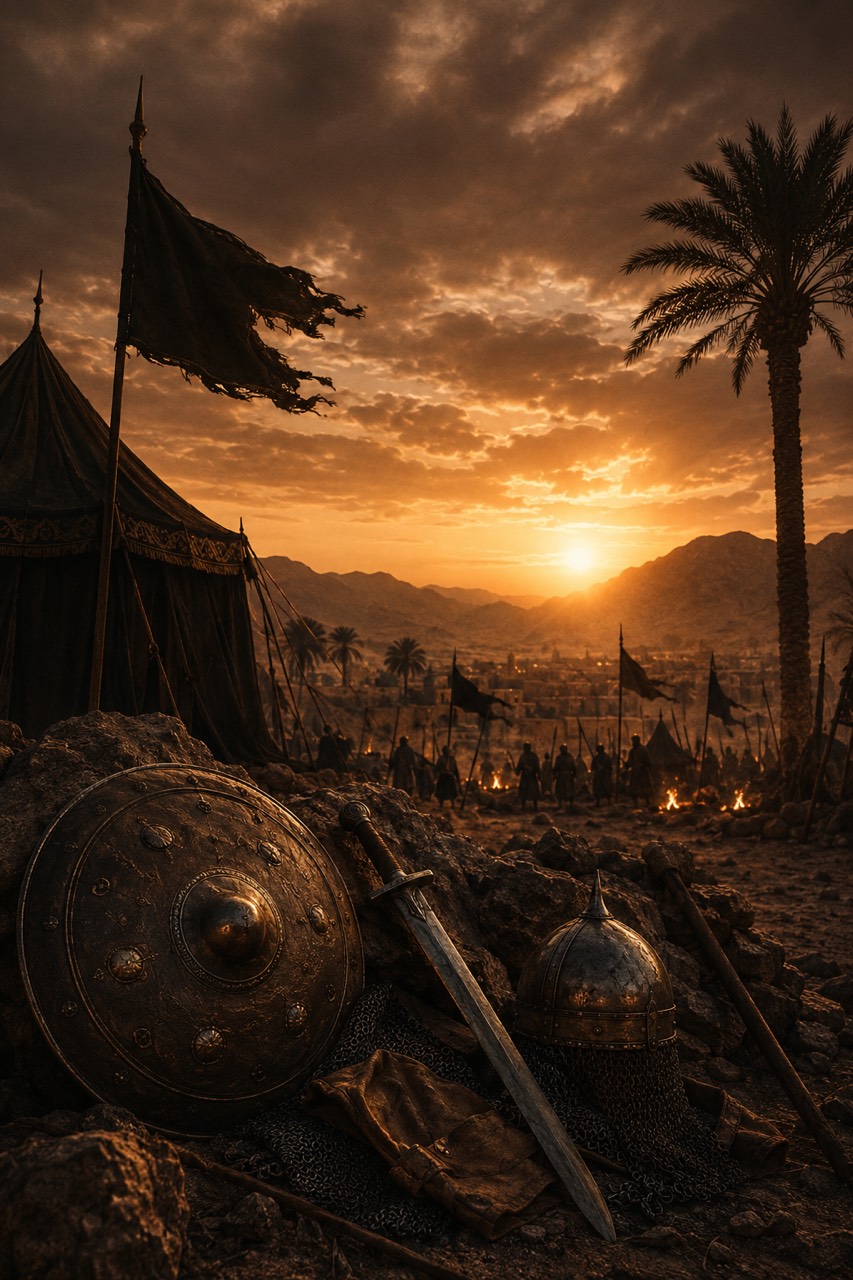
غزوة حَمْراء الأسد الجزء الثاني
تابع إلى غزوة حَمْراء الأسد الجزء الأول الرسول والصحابة معسكرين حول النار في منطقة حمراء الأسد وأرسل الرسول العيون تستطلع أخبار جيش ابو سفيان،،،،، فمرّ بهم رجل اسمه معبد بن أبي معبد الخزاعي وهو ابن أم معبد التي مر بها النبي يوم الهجرة من مكة للمدينة و طلب منها الزاد (الطعام) فلم تبخل عليه ، وقالت لو كان عندنا،، ما بخلنا به عنك،،،، قال وهذه الشاة،،،، قالت إنما خلفها العجز (كبرت)،،،، فاستأذنها الرسول بحلبها فحلبها ابنها المرأة (معبد ) لم يسلم بعد ، ولكنه علم أن هذا صاحب قريش النبي المرسل فلما رأى النبي سلم عليه ،،،،وقال : _ يا محمد لقد عز علينا والله ما أصابك في أصحابك،،،،ولوددنا أن الله أعلى كعبك،،،، وأن المصيبة كانت بغيرك،،، ، فوالله لا أدري ما أقول ،،،فهل من خدمة نؤديها لك ؟؟ فقال له رسول الله :_إن رأيت قريش في طريقك فأخبرهم بخروجنا لقتالهم وبالفعل مضى معبد حتى وصل الى جيش المشركين وكانت قريش في منطقة اسمها الروحاء وركانوا يبعدون عن النبي ك ٤٧ كم لما وصل معبد، كان أبوسفيان يقرر العودة لمهاجمة المدينة بالفعل، وكان صفوان يعارض رأيهم بالرجوع،، وكان صفوان ايضا من زعماء قريش ولكن كانت الأغلبية الساحقة ترى العودة لمهاجمة المدينة، وبالفعل استعد الجيش للعودة ولكن قبل أن يتحرك الجيش وصل اليهم معبد بن أبي معبد وتعمد أن يخاطب ابو سفيان فأستقبله ابو سفيان ،،،فقال :_ هذا معبد وعنده الخبر ، ما وراءك يا معبد ؟ قال :_ورائي ما يسوؤك أبا سفيان قال :_ ويحك ماذا تعني ؟!! (ولم يكن يعلم ابو سفيان ان معبد قلبه وروحه مع رسول الله رغم عدم إسلامه) فقال معبد :_ تركت محمداً وأصحابه قد خرجوا لطلبكم في جمع،،،لم أر مثله قط ،،، يتحرقون عليكم تحرقا،،،، قد اجتمع معه من كان تخلف عنه بالأمس من الأوس والخزرج ، وتعاهدوا على أن لا يرجعوا حتى يلقوكم فيثأروا،،،وغضبوا لقومهم غضبا شديدا،،،،وندموا على ما فعلوا ،،،فيهم من الحنق (الغيظ الشديد) شيء لم أر مثله قط طبعا معبد هوّل وكبّر له الموضوع ،،، قال أبو سفيان: _ ويلك ما تقول ؟ والله لقد أجمعنا الكرة عليهم لنستأصلهم (نحن مجتمعين عشان نرجعلهم ) قال معبد: _ لا تفعل أبا سفيان فإني ناصح،،،، ومما خلع قلبي عندما رأيتهم نظمت لهم شعراً قال ابو سفيان :_ أسمعني ماذا قلت ؟؟ والعرب كان لسانهم ينطق الشعر فوراً ، ولا يحتاجوا لدراسة الشعر اخذ يرتجل شعراً لابي سفيان يهوّل له جيش النبي فقال {معبد (وقد أسلم فيما بعد) قال : "كادت تهد من الأصوات راحلتي،،،، إذ سالت الأرض بالجرد الأبابيل" يعني من صوت السلاح والجيش الذي مع محمد راحلتي كانت رح تسقط على الارض و أنّه لم يرى الارض ولم يرى لونها من كثرة الجيش الذي خرج مع محمد "تردى بأسدٍ كرام لا تنابلةٍ ،،،،، عند اللقاء ولا ميل معازيل" تردى أي تجري خيولهم نحوكم ، كأنهم اسود من سرعتهم وتوحشهم عليكم و أنّهم مدججين بالسلاح " فظُلت عدواً أظن الأرض مائلةً ،،،، لما سموا برئيس غير مخذول" اي اسرعت بالهرب ومن كثر السرعة والخوف منهم وانا هارب اشوف الارض مايلة،،،اي قائدهم محمد على رأسهم غير مخذول الجميع يتبادر لطاعته وأمره " فقلت : ويل أبن حربٍ من لقائكمُ ،،،، إذا تغطمطت البطحاء بالجيل" يعني ويل ابو سفيان (لان ابو سفيان من بني حرب ) اي هذه الصحراء البطحاء، غدا اذا تغطت كلها بالناس والجيش وكأن محمد اخرج لكم جيل جديد لم تعرفه العرب كلها " إني نذير لأهل البسل ضاحية ،،،، لكل ذي إربة منهم ومعقولِ " اي اسرعت لأنذركم (اهل البسل ) وذلك لأنّ قريش هم اهل الحرم " من جيش أحمد لا وخش تنابلة ، وليس يوصف ما أنذرت بالقيل " اياك تفكر يا ابو سفيان كل هذا الوصف اللي ذكرته مبالغة ففزع ابو سفيان وارتجف قلبه قال :_ ويلك اين هم الآن ؟؟ قال:_ والله ما أرى أن ترحل حتى ترى نواصي خيلهم قد أقبلت وبالفعل خارت عزائم قريش وقرروا العودة سريعا الى مكة فهربت قريش وفي الطريق أراد ابو سفيان ان يخوف المسلمين كي لا يلحقوا بهم،،، فمر به ركب من قبيلة عبد القيس يريد المدينة فقال: _هل أنتم مبلغون عني محمداً رسالة، وأوقر لكم راحلتكم هذه زبيبا إذا أتيتم إلى مكة ؟ قالوا: _نعم قال:_ فأبلغوا محمداً أنا قد أجمعنا الكرة ، لنستأصله ونستأصل أصحابه فلما مر ركب عبد القيس بالنبي أخبروه برسالة ابو سفيان أن جيش قريش في الطريق اليهم ليستأصلهم ولكن هذا لم يؤثر في المسلمين، بل زادهم ايمانا وثباتا وتوكلًا على الله تعالى فقال النبي لما سمع ما قالوا :_ حسبنا الله ونعم الوكيل فقال الصحابة من خلفه : _ حسبنا الله ونعم الوكيل فامتدح الله تعالى هذا الموقف الرائع الفريد من المسلمين فقال تعالى {{ الَّذِينَ قَالَ لَهُمُ النَّاسُ إِنَّ النَّاسَ قَدْ جَمَعُواْ لَكُمْ فَاخْشَوْهُمْ فَزَادَهُمْ إِيمَاناً وَقَالُواْ حَسْبُنَا اللّهُ وَنِعْمَ الْوَكِيلُ }} انصراف أبي سفيان ومن معه خائفين وظفر النبي منهم برجل اسمه {{ عزة الشاعر }} الذي وقع اسير في بدر وكان فقير و حرّره الرسول مقابل عهد أن لا يقاتل المسلمين ولا يقول شعرًا يهجوهم ،،،فنقض الشاعر العهد ، وخرج مع قريش لأحد ، وصار يستنفر الناس ويحرضهم على قتاله بأشعاره هرب ابو سفيان مع قريش وتركوه نائم تحت شجرة فأمسك به الصحابة، فلما جيء به للنبي قال: _ يا محمد أقلني وامنن علي ، ودعني لبناتي ، وأعطيك عهدا أن لا أعود لمثل ما فعلت فقال:_ لا والله لا تمسح عارضيك بمكة ، تقول خدعت محمدا مرتين فقتله الصحابة وبقي المسلمون في حمراء الأسد ثلاثة أيام ،،،ثم عادوا الى المدينة وقد حققت هذه الغزوة كل أهدافها التي ارادها الرسول 1. تخويف قريش وتراجعها عن مهاجمة المدينة 2. اعادة بعض الهيبة للدولة الإسلامية بعد أحد 3. رفع الروح المعنوية لجيش المسلمين بعد أحد
The Battle of Hamra’ al-Asad – Part Two The Prophet ﷺ and the Companions camped around their fires at Hamra’ al-Asad, while the Prophet sent scouts to monitor the movements of Abu Sufyan’s army. During this time, a man named Ma’bad ibn Abi Ma’bad al-Khuza’i passed by. He was the son of Umm Ma’bad, the woman whom the Prophet had met during the Hijrah from Makkah to Madinah when he asked her for food. Although she had little to offer, she welcomed him, and the Prophet miraculously milked her old goat. Ma’bad had not yet embraced Islam, but he knew that Muhammad ﷺ was the true Messenger. When he met the Prophet, he greeted him respectfully and said: “By Allah, O Muhammad, we were deeply saddened by what happened to you and your companions. We wished that Allah had granted you victory and that this calamity had never befallen you. Is there anything I can do for you?” The Prophet ﷺ replied: “If you come across Quraysh on your way, tell them that we have marched out to confront them.” Ma’bad continued until he reached the Quraysh army, which had camped at Al-Rawha’, about 47 kilometers away. At that moment, Abu Sufyan was seriously considering turning back to attack Madinah again. Although Safwan ibn Umayyah opposed the idea, most of the Quraysh leaders favored returning to finish off the Muslims. Before they set out, Ma’bad deliberately approached Abu Sufyan. Abu Sufyan welcomed him and said: “Here is Ma’bad. He surely has news. What have you seen, Ma’bad?” Ma’bad replied: “I bring you news that you will not like.” Abu Sufyan asked anxiously: “What do you mean?” Although Ma’bad had not yet accepted Islam, his heart was with the Prophet. He answered: “I have just left Muhammad and his companions. They have marched out in an army the likes of which I have never seen. They are burning with the desire to fight you. Those who stayed behind yesterday have now joined them, and they have sworn not to return until they avenge their fallen companions. Their anger is unlike anything I have ever witnessed.” Ma’bad intentionally exaggerated the strength and determination of the Muslim force. Abu Sufyan exclaimed: “Woe to you! What are you saying? We had already decided to return and wipe them out.” Ma’bad replied: “Do not do it, Abu Sufyan. I am sincerely advising you. What I witnessed shook me so deeply that I even composed verses about them.” Abu Sufyan asked him to recite the poem. As was the custom of the Arabs, Ma’bad improvised poetry on the spot, describing the immense strength of the Muslim army and magnifying its appearance until fear spread through the hearts of Quraysh. The poem terrified Abu Sufyan. He finally asked: “Where are they now?” Ma’bad answered: “By Allah, I do not think you will have time to depart before you see the forelocks of their horses approaching.” Fear quickly overcame Quraysh. Their determination collapsed, and they abandoned the plan of attacking Madinah, choosing instead to hasten back toward Makkah. Before leaving, Abu Sufyan tried one last psychological tactic. He encountered a caravan from the tribe of Abd al-Qays heading to Madinah and said: “Will you deliver a message from me to Muhammad? If you do, I will reward you with a full load of raisins when you reach Makkah.” They agreed. He instructed them to tell the Prophet: “We have gathered our forces once again and are coming to destroy both him and his companions.” When the caravan delivered the message, it did not frighten the Muslims. Instead, it strengthened their faith and reliance upon Allah. The Prophet ﷺ declared: “Allah is sufficient for us, and He is the Best Disposer of affairs.” The Companions repeated: “Allah is sufficient for us, and He is the Best Disposer of affairs.” Allah praised this steadfast response in the Qur’an: “Those to whom people said, ‘The people have gathered against you, so fear them,’ but it only increased them in faith, and they said: ‘Allah is sufficient for us, and He is the Best Disposer of affairs.’” (Qur’an 3:173) As Abu Sufyan and his army fled in fear, the Muslims captured Abu ’Izzah al-Jumahi, a poet who had previously been taken prisoner at Badr. Because of his poverty, the Prophet ﷺ had released him after he pledged not to fight the Muslims again or compose poetry against them. However, he broke his promise, joined Quraysh at Uhud, and used his poetry to incite people against the Muslims. Abu Sufyan fled, leaving Abu ’Izzah asleep beneath a tree, where the Muslims captured him. When he was brought before the Prophet ﷺ, he pleaded: “O Muhammad, forgive me once more. Spare my life for the sake of my daughters, and I promise never to do this again.” The Prophet ﷺ replied: “No, by Allah. You shall not return to Makkah boasting that you deceived Muhammad twice.” He was then executed. The Muslims remained at Hamra’ al-Asad for three days before returning to Madinah. The expedition successfully achieved all of the Prophet’s objectives: * It deterred Quraysh from returning to attack Madinah. * It restored much of the Muslim community’s prestige after Uhud. * It greatly strengthened the morale and confidence of the Muslim army following the battle of Uhud.