
زمان أوّل حوّل / اللهجة الفلسطينية الأردنية
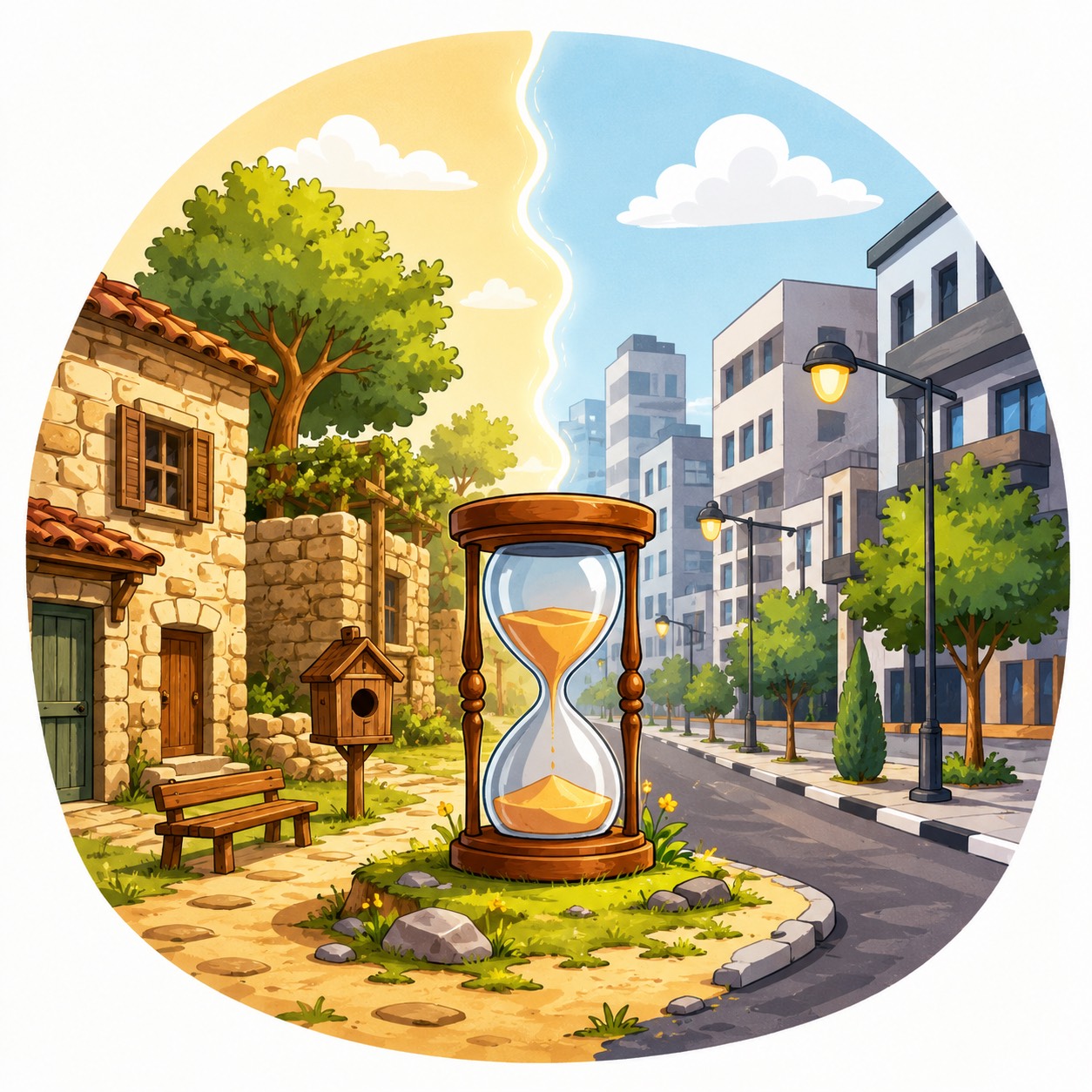
كان في أربع جارات، أم لين، وأم آية، وأم محمد، وأم نور. كل وحدة منهم سكنت بمدينة ثانية، وبعد سنين طويلة، اتفقوا يلتقوا بحارة طفولتهم. أول ما وصلوا، وقفوا قدّام البيوت القديمة. أم لين ابتسمت وقالت: “بتتذكروا هون كنا نلعب الغميضة كل يوم؟” ضحكت أم آية وقالت: “وهون كانت أم أحمد كل يوم العصر تنادي علينا نروّح عالبيت، وإحنا ما نردّ ولا كأنّا سامعين.” وأم محمد أشّرَت على الساحة وقالت: “بتتذكروا لما كانت الحارة كلها كانت تجتمع هون؟ لا موبايلات ولا إنترنت… كنا نقعد بالساعات وما نزهق وكان في حب حقيقي بينا.” و همه قاعدين بيمشو، شافو أغلب البيوت اتغيّرت. في بيوت انهدّت، وفي عمارات طلعت مكانها. حتى الشجرة الكبيرة اللي كانوا يلعبوا تحتها، انقطعت. أم نور وقالت: “حتى الجيران… ما ضل حدا من اللي كنا نعرفهم.” سكتوا شوي وهم بيتطلعوا حواليهم. بعدها أم لين قالت: “شو بدنا نحكي… زمان أوّل حوّل.” ردّت أم آية: “الدنيا بتتغيّر… والناس بتكبر، وكل واحد بروح بطريقه.” ابتسموا وهم يتذكروا أحلى أيام طفولتهم، وأخذوا صورة سوا بنفس المكان اللي كانوا يلعبوا فيه زمان. معنى المثل “زمان أوّل حوّل” بنحكيه لما بنحكي عن الماضي، ونشوف أدّيش تغيّرت الحياة بالأماكن، أو الناس، أو العادات، أو العلاقات. وكمان بنحكي لمّا حد يسألنا ليش تغيّرنا وليش بطلنا متل قبل،،، وهاد جواب بيعني إنّه كلشي تغيّر مش بس أنا. وأنّه الأيام ما بتضل مثل ما هي، وكل وقت إله ناسه وظروفه
“Things Aren’t What They Used to Be” (Palestinian–Jordanian dialect proverb) There were four neighbors—Um Leen, Um Aya, Um Mohammad, and Um Noor. Each of them had moved to a different city, and after many years, they agreed to meet again in the neighborhood where they had grown up. As soon as they arrived, they stood in front of their old houses. Um Leen smiled and said, “Do you remember? We used to play hide-and-seek here every single day.” Um Aya laughed and replied, “And every afternoon, Um Ahmad would stand outside calling us to come home, and we’d pretend we couldn’t hear her.” Um Mohammad pointed toward the old square and said, “Do you remember when the whole neighborhood used to gather here? No smartphones, no internet… We’d sit together for hours without ever getting bored. There was real love and closeness between everyone.” As they continued walking, they noticed how much everything had changed. Some of the old houses had been demolished. Apartment buildings had taken their place. Even the big tree they used to play under was gone. Um Noor sighed and said, “Even the neighbors… none of the people we used to know are still here.” They stood silently for a moment, looking around. Then Um Leen smiled sadly and said, “What can we say… things aren’t what they used to be.” Um Aya nodded and replied, “Life changes… people grow older, and everyone ends up going their own way.” They smiled as they remembered the happiest days of their childhood, then took a photo together in the very place where they had once spent countless hours playing. Meaning of the proverb “Things aren’t what they used to be” is said when we compare the past with the present and notice how much life has changed—whether it’s the places, the people, traditions, or relationships. It’s also used when someone asks why we’ve changed or why we’re no longer the way we used to be. The reply means that it’s not just one person who has changed—everything has changed with time. The proverb reminds us that nothing stays the same forever; every era has its own people, its own circumstances, and its own way of life.