
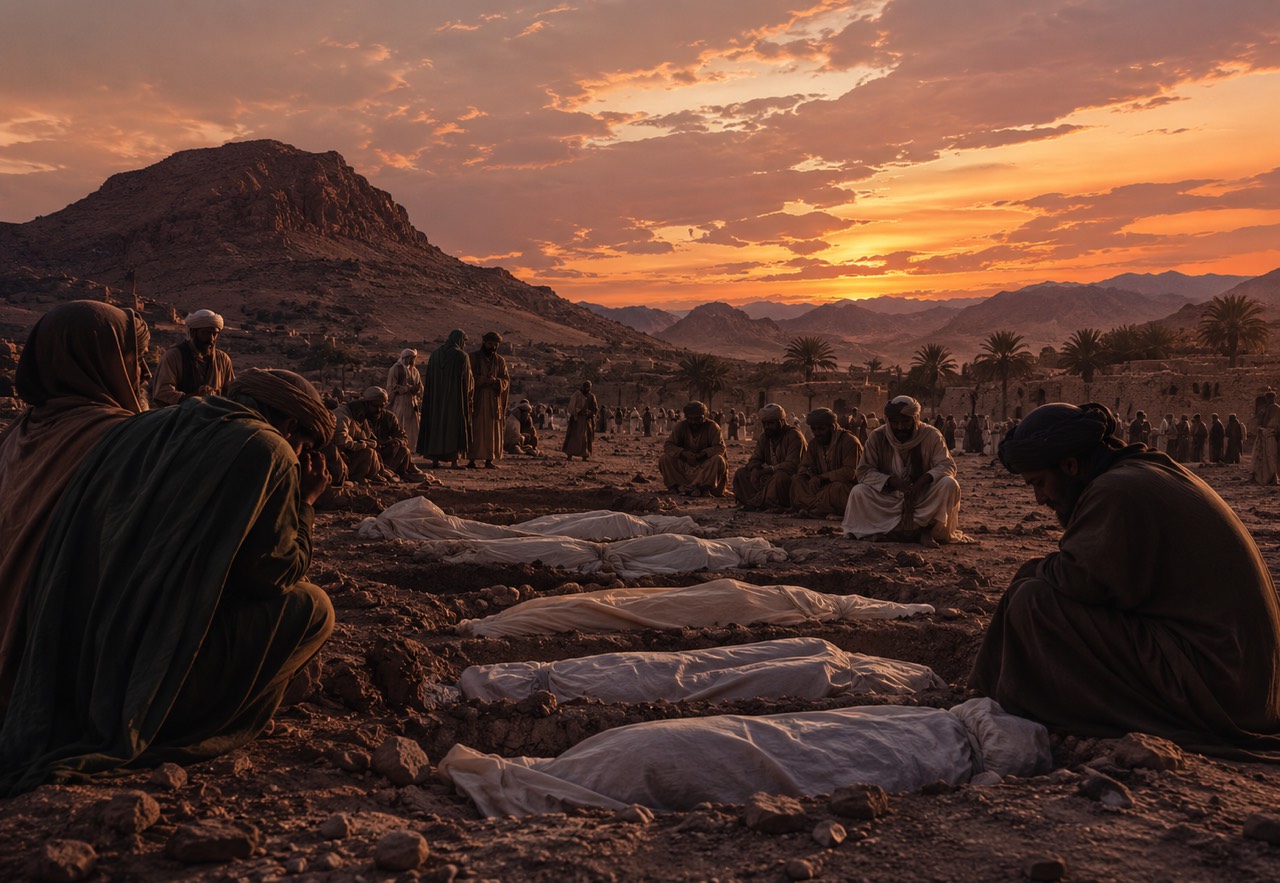
غزوة أُحَد، حُكْم البكاء على الميت
ثم مضى الرسول الى بيته ومرّ ببعض بيوت الأنصار ، فسمع بكاء نساء الأنصار على قتلاهم ، ويذكرون مأثرهم (اي صفاتهم) فبكى وقال : ولكن حمزة لا بواكي له (يعني أنّ حمزة لا يبكي عليه أحد وذلك لأن أكثر قرابته كانوا في مكة) فما أن وصل النبي على باب مسجده،،، فلم يستطع أن ينزل من على فرسه، فأنزلاه السعدان (سعد بن معاذ ( سيد الأوس) و سعد بن عبادة (سيد الخزرج)،،،ثم اتكأ عليهما حتى دخل بيته ثم امر الصحابة جميعاً ان ينطلقوا الى بيوتهم ويداوون جراحهم فأنطلق سعد بن معاذ وجمع نساء الأنصار من بني عبد الاشهل لان سعد هو سيد بني عبد الأشهل قال : والله لا تبكي امرأة منكم قتيلٌ لها حتى تأتوا باب المسجد ، وتبكوا عم رسول الله فذهبت نساء الأنصار الى باب المسجد ، عند بيت النبي وجلسنّ يبكين حمزة عند بيت الرسول فسمع النبي الصوت فقال :_ ما هذا ؟!!! فقيل له :_ إنهن نساء بني عبد الأشهل يارسول الله ، يبكين حمزة بن عبد المطلب ويذكرنّ مأثره فخرج وأستمع إليهن وقال :_ رحم الله الأنصار ، رحم الله ابنائكم ، وخفف عليكن مصابكم ، وأخلف الله عليكن فيها خيراً ، أرجعن الى بيوتكن مأجورات ثم دخل ولكن بقيت النساء يبكين حمزة وأمر النبي أن يؤخّروا صلاة المغرب الى العشاء (جمع تأخير ) حتى يداوون جراحهم ولأن وقت المغرب ضيق ودخل وغلبته عيناه فنام بسبب التعب فما أستيقظ النبي إلا وقد مضى من العشاء وقت طويل فلما أستيقظ، سمع صوت بكاء على باب المسجد قال :_ ماهذا ؟!! قالوا له :_ هذه نساء الأنصار يبكين حمزة بن عبد المطلب قال مستغرباً :_ منذ الليل ؟ !!!! فخرج مسرعاً إليهن وقال :_ كفى .. كفى .. يا نساء بني عبد الأشهل لقد أوجبتنّ ، ولقد واسيتنّ ،،،، ألا إني أعزم عليكن ، وأنا محمد رسول الله ، أن لا تنوحنّ على ميت بعد اليوم (يعني بعد اليوم مافي نواح بالإسلام ) ومن ذلك اليوم لم تبكِ مؤمنة على ميت بندب ونواح فعندما مات ابن النبي ( ابراهيم ) وهو ابن مارية القبطية ( والرسول لم ينجب من ازواجه غير من خديجة ومارية) وكان ابراهيم يشبه أبوه رسول الله كأنه هو،، ففرح به رسول الله كثيراً ، لان بعد هذا العمر رزقه الله ولد يحمل اسمه ، ولكنه مات وعمره ١٧ شهر فحزن عليه وحمله النبي بين يديه عندما فاضت روحه (مات) و جهش النبي بالبكاء فسُمع صوته خارج البيت فقيل :_ يارسول الله ألم تنهنا عن ذلك منذ يوم أُحُد ؟؟ قال :_ ما عن هذا نهيتكم ، إن العين لتدمع ، وان القلب ليحزن وإن على فراقك يا ابراهيم لمحزنون ، وإنا لا نقول إلا مايرضي الرب {{ إنا لله وإنا إليه راجعون }}،،،،إنما نهيتكم (اي يوم احد ) أن يضرب الرجل وجهه او يشق جيبه او يقول في ذلك ما لا يرضي الله فالبكاء على الميت مسموح فهذا أمر من فطرة البشر والرسول يقول :_ البكاء من الرحمة،، ومن لا يَرحم لا يُرحم فالبكاء مسموح والمنهي عنه هو ضرب الوجه ، وشق الثياب، ونطق كلمات لا ترضي الله وقد بكى أيضاً الرسول على ابن بنته عندما توفى فقال له سعد بن عبادة :_ ما هذا يا رسول الله ؟ قال :_ هذه رحمة جعلها الله في قلوب عباده ، وإنما يرحم الله من عباده الرحماء و يجوز للمرأة ان تودع زوجها ، ولا حرج حتى بعد الغسل من أن تودع الزوجة ، زوجها الميت بتقبيله بعد غسله وتكفينه وكذلك يجوز للزوج أن يودع زوجته الميتة كما يجوز تغسيل الرجل زوجته الميتة وكذلك تغسيل المرأة لزوجها الميت ثم صلى النبي بأصحابه المغرب والعشاء جمع تأخير بسبب إرهاقهم الشديد بعد غزوة أُحُد التي حاولت قريش خلالها أن تقتل النبي ولم تستطع كما حاولت أن _تأسر أي أحد من المسلمين ولم تتمكن بل وعلى العكس، انسحبت قريش فورا بعد انتهاء المعركة، ولم تقم في أرض المعركة ثلاثة أيام كما هي عادة الجيوش المنتصرة في ذلك الوقت فبقي المسلمون و دفنوا شهدائهم بأنفسهم بينما لم تتمكن قريش من ذلك في {{ بدر }}
The Battle of Uhud – The Islamic Ruling on Mourning the Dead After the battle, the Prophet ﷺ returned home. As he passed by the houses of the Ansar, he heard their women weeping for those who had been killed, recalling their virtues and noble deeds. The Prophet ﷺ wept and said: “But Hamzah has no one to weep for him.” Hamzah had few relatives in Madinah, as most of his family were still in Makkah. When the Prophet ﷺ reached the entrance of the mosque, he was too weak from his injuries to dismount his horse. Sa’d ibn Mu’adh and Sa’d ibn Ubadah helped him down and supported him until he reached his home. He then instructed the Companions to return to their homes and tend to their wounds. When Sa’d ibn Mu’adh, the leader of Banu Abd al-Ashhal, heard the Prophet’s words, he gathered the women of his tribe and said: “None of you should mourn her own dead until you first go to the Prophet’s house and mourn his uncle, Hamzah.” The women gathered outside the Prophet’s home, weeping for Hamzah and remembering his noble qualities. Hearing their voices, the Prophet ﷺ asked, “What is this?” They replied, “These are the women of Banu Abd al-Ashhal mourning Hamzah.” The Prophet came out, listened to them, and said: “May Allah have mercy on the Ansar. May Allah bless your children, lighten your grief, and replace your loss with something better. Return to your homes, rewarded by Allah.” Although he returned inside, the women continued weeping for Hamzah. Because the Muslims were exhausted and badly wounded, the Prophet ﷺ delayed the Maghrib prayer until Isha, combining the two prayers to give them time to treat their injuries. Exhausted, he fell asleep. When he awoke much later that night, he could still hear the women weeping outside the mosque. Surprised, he asked, “Are they still there?” They replied, “Yes, O Messenger of Allah. They are still mourning Hamzah.” The Prophet ﷺ went out and said: “Enough… enough, O women of Banu Abd al-Ashhal. You have fulfilled your duty and comforted me. I now instruct you, as Muhammad, the Messenger of Allah, that from this day forward you are not to wail over the dead.” From that day onward, Muslim women abandoned the pre-Islamic practice of loud wailing and lamentation. Later, when the Prophet’s young son Ibrahim, born to Maria al-Qibtiyyah, passed away at the age of seventeen months, the Prophet ﷺ held him in his arms as he died and openly wept. Some of the Companions asked, “O Messenger of Allah, did you not forbid this after Uhud?” He replied: “This is not what I forbade. The eyes shed tears, the heart grieves, and we are deeply saddened by your departure, O Ibrahim. But we say only what pleases our Lord: ‘Indeed, we belong to Allah, and to Him we shall return.’ What I forbade was striking the face, tearing one’s clothes, or saying words that displease Allah.” Thus, Islam permits crying over the loss of a loved one, as it is part of human nature. The Prophet ﷺ said: “Weeping is a mercy, and whoever does not show mercy will not be shown mercy.” He also wept when one of his grandsons passed away. Sa’d ibn Ubadah asked, “O Messenger of Allah, what is this?” The Prophet ﷺ replied: “This is mercy that Allah has placed in the hearts of His servants. Allah shows mercy only to those who are merciful.” Islam also permits a wife to bid farewell to her deceased husband, including kissing him after he has been washed and shrouded. Likewise, a husband may bid farewell to his deceased wife. It is also permissible for spouses to wash one another after death. Later that day, the Prophet ﷺ led the Muslims in Maghrib and Isha together as a delayed combination because of their severe exhaustion after the Battle of Uhud. Although Quraysh had come determined to kill the Prophet ﷺ, they failed. They were also unable to capture a single Muslim. Instead, they withdrew immediately after the battle and did not remain on the battlefield for three days, as victorious armies customarily did at that time. The Muslims remained in control of the battlefield, buried their own martyrs, while Quraysh—just as they had failed to recover their dead at Badr—left without doing so.