
أعطيناهم العين، طمعوا بالرموش / اللهجة الفلسطينية الأردنية
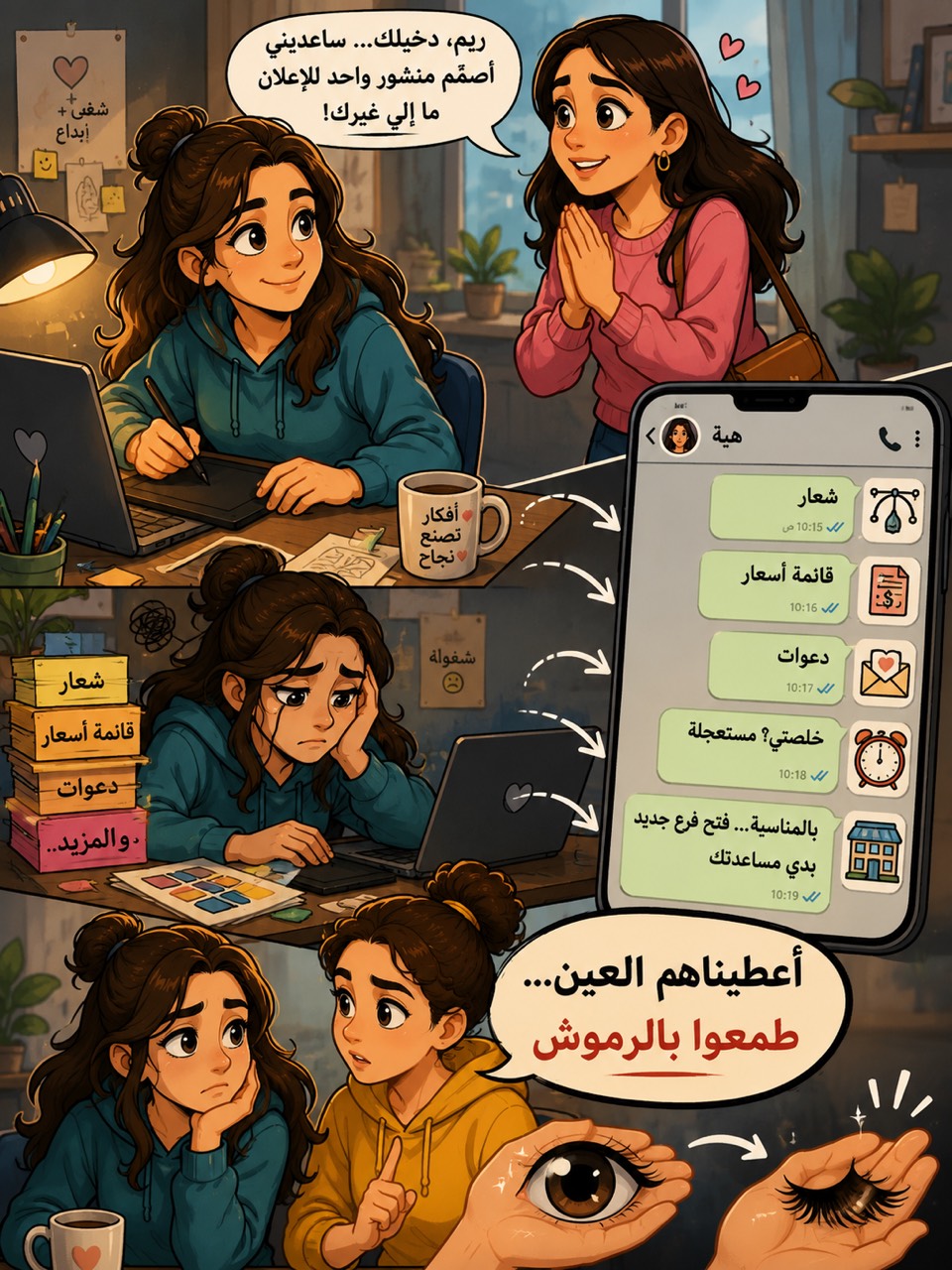
كانت في بنت اسمها ريم، شاطرة بالتصميم، وبتحب تساعد الناس. إجت صاحبتها هبة قبل يوم من فتح مشروعها، وقالتلها: “ريم، دخيلك… ساعديني أصمّم منشور واحد للإعلان. والله مستحية أطلب، بس ما عندي وقت و ما إلي غيرك" ريم سهرت معها، وخلصتلها التصميم. هبة شكرتها كتير وقالت: “والله ما رح أنسى وقفتك معي .” بعد أسبوع، رجعت هبة. “ريم… بتقدري تعمليلي كمان تصميمين؟” ريم وافقت. وبعدها بأيام، صار كل ما يكون عند هبة شغل، تبعته لريم. مرة شعار… ومرة قائمة أسعار… ومرة دعوات… وبعدين صارت تبعتلها رسائل مثل: “خلصتي؟ مستعجلة.” ولا مرة عرضت تدفع، ولا حتى سألت إذا ريم فاضية أو مشغولة. وبعد شهر، رن تلفون ريم. هبة قالت بكل برود: “بالمناسبة… عندي فتح فرع جديد، و بدي تساعديني" ريم ابتسمت وقالت: “هبة… أنا ساعدتك أول مرة لأنك كنتِ محتاجة، وثاني مرة مجاملة… بس شكلك اعتبرتي شغلي مجاني للأبد.” سكتت هبة. بهاللحظة كانت أخت ريم قاعدة جنبها، ولما سكرت التلفون، قالت “أعطيناهم العين… طمعوا بالرموش.” لأن المشكلة ما كانت إنها طلبت مساعدة… المشكلة إنها كل ما أخذت، صارت تطمع بأكثر، وكأن المعروف صار حق إلها. معنى المثل “أعطيناهم العين، طمعوا بالرموش” بنحكيه لما بنساعد شخص أو بنعطيه إشي، بس بيضل يطلب أكثر وأكثر، وكأنه اللي قدمناه إله صار واجب علينا. وهاد المثل بيشبه مثل “سمحناله… دخل بحماره”، بس في فرق بسيط: "سمحناله دخل بحماره” بيركّز على الشخص اللي ما بستحي إذا سمحناله باشي بيصير بده اكتر. أما “أعطيناهم العين، طمعوا بالرموش” فبيركّز أكثر على الطمع؛ شو ما أعطيتهم، بيضلوا بدهم أكثر، وما بيشبعوا
“We Gave Them an Eye, and They Wanted the Eyelashes Too” (Palestinian–Jordanian dialect proverb) There was a young woman named Reem who was talented in graphic design and loved helping people. The day before her friend Hiba was opening her new business, she came to Reem and said, “Reem, please… help me design just one advertisement. I feel bad asking, but I don’t have time, and I have no one else to help me.” Reem stayed up late that night and finished the design for her. Hiba thanked her warmly and said, “I’ll never forget what you’ve done for me.” A week later, Hiba came back. “Reem… could you make two more designs for me?” Reem agreed. A few days later, whenever Hiba needed something, she automatically sent it to Reem. One time it was a logo… Another time it was a price list… Then invitation cards… Soon, Hiba’s messages sounded more like this: “Are you done yet? I need it urgently.” She never once offered to pay, nor did she ask whether Reem was free or busy. A month later, Reem’s phone rang. Hiba casually said, “By the way… I’m opening a second branch, and I need you to help me.” Reem smiled and replied, “Hiba… I helped you the first time because you genuinely needed it, and the second time as a favor. But it seems you’ve started treating my work as if it’s free forever.” Hiba fell silent. At that moment, Reem’s sister was sitting beside her. After Reem hung up, her sister shook her head and said, “We gave them an eye, and they wanted the eyelashes too.” The problem wasn’t that Hiba had asked for help. The problem was that every time she received something, she wanted even more, as if Reem’s kindness had become an obligation instead of a favor. Meaning of the proverb “We gave them an eye, and they wanted the eyelashes too” is said when you help someone or give them something, but instead of appreciating it, they keep asking for more and more, acting as if your kindness has become something you owe them. This proverb is similar to “We let him in, and he brought his donkey with him,” but there’s an important difference: * “We let him in, and he brought his donkey with him” focuses on someone who takes advantage of your generosity and has no shame in asking for even more once you’ve given them permission. * “We gave them an eye, and they wanted the eyelashes too” emphasizes greed and never being satisfied—no matter how much you give, they always want more.