
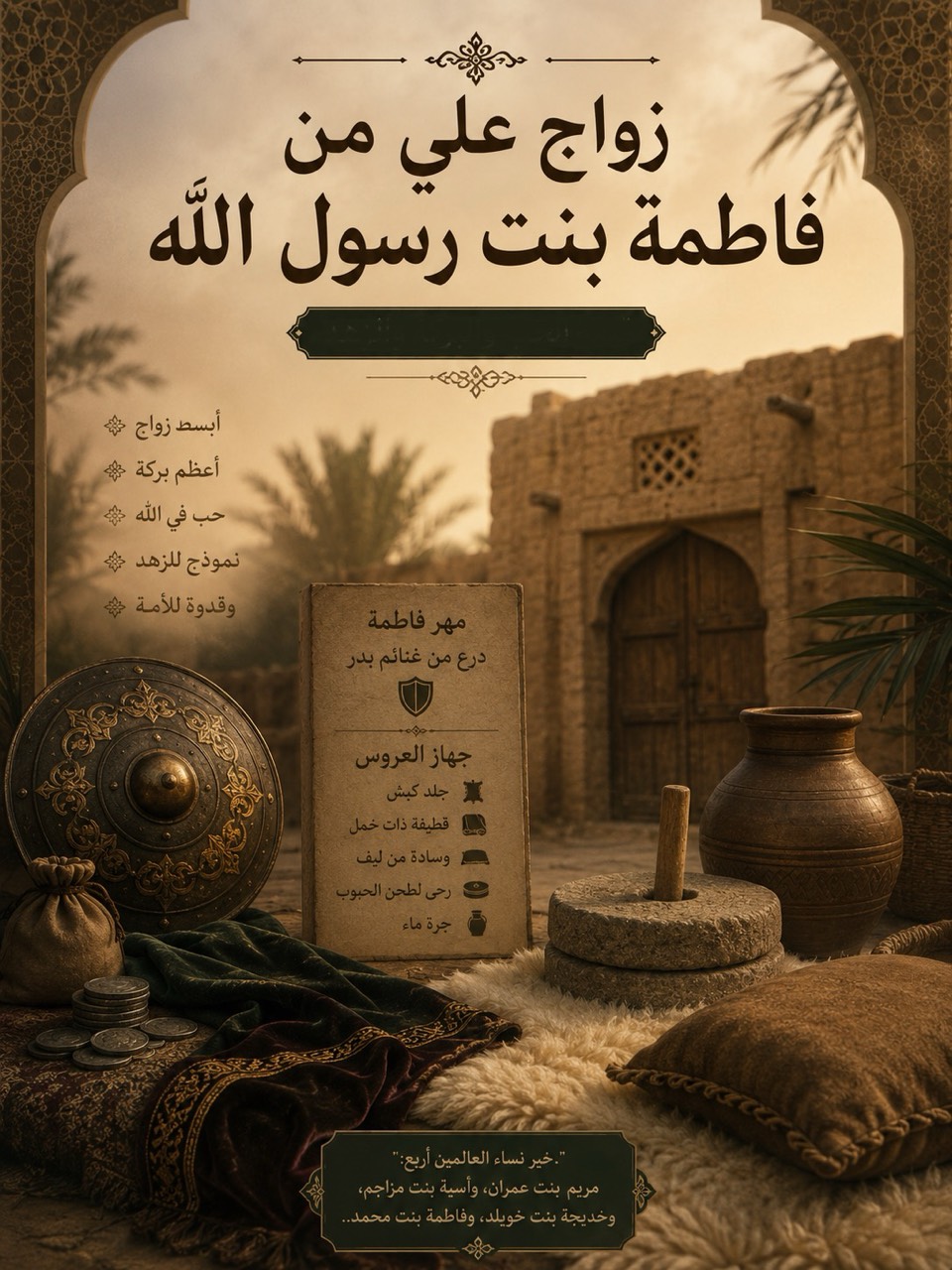
زواج علي من فاطمة بنت رسول الله
فاطمة بنت رسول الله ولدت قبل البعثة (قبل نزول الوحي على رسول الله) بخمس سنين فكان عمر النبي حينها ٣٥ عام عمرها: عند نزول الوحي ٥ سنين ١٣ الدعوة المكية السنة الثانية للهجرة = ١٩ عام كانت أصغر بنات الرسول معروفة بالصدق الشديد تقول عنها السيدة عائشة {{ ما رأيت أحدا كان أصدق لهجة منها إلا أن يكون الذي ولدها (أبوها نبي الله) }} كانت شديدة الحياء لدرجة أنها كانت تخشى أن يصفها الكفن بعد الموت، فطلبت أن يُوْضَع جثمانها بعد موتها في نعش، و كانت أول من استعمل النعش من المسلمين قال رسول الله {{ خير نساء العالمين أربع ، مريم بنت عمران ، وآسية بنت مزاحم امرأة فرعون ، وخديجة بنت خويلد ، وفاطمة بنت محمد }} وقال عنها في الحديث الذي رواه البخاري ومسلم أنها {{ سيدة نساء هذه الأمة }} وكان يقول عنها النبي {{ فاطمة أم أبيها }} لأنها كانت شديدة الرعاية للرسول و لسهر لخدمته وكأنها أمه كانت أشبه الناس خَلقاً وخُلقاً ، بأبيها الرسول عليه السلام في السنة الثانية للهجرة كان عمرها ١٩ عام وكانت أمور المدينة و أحوال المسلمين باطمئنان بعد بدر تقدم ابو بكر الصديق لخطبة بنت النبي فاطمة وكان عمره ٥٢ فسكت النبي و لم يرد على أبي بكر لا بأيجاب ولا برفض فاستأذن ابو بكر وخرج ، ولم يكلم النبي باعادة القول ابداً فذكر ذلك لعمر بن الخطاب قال : خطبت ابنته فاطمة ، ولم يرد علي بشي فقام عمر وتوجه الى النبي وخطب ابنة النبي فاطمة ففعل النبي معه كما فعل مع ابو بكر و لم يرد عليه بشي فذهبا لعلي بن ابي طالب وقالا له :_يا علي لقد خطبنا فاطمة فلم يرد علينا بشيء فقال علي : إذا كان ردكما ، وأنتما شيوخ الصحابة ، فماذا عسى ان يقول لي ؟!! قالا له : انت غيرنا ، أنت منه بمكان قال : وماذا عندي اقدم لبنت رسول الله ؟؟ (يسأل عن مهرها لأنّ علي رضي الله عنه كان فقيرا ) قالوا له : اذكرها ولا عليك (نحن نساعدك) فانطلق علي بن ابي طالب وهو يبلغ من العمر ٢١ سنة فجلس الى النبي على استحياء ، ولم يتكلم إلا انه سلم ... السلام على رسول الله وجلس فنظر اليه النبي وابتسم وقال له : ما حاجة ابن ابي طالب قال : يا رسول الله طلبت فاطمة ، وانا ابن عمها فقال له النبي : اهلاً ومرحباً فسكت علي ولم يزد النبي، على هاتين الكلمتين فجلس علي قليلاً ، ثم استأذن وخرج ، متلعثمً ، لا يعرف كيف يرجع الى أبو بكر و عمر قالا له : ما بك ياعلي ؟!! قال : طلبتها ، فقال اهلاً ومرحباً فقالا : يا أبن ابي طالب واحدة منهما تكفيك من رسول الله ،،،،لقد رَحَّب بك صهراً يقول لك اهلاً ومرحباً فعاد في اليوم الثاني وأخذ يتكلم علي مع سعد بن معاذ على مقربة من النبي حتى يسمعه النبي قال : يا سعد طلبت فاطمة من رسول الله بالأمس فلم يزد على أن قال لي اهلاً ومرحباً فأبتسم سعد وقال له: احدهما تكفيك ،،، لقد ارتضاك صهراً يقول علي : فما راعني إلا ورسول الله يرفع رأسه ويقول : يا علي وماذا عندك لتقدمه لفاطمة (المهر ) فقال علي : بأبي وأمي يارسول الله والله لا أملك شيء فقال له النبي : أين الدرع التي اعطيتك يوم بدر (من الغنائم في بدر درع ) قال : هي عندي قال : أمهرها لفاطمة ؟ قال : هي مهرها فقال عثمان، وانا اشتريتها يارسول الله ب ٤٨٠ درهم وأتى عثمان بالمال و وضعه بين يدي النبي ، واخذ الدرع فأخذ النبي شي من هذا المال بأصابعه وقال : خذ يا بلال ، فأشتري به طيبً للعروس( اي عطر ) ثم أخذ مثلها وقال لأنس بن مالك : اعطيهم لأم سلمة ، وقل له تهيئ جهاز للعروس (أي ما تتجهّز به العروس للانتقال لبيت زوجها من ملابس و زينة) فماذا كان جهاز عرس فاطمة؟ كان جلد كبش وقطيفة ذات خمل (يعني قماش مخمل) ووسادة من جلد محشوة بالليف وحجر رحى لتطحن فاطمة القمح وتخبز وجرة ماء تزوجت فاطمة لأول فتى يعتنق الإسلام علي بن ابي طالب والذي قدر الله له أن يكون نسل النبي منه فقط لا من غيره فسمي {{ جد ال البيت }} رغم قُرب وحب الرسول لأبو بكر وعمر ورغم غناهم ووضعهم المادي الممتاز ،،، زوّجها لعلي رغم فقره قال عمر بن الخطاب يوماً يخطب بالناس: {{ يا عباد الله لا تغالوا بالمهور ، فلو كانت مكرمة في الدنيا وتقوى عند الله عزوجل،،، لكان أولى الناس بها رسول الله فما أصدق امراة من نسائه اكثر من اثنى عشر اوقية ونشا }} وقالت عائشة رضي الله عنها {{ أعظم النساء بركة أيسرهن صداقا }} رواه أحمد و الحاكم والبيهقي ويقول النبي صلى الله عليه وسلم {{إِنَّ مِنْ يُمْنِ الْمَرْأَةِ: تَيْسِيرَ خِطْبَتِهَا، وَتَيْسِيرَ صَدَاقِهَا }} ثم يرفع النبي عليه السلام رأسه فجاء علي والصحابة حوله ينتظرون كلام النبي بالزواج فحمد الله واثنى عليه ثم قال : إني قد زوجت علي بن ابي طالب من فاطمة بنت محمد رسول الله ثم قدم لهم وعاء فيه تمر ضيافة هذا هو العقد الشرعي ١_ الايجاب والقبول ٢_دفع المهر فقال النبي غداً بعد العشاء ان شاء الله فلما كان الغد قبل المغرب، قال لزوجاته: اصّحبنّ فاطمة الى منزل علي ثم قال لعلي : تصلي العشاء معنا وتنطلق لبيتك ولا تحدث شيئاً ، حتى أتيكما فصلى النبي العشاء وبعد العشاء تقدمه علي وانتظر واذا بالرسول يُقْبِل الى بيت الزوجية،، فكانت فاطمة تجلس في جانب على استحياء وعلي في جانب فيقول النبي: يا علي إلي بقدح ماء…فيأتيه بوعاء فيه ماء فيقرأ عليه الرسول شيء من القران ثم قال : اشربا منه وتوضئا بفضلته فشربا وتوضئا فاخذ النبي من وضوئهما بيده ونثر عليهما وقال : اللهم بارك لهما ، وبارك عليهما ، وبارك في نسلهما وارزقهم الكثير الطيب ثم ودّعَهُما وخرج وكانت حجرة فاطمة وعلي ملاصقة لحجرات ازواج النبي فكان اذا خرج من حجراته يريد الصلاة لا سيما صلاة الفجر وقف بباب علي واخذ بطرفي الباب وقال : السلام عليكم اهل البيت ، الصلاة ، الصلاة ولكي تبقى فاطمة تحت ناظريه مضى زواج علي من فاطمة و في يوم من الأيام زار النبي صلى الله عليه وسلم ابنته فاطمة في بيتها يوماً فلما رأى فاطمة، عَلِمَ أن هناك خلاف بينها وبين علي فقال لفاطمة :_ أين ابن عمك ؟؟ فقالت: كان بيني وبينه شيء، فغاضبني فخرج فلم يقِل (لم ينام قيلولة) عندي فخرج صلى الله عليه وسلم مسرعاً وقال لأحد أصحابه :_ انظر أين هو علي ؟ ( يعني ابحث عنه) فجاء فقال: يا رسول الله هو في المسجد نائم فجاء إليه رسول الله قد سقط رداؤه عن جانبه فأصابه التراب (أرض المسجد كانت تُراب) فجلس النبي و اخذ يمسح التراب عنه وهو يقول لعلي قم أبا التراب ، قم أبا التراب فنظر علي فرأي النبي فوق راسه يبتسم في وجهه ،ثم تركه ومضى ففهم الرسالة علي وانطلق ودخل الى بيته واصطلح مع فاطمة
The Marriage of Ali to Fatimah, Daughter of the Messenger of Allah Fatimah, the daughter of the Messenger of Allah, was born five years before the beginning of revelation. At that time, the Prophet was 35 years old. Her age was: * 5 years old when revelation began, * plus 13 years of the Meccan period, * plus 2 years after the Hijrah, making her about 19 years old in the second year after migration. She was the youngest of the Prophet’s daughters and was known for her great truthfulness. Lady Aisha said: “I never saw anyone more truthful in speech than her, except the one who gave birth to her (her father, the Prophet of Allah).” She was extremely modest. It is reported that she feared that a burial shroud might reveal the shape of her body after death, so she requested that her body be placed in a bier (funeral coffin). She was the first Muslim woman to be buried in such a manner. The Messenger of Allah said: “The best women of the worlds are four: Maryam daughter of Imran, Asiyah wife of Pharaoh, Khadijah daughter of Khuwaylid, and Fatimah daughter of Muhammad.” He also described her as: “The leader of the women of this nation.” The Prophet often called her: “Fatimah, the mother of her father,” because of the extraordinary care and affection she showed toward him, almost as if she were his mother. She resembled him more than anyone else in both appearance and character. Abu Bakr and Umar Seek Her Hand In the second year after the Hijrah, when Fatimah was nineteen years old and conditions in Madinah had become more secure after Badr, Abu Bakr sought her hand in marriage. He was then fifty-two years old. The Prophet remained silent, neither accepting nor rejecting the proposal. Abu Bakr sought permission to leave and never repeated the request. Later, he mentioned this to Umar ibn al-Khattab. Umar said: “I proposed to Fatimah, and he did not respond to me.” So Umar also went to the Prophet and asked for Fatimah’s hand in marriage. The Prophet treated him the same way, giving no reply. The two men then approached Ali ibn Abi Talib and said: “We asked for Fatimah’s hand and received no answer.” Ali replied: “If that was the response given to you, the elders among the Companions, what would he say to me?” They answered: “You are different from us. You have a special place with him.” Ali said: “But what do I have to offer the daughter of the Messenger of Allah?” He was referring to the bridal gift (mahr), since he was poor. They encouraged him: “Mention the matter and do not worry. We will help you.” Ali Proposes Ali, who was twenty-one years old, went to the Prophet. He sat shyly before him and remained silent after greeting him. The Prophet smiled and asked: “What does the son of Abu Talib need?” Ali replied: “Messenger of Allah, I seek Fatimah’s hand in marriage. I am her cousin.” The Prophet answered: “Welcome.” Then he remained silent and said nothing more. Ali stayed for a short while, then left, confused and uncertain. When Abu Bakr and Umar saw him, they asked: “What happened?” He answered: “I asked for her hand, and he only said: ‘Welcome.’” They replied: “O son of Abu Talib, one of those words would have been enough. The Messenger of Allah has welcomed you as a son-in-law.” The Dowry The next day Ali was speaking with Sa’d ibn Mu’adh near the Prophet so that he could hear. Ali said: “Yesterday I asked the Messenger of Allah for Fatimah’s hand, and all he said was: ‘Welcome.’” Sa’d smiled and replied: “One of those words is enough. He has accepted you as a son-in-law.” Suddenly, the Prophet raised his head and asked: “Ali, what do you have to offer Fatimah as her dowry?” Ali answered: “May my father and mother be sacrificed for you, Messenger of Allah, I possess nothing.” The Prophet said: “What about the armor I gave you after Badr?” Ali replied: “I still have it.” The Prophet said: “Make it Fatimah’s dowry.” Ali agreed. Uthman then offered to buy the armor for 480 dirhams, brought the money, and took possession of the armor. The Prophet took some of the money and said: “Bilal, buy perfume for the bride.” Then he took another portion and said to Anas ibn Malik: “Give this to Umm Salamah and tell her to prepare the bride’s household items.” Fatimah’s Wedding Furnishings The furnishings prepared for Fatimah were simple: * A sheepskin. * A velvet-covered blanket. * A leather pillow stuffed with palm fibers. * A hand mill for grinding grain. * A water jar. Fatimah married Ali ibn Abi Talib, the first young man to embrace Islam. Through him alone, Allah decreed that the descendants of the Prophet would continue, which is why Ali became known as the forefather of the Prophet’s household. Despite the Prophet’s immense love for Abu Bakr and Umar, and despite their wealth and status, he married Fatimah to Ali, who possessed very little worldly wealth. Simplicity of Marriage Umar ibn al-Khattab once addressed the people: “Do not exaggerate in dowries. If high dowries were a mark of honor in this world and piety before Allah, then the Messenger of Allah would have been most deserving of them. Yet he never gave any of his wives more than twelve uqiyyahs and a nashsh.” Aisha said: “The most blessed women are those whose dowries are the easiest.” The Prophet also said: “Part of a woman’s blessing is the ease of her engagement and the ease of her dowry.” The Marriage Contract The Prophet then raised his head while Ali and the Companions awaited his words. He praised Allah and said: “I have married Ali ibn Abi Talib to Fatimah, daughter of Muhammad, the Messenger of Allah.” He then served dates to those present. The essential elements of the marriage were completed: 1. Offer and acceptance. 2. Payment of the dowry. The Prophet then announced: “Tomorrow after the evening prayer, Allah willing.” The Wedding Night The next day, before sunset, the Prophet told his wives: “Accompany Fatimah to Ali’s house.” Then he said to Ali: “Pray the evening prayer with us and then go home. Do not do anything until I come to you.” After the prayer, Ali went home and waited. The Prophet later came to their house. Fatimah sat shyly on one side, and Ali sat on the other. The Prophet said: “Ali, bring me a vessel of water.” Ali brought it. The Prophet recited verses from the Qur’an over the water and said: “Drink from it and perform ablution with what remains.” They drank and performed ablution. The Prophet then took some of the water with his hands and sprinkled it over them, supplicating: “O Allah, bless them, bless their union, bless their descendants, and provide them with abundant goodness.” He then bade them farewell and left. The Prophet’s Care for Fatimah The home of Ali and Fatimah was next to the apartments of the Prophet’s wives. Whenever he left his home for prayer, especially Fajr, he would stop at their door, hold its sides, and call: “Peace be upon you, People of the Household. Prayer! Prayer!” He liked to keep Fatimah close to him and under his watchful care. “Abu Turab” One day, the Prophet visited Fatimah and sensed there had been a disagreement between her and Ali. He asked: “Where is your cousin?” She replied: “Something happened between us. He became upset and left. He did not rest here today.” The Prophet immediately went out and asked one of his companions: “Find out where Ali is.” The companion returned and said: “Messenger of Allah, he is sleeping in the mosque.” The Prophet went to him and found that his cloak had slipped aside and dust had settled on him, since the mosque floor was made of earth. The Prophet sat beside him and gently brushed the dust away while saying: “Get up, Abu Turab (Father of Dust). Get up, Abu Turab.” Ali opened his eyes and saw the Prophet standing over him, smiling. The Prophet then departed. Ali understood the message, returned home, and reconciled with Fatimah.