
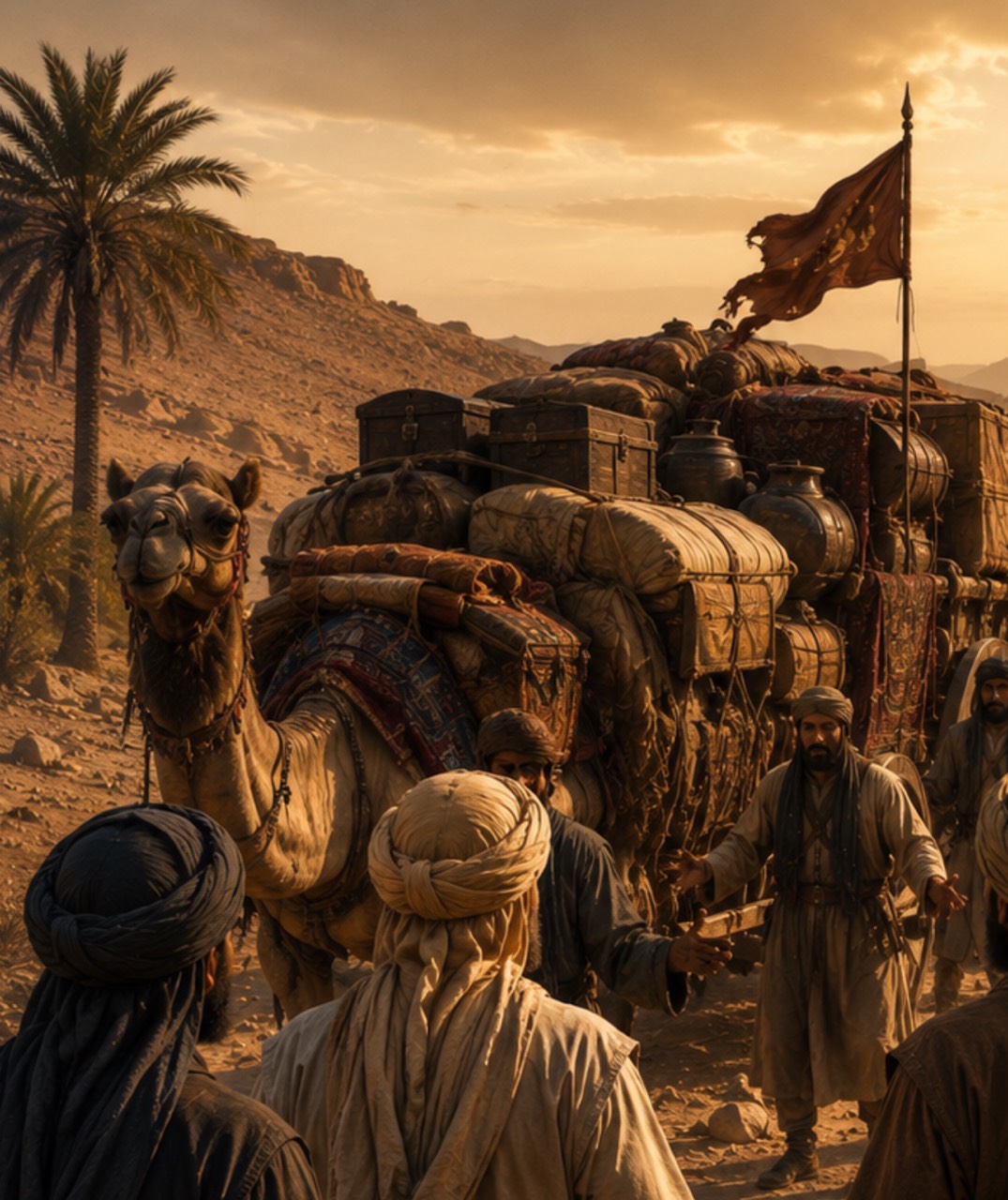
خروج المسلمين لبدر
غزوة بدر تسمى بدر الكبرى وتسمى أم المعارك وتسمى يوم الفرقان… كما سماها الله في القرآن الكريم وبدر هي التي أحقت الحق وأبطلت الباطل ويوم نُصِرَت فيه القلة على الكثرة …فقُلِبَت موازين الكون…، لأن القاعدة الشعبية تقول الكثرة تغلب الشجاعة ولكن صدق الإيمان غلب الكثرة وجعل الكفار يُوَلُّون الأدبار فكان يوم بدر أعظم درس للمسلمين ، في ظل الظروف التي يعيشونها قرر صلى الله عليه وسلم أن يتَرَقَّب قافلة قريش عند عودتها من الشام الى مكة لأن المعلومات التي وصلت النبي صلى الله عليه وسلم أنها قافلة ضخمة، واستيلاء المسلمين عليها يُعتبر ضربة اقتصادية قوية جدا لقريش وعلم أن هذه القافلة تحمل تجارة ضخمة جداً قوامها {{ ألف بعير }} وتُقَدَّر قيمة هذه التجارة {{ بخمسين ألف دينار ذهبية }} كما علم أن الحراسة التي على تلك القافلة حراسة ضعيفة …لا تتناسب مع ضخامتها … وأنها لا تزيد عن سبعين رجل ….وأنها بقيادة سيد قريش ( أبو سفيان ) ومعه أيضاً ( عمرو بن العاص ) وكانت القافلة عند عودتها ، خرجت من الأردن ووصلت بلاد الحجاز وقف صلى الله عليه وسلم ، بين اصحابه وقال لهم :_ هذه عير (قافلة) قريش فيها أموالهم ، فاخرجوا اليها، لعل الله أن يغنمكموها (لعل الله يجعلكم تأخذوها غنيمة) وقال : من كان ظهره (الدابة/ الحصان/ الناقة) حاضرا فليركب معنا (يعني من كانت ناقته أو حصانه جاهزا فليأت معنا) فأصبح بعض الصحابة ، يسأذنون النبي صلى الله عليه وسلم بأن ياتوا بدوابهم (الدابة/ الحصان/ الناقة) من خارج المدينة، فلم يأذن لهم النبي وقال :_لا …إلا من كان ظهره حاضرا (فقد الذي لديه جاهزية) لأن النبي صلى الله عليه وسلم كان متعجلا ويخشى أن تفوته هذه القافلة عند رجوعها من الشام ، فعرف الناس أن الرسول لا يريد قتال لأنها عير لقريش فيها سبعين رجل وكان ممن لم يخرج مع النبي صلى الله عليه وسلم عثمان بن عفان لأن زوجته السيدة رقية( بنت النبي صلى الله عليه وسلم ) كانت مريضة مرضا شديدا، فظل معها عثمان بن عفان حتى يرعاها في مرضها خرج الرسول صلى الله عليه وسلم من المدينة يوم السبت ١٢ رمضان، في السنة الثانية من الهجرة فخرج معه من المهاجرين والأنصار ٣١٣ رجل ولم يكن معهم من الخيل ، إلا اثنان أحدهما للزبير بن العوام (إبن عمة النبي صلى الله عليه وسلم) والثاني للمقداد بن الأسود ولم يكن معهم إلا ٧٠ جمل فكان كل ثلاثة أو أربعة مشتركين على جمل حتى النبي صلى الله عليه وسلم ، كان معه علي بن أبي طالب وزيد بن حارثة (يعني أنّ رسول الله ركب الناقة/الجمل) ثلث الطريق …ومشى ثلثيها ) كان إذا جاء دوره بالمشي يقول له أصحابه : إركب يا رسول الله ونحن نمشي بدلاً عنك فيقول صلى الله عليه وسلم :_ ما أنتما بأقوى مني على المشي ، وما أنا أغنى منكما عن الأجر ، أركب إذا جاءت نوبتي وأمشي إذا جاءت نوبتي فكان صلى الله عليه وسلم مثله مثل أصحابه وهكذا كان أبو بكر ، وعمر ، وعبد الرحمن بن عوف ، يشتركان في بعير واحد والمسافة لبدر تقريبا ١٥٠ كم… يعني النبي صلى الله عليه وسلم و كل صحابي مشي بحدود ١٠٠ كم على قدميه فوق رمال الصحراء الملتهبة حتى وصلوا الى مكان على طرف المدينة اسمه بيوت السقيا وهي آبار عذبة على بعد حوالي كيلو ونصف من المدينة فوقف هناك صلى الله عليه وسلم يستعرض اصحابه ( يعني يشوف من هم الصحابة الذين خرجوا معه؟ كم عددهم؟ وقف هناك ونظر إلى أصحابه فوجد فيهم غلمان (شباب صغار) بالعمر يعني ١٤ _ ١٥ سنة كعبدالله بن عمر و زيد بن ثابت وغيرهم من أبناء الأنصار والمهاجرين فأوقفهم وأرجعهم وكان بين هؤلاء الشباب الصغار شاب اسمه عمير بن ابي الوقاص عمره ١٦ سنة اخو سعد بن ابي وقاص يقول سعد عن اخوه فكان يتوارى( يخفي نفسه ، يتخبه )…فقلت: _مالك يا أخي ؟ فقال:_ اني أخاف أن يراني رسول الله صلى الله عليه وسلم ويستصغرني فَيَرُدَّني (يرجعني إلى المدينة) واني أحب الخروج لعل الله أن يرزقني الشهادة ( وقد نالها كما تمنى ….حيث استشهد في بدر رضي الله عنه ) يقول سعد : فرأى النبي صلى الله عليه وسلم اخي عمير فقال له النبي :_ أرجع يا عمير فأخذ يبكي بكاء شديد ، وارتفع صوته بالبكاء فلما رأه النبي صلى الله عليه وسلم ، بهذا الوضع سمح له بالخروج لأنه وجد فيه جدية ورجولة مبكرة فأرجع صلى الله عليه وسلم الصغار الصبية وإستخلف على المدينة في الصلاة على الناس عبدالله بن أمي مكتوم ( و كان رحلًا كفيفًا أي لا يُبْصِر أو أعمى) ليصلي بالناس …جعله النبي إمام الصحابة في غيابه خمس صلوات وجعل على المدينة من يدير شؤون أهلها الصحابي الجليل أبو لبابة رضي الله عنه وقف النبي صلى الله عليه وسلم يستعرض (يرى) اصحابه ثم قسمهم فرقتين : - ميمنة وعلى رأسها الزبير بن العوام - ميسرة وجعل على رأسها المقداد بن عمرو ثم جعل لهم لوائين - واحد للمهاجرين حمله علي بن ابي طالب - والآخر للأنصار حمله سعد بن معاذ وكان لونهما أسود ثم قال صلى الله عليه وسلم ، لرجل من أصحابه قف واحذر أصحابنا( يعني شوف عددهم ) حتى إذا غاب أحدهم تفقدناه ،،،، أو تَخَلَّف (تأخّر) أحدهم تفقدناه فوقف و عَدَّهم فعدهم فقال يارسول الله عددهم : ثلاثة عشرة وثلاث مائة رجل ( العرب زمان كانت تقدم العدد الصغير على الكبير يعني ٣١٣ ) فلما سمع النبي بهذا الرقم وقف صلى الله عليه وسلم وكّبر وقال : الله أكبر …عِدّة أصحاب طالوت،،، لن يُهزموا ابدا فسُرَ (سَعِدَ) بهذا العدد {{٣١٣ }} صلى الله عليه وسلم قال هذا العدد لا يهزم من هم أصحاب طالوت ؟؟ ذكر الله قصتهم بالقرآن وجاء بالحديث أنه خرج طالوت بسبعين ألف من بني إسرائيل ليقاتلوا عدو الله جالوت ومن معه…. اخبرهم طالوت بأن الله مبتليهم بنهر ( يعني في طريقهم سوف يجدوا نهر .. و حذّرهم من الشرب منه ) فقال لهم طالوت {{ إِنَّ اللَّهَ مُبْتَلِيكُم بِنَهَرٍ فَمَن شَرِبَ مِنْهُ فَلَيْسَ مِنِّي وَمَن لَّمْ يَطْعَمْهُ فَإِنَّهُ مِنِّي إِلَّا مَنِ اغْتَرَفَ غُرْفَةً بِيَدِهِ }} ۚ غرفة بيده ( يعني يبل ريقه شوي و كان هذا أول إمتحان لبني إسرائيل ) فأنظروا ماذا فعل بني اسرائيل؟ شربوا منه جميعا إلا القليل منهم فشربوا منه (ال ٧٠ ألف) إلا قليل إلا القليل و كان عدد الذين اطاعوا كلام الله و طالوت ولم يشربو من النهر {{ ٣١٣ }} فقط من ٧٠ الف .... لذلك عندما سمع النبي صلى الله عليه وسلم ، هذا العدد قال : الله أكبر عدة أصحاب طالوت لن يهزموا أبداً ثم مضى الركب على بركة الله ، ونظر الرسول إلى المدينة و بسط (فَرَدَ أو مدّ) كفيه ودعى لها… وفي ذلك الموقف جعلها حرم قال {{ اللهم إن نبيك إبراهيم قد دعى لمكة وحرم مكة وإني محرم المدينة ، اللهم كما باركت لأهل مكة فبارك لأهل المدينة ضعفي ما باركت لأهل مكة }} ثم دعى لأصحابه ثم مضى على بركة الله ومازال يمشي ويترقب الأخبار حتى وصل إلى الروحاء (وهو موقع لبئر ماء يبعد عن المدينة المنورة ٦٠ كم ) منطقة بئر الروحاء كلها بساتين وفيها موقع ماء ، وعند هذا البئر سيقبض عيسى المسيح عليه السلام عندما ينزل إلى الأرض ويقتل الدجال ويكسر الصليب ، وبعد أن يحج في آخر أيام من عمره فعندما يرجع من مكة بعد حجه ويستريح عند الروحاء فيأتيه ملك الموت هناك ويشيعه المسلمون من بئر الروحاء إلى المدينة حتى يجهز ويدفن في حجرة النبي صلى الله عليه وسلم إلى جانب عمر بن الخطاب لذا يقول النبي صلى الله عليه وسلم لعمر كيف بك يا إبن الخطاب إذا بعثك الله يوم القيامة بين نبيين وصديق… ولا يخلف رسول الله وعده فلما وصل الروحاء وهو يترقب الأخبار، فعلم أن أبا سفيان قد عَلِم بخروجه وأخذ يستنفر قريش لنجدته فقد أخبر يهود المدينة و المنافقين بمساعدة إبن سلول رأس المنافقين ابو سفيان بخطة رسول الله رغم أنّه كان بينهم وبين الرسول عهود. فأرسل أبو سفيان رجل على الفور يستنجد بقريش للدفاع عن أموالهم وليخبرهم بأن محمداً قد يهاجم القافلة ، فإنطلق سريعاً إلى مكة.
The Muslims Set Out for Badr The Battle of Badr is known as Badr al-Kubra (the Great Badr). It is also called the Mother of Battles and the Day of Criterion (Yawm al-Furqan), as Allah named it in the Qur’an. Badr was the battle in which truth was established and falsehood was defeated. It was the day when a small force overcame a much larger one, overturning what people commonly believed—that numbers alone determine victory. Instead, sincere faith triumphed over superior numbers, causing the disbelievers to flee. Badr became one of the greatest lessons for the Muslims amid the circumstances they were facing. The Prophet ﷺ decided to monitor the Quraysh caravan returning from Syria to Makkah. The information that had reached him indicated that it was an enormous caravan, and its capture would deal a major economic blow to Quraysh. He learned that the caravan carried merchandise transported on approximately one thousand camels, with an estimated value of fifty thousand gold dinars. He was also informed that its escort force was relatively small and did not match the caravan’s size, numbering no more than seventy men. The caravan was under the leadership of Abu Sufyan, accompanied by Amr ibn al-As. At the time, it had left the region of Jordan and entered the Hijaz on its return journey. The Prophet ﷺ stood before his companions and said: “This is the caravan of Quraysh carrying their wealth. Go out toward it; perhaps Allah will grant it to you as spoils.” He also said: “Whoever has his mount ready should ride with us.” Some companions asked permission to fetch their animals from outside Madinah, but the Prophet ﷺ did not permit them. He said: “Only those whose mounts are already present.” The Prophet ﷺ was moving quickly because he feared missing the caravan before it reached Makkah. The people understood that he was not expecting a major battle, since it was only a caravan guarded by about seventy men. Among those who did not accompany him was Uthman ibn Affan, because his wife Ruqayyah, the daughter of the Prophet ﷺ, was seriously ill. Uthman remained behind to care for her. The Departure from Madinah The Prophet ﷺ departed from Madinah on Saturday, the 12th of Ramadan, in the second year after the Hijrah. A total of 313 Muhajirun and Ansar accompanied him. They possessed only two horses: * One belonging to Al-Zubayr ibn al-Awwam. * One belonging to Al-Miqdad ibn al-Aswad. They also had only seventy camels, so groups of three or four men shared a single camel. Even the Prophet ﷺ shared a camel with Ali ibn Abi Talib and Zayd ibn Harithah. Each person took turns riding and walking. When it was the Prophet’s turn to walk, his companions would say: “Ride, O Messenger of Allah, and we will walk in your place.” But he would reply: “You are not stronger than I am in walking, nor am I less in need of reward than you. I ride when it is my turn and walk when it is my turn.” Thus, the Prophet ﷺ shared the hardship equally with his companions. Similarly, Abu Bakr, Umar, and Abd al-Rahman ibn Awf shared a single camel. The distance to Badr was about 150 kilometers, meaning that each participant walked a significant portion of the journey across the hot desert sands Reviewing the Army The Muslims reached a place on the outskirts of Madinah called Bi’r al-Suqya, a group of sweet-water wells located about one and a half kilometers from the city. There the Prophet ﷺ reviewed his companions to determine exactly who had joined the expedition. Among them he found several young boys, around fourteen or fifteen years old, including Abdullah ibn Umar, Zayd ibn Thabit, and others from among the Muhajirun and Ansar. He sent them back because they were too young. Among these youths was Umayr ibn Abi Waqqas, the sixteen-year-old brother of Sa’d ibn Abi Waqqas. Sa’d later related: “My brother kept hiding himself.” I asked him: “What is wrong with you?” He replied: “I fear that the Messenger of Allah will see me as too young and send me back. I wish to go forth, hoping that Allah may grant me martyrdom.” The Prophet ﷺ noticed Umayr and initially told him: “Return, O Umayr.” The young man began weeping intensely. When the Prophet ﷺ saw his determination and sincerity, he allowed him to remain. Umayr later achieved the martyrdom he had hoped for at Badr. Organization of the Army The Prophet ﷺ appointed Abdullah ibn Umm Maktum, who was blind, to lead the prayers in Madinah during his absence. He also appointed Abu Lubabah to oversee the affairs of the city. The Prophet ﷺ then organized the army into two wings: * Right wing: commanded by Al-Zubayr ibn al-Awwam. * Left wing: commanded by Al-Miqdad ibn Amr. He also assigned two black banners: * One for the Muhajirun, carried by Ali ibn Abi Talib. * One for the Ansar, carried by Sa’d ibn Mu’adh. He then instructed one of his companions to count the men carefully so that anyone missing or delayed could be identified. The count was completed. The companion reported: “O Messenger of Allah, they number three hundred and thirteen men.” When the Prophet ﷺ heard this number, he proclaimed: “Allahu Akbar! The number of Talut’s companions. They will never be defeated.” He was pleased by the number 313. The Companions of Talut The Prophet ﷺ was referring to the story mentioned in the Qur’an concerning Talut (Saul). According to the Qur’an, Talut led the Children of Israel against Jalut (Goliath). Along the way, Allah tested them with a river. Talut told them: “Indeed, Allah will test you with a river. Whoever drinks from it is not of me, and whoever does not taste it is of me, except one who takes a handful with his hand.” (Qur’an 2:249) Most of them drank from the river despite the command. Only a small group remained obedient. The narration referenced in the text states that the number of those who remained steadfast was 313, and for this reason the Prophet ﷺ rejoiced when he heard that his own force numbered the same. The Prayer for Madinah The army then proceeded onward. The Prophet ﷺ turned toward Madinah, raised his hands, and prayed for the city. He said: “O Allah, Your Prophet Ibrahim prayed for Makkah and declared it sacred. I declare Madinah sacred. O Allah, as You blessed the people of Makkah, then bless the people of Madinah with twice that blessing.” He prayed for his companions and continued on his journey. News of Abu Sufyan The Muslims continued advancing while monitoring developments. When they reached Al-Rawha’, approximately sixty kilometers from Madinah, the Prophet ﷺ received important news. He learned that Abu Sufyan had discovered the Muslims’ movements and had begun calling upon Quraysh for assistance. According to the account, information about the Prophet’s plans had reached Abu Sufyan through contacts connected to some of the Jews of Madinah and the hypocrites led by Abdullah ibn Ubayy. Realizing the danger facing the caravan, Abu Sufyan immediately dispatched a messenger to Makkah, urgently calling upon Quraysh to come and defend their wealth and caravan from a possible Muslim interception.