
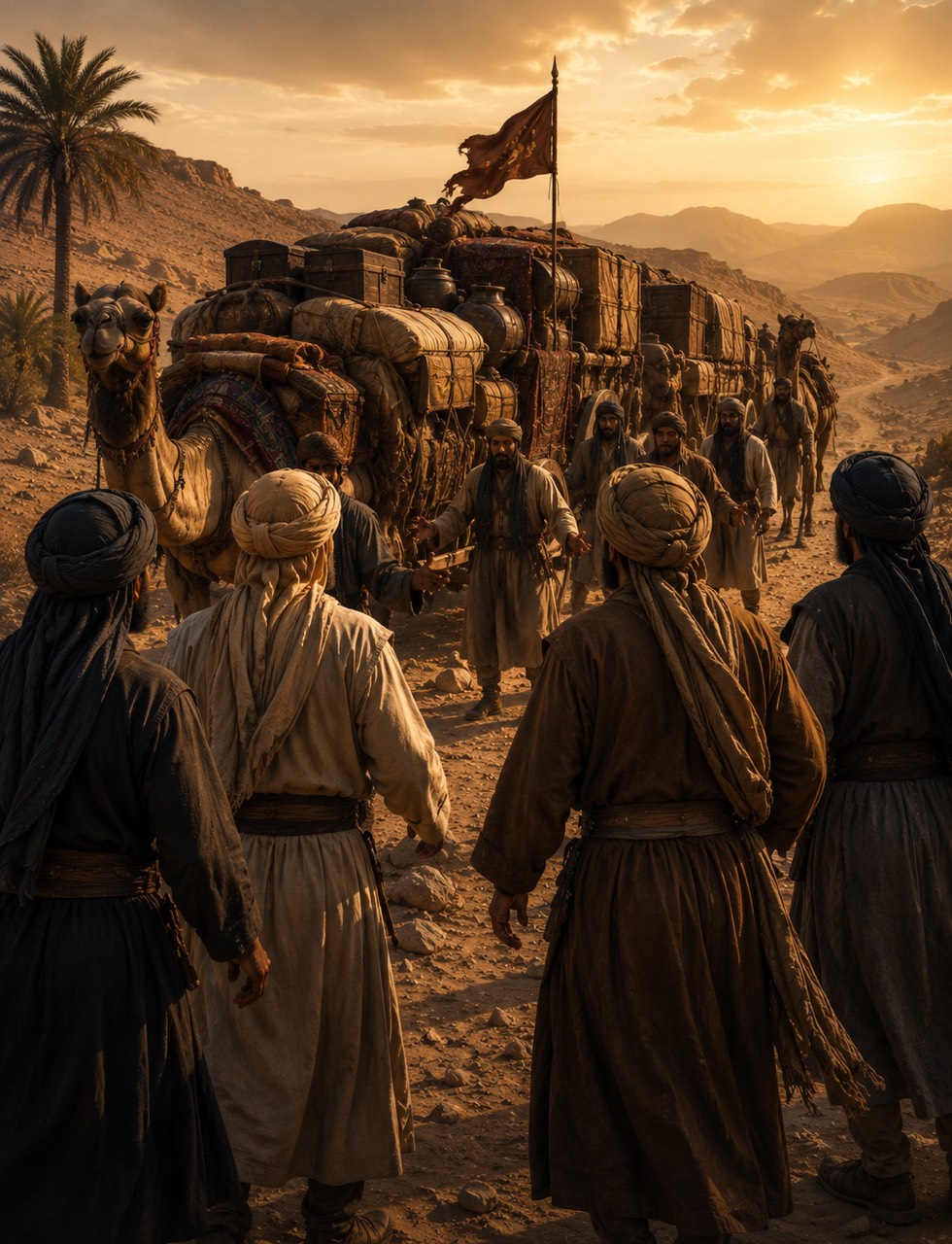
مقدمة غزوة بدر الكبرى الجزء الأول
عقد صلى الله عليه وسلم سَرِيّة …وهي آخر السرايا ..وهي مقدمة لغزوة بدر الكبرى بعد الهجرة (إلى المدينة المنورة (يثرب) بحوالي سنة و سبعة أشهر، إستعد صلى الله عليه وسلم لمواجهة قريش كلها في غزوة بدر الكبرى لأن قريش أخرجتهم بالقوة ،،، و لِعِلْم النبي صلى الله عليه وسلم أن قريش لا تتأدب و لا ترجع عن ظلمها إلا بالقوة .. وهكذا أمرهم الله وبرمج لهم {{ وأعدوا لهم ما استطعتم من قوة }} وكانت سرية عبدالله بن جحش رضي الله عنه (ابن عمة النبي صلى الله عليه وسلم ) مقدمة لغزوة بدر ففي رجب، قبل رمضان الثاني، عقد صلى الله عليه وسلم لواءًا من ثمانية رجال….وكان أميرهم عبدالله بن جحش ولم يضع لهم صلى الله عليه وسلم الجهة، لأنها بدأت طوالع (بدايات) الجد الآن فقال عليه السلام لعبدالله بن جحش: امضِ في هذه السَرِيّة وهذا كتابي ( حيث أمرّ عليه السلام كاتبًا أن يكتب له،،، وأغلق الكتاب ،،،والصحابة مؤتمنون) وقال لعبد الله بن جحش :_ تسير من المدينة يومين ، لا تفتح الكتاب ….حتى إذا قطعت السير يومين عن المدينة ، إفتح الكتاب وأنظر أمري فيه و ذاك حتى لا تعلم قريش، فعدد السرية قليل وقد شاع نفاق المنافقين وأصبح اليهود يتعاطفون مع قريش مضى عبدالله بن جحش مع ثمانية رجال هو واحد وأصحابه سبعة = ثمانية رجال حتى إذا خرج من المدينة بإتجاه مكة ومضى يومين، فتح كتاب رسول الله صلى الله عليه وسلم .. وإذا به مكتوب إذا قرأت كتابي ونظرت ما فيه، فإنزل نخلة ( وهي منطقة على أطراف مكة …يعني منطقة قريبة من مكة) فإنزل نخلة وارقب (راقب) لي قريش ، وأعلم لي أخبارها والسبب لأنه كانت قد خرجت تجارة عظيمة لقريش ، ما من قريشي رجل أو إمرأة يملك درهم وما فوق إلا ساهم في هذه التجارة قال :_ إمضِ إلى نخلة( منطقة نخلة)، ولا ترُغم (لا تجبر) أحد من أصحابك على ذلك…. و خَيِّرْهم بالمضي معك أو الرجوع إلى المدينة فلما قرأ عبدالله كتاب النبي صلى الله عليه وسلم قال :_سمعاً وطاعة يا رسول الله ثم قرأ الكتاب على أصحابه وقال :_ رسول الله يُخَيِّرُكم.. وليس أنا فمن شاء فليمضي معي …ومن شاء فليرجع فقالوا جميعهم :_ نمضي لأمر رسول الله صلى الله عليه وسلم ومضوا وكانوا في الطريق كل إثنان معهم بعير (ناقة/جمل) أي أنّه كان معهم أربعة جمال فقط فكان سعد بن أبي وقاص ورجل آخر ، يركبون بعير واحد وفي ذات ليلة أضاعوا البعير فلما ذهبا يبحثان عن البعير أضاعوا الركب (الجماعة)، فضاعت البعير …و ضَلّوا طريقهم عن عبدالله بن جحش ومن معه فمضى عبدالله بن جحش ومن بقي معه (بقي معه خمسة هو السادس ) ستة رجال مضى عبدالله ، يُنَفِذُ أمر رسول الله صلى الله عليه وسلم ونزل نخلة فكانت قافلة لقريش،،،قادمة من اليمن وطريقها من نخلة ،،،فجاءت القافلة فيها الخير الكثير ، ورجالها قليل والسبب لان اليمن قريبة لا تحتاج لجيش يحرسها وكان أمير هذه التجارة رجل من قريش إسمهعمرو بن الحضرمي فلما وصلت التجارة، نظر الصحابة و تَحَيَّروا (احتاروا) قالوا :_ هذه تجارة لقريش ،،،ورسول الله أمرنا أن نرقب ولم يأمرنا بقتال ماذا نفعل ؟!!!! هل نهاجمها ونأخذها ؟؟ فأموالنا فيها أم نرقب أخبار قريش فقط ولا نحدث ؟؟ ثم قالوا :_أين نحن من رجب ؟؟؟ فكانت الليلة الأخيرة من رجب .. ورجب من الأشهر الحرام،،، والعرب تخاف القتال في الأشهر الحرم فإجتهدوا هل غداً شعبان أم تتمت (تكملة) رجب ؟ فراقبوا الهلال ، فغَمَّ عليهم (لم يظهر الهلال في السماء) لأن الطقس كان غائماً وماطراً فكان الموسم شتاء فغَمَّ عليهم من الغيوم فلم يعلموا هل الليلة آخر يوم في رجب ؟ أم أنه أول يوم في شعبان ؟؟ والعرب لم تكن تضع التقويم بالشهر …كانوا يراقبون الهلال… إما الشهر القمري يكون 29 أو 30 يوم فإجتهدوا ، وقالوا أنه آخر رجب قالوا :_ إذاً لا بأس أن نغزو القافلة وكان عدد رجال قريش في القافلة ستة رجال فقط وعدد الصحابة ايضا ستة رجال وسبحان من أضل عنهم ، سعد وصاحبه حتى لا يقولوا الكثرة تغلب الشجاعة فكان ستة مقابل ستة قاتلهم الصحابة، فهرب إثنان وأسروا منهم إثنان وأخذوا القافلة بما فيها فكانت أول غنيمة للمسلمين من قريش واستطلعوا الاخبار فعرفوا ان هناك قافلة لقريش ستأتي من الشام ، وهي في طريقها لمكة قد تصل في رمضان أو نهاية شعبان ، هكذا الناس يتحدثون وبما انها قادمة من الشام لا بد لها ، ان تمر من اطراف المدينة المنورة فرجع الصحابة ، للمدينة وعددهم ستة رجال واعتقدوا ان سعد بن ابي وقاص وصاحبه ، قد أسرتهم قريش رجعوا وأخبروا النبي صلى الله عليه وسلم بخبرهم وأحضروا العير معهم التي أخذوها غنيمة سألهم النبي صلى الله عليه وسلم أقاتلتموهم في رجب أم قاتلتموهم في شعبان ؟ (يتأكد منهم رسول الله أنهم لم يقاتلوهم في الأشهر الحرم) فتبين أن اليوم الذي قاتلوهم فيه آخر يوم في رجب (يعني حصل القتال في يوم رجب من الأشهر الحرم) فغضب النبي صلى الله عليه وسلم وأوقف العير بما فيها ، لا يأخذ منها درهما واحد وأمسك بالأسيرين يتبع الجزء الثاني …..
The Prelude to the Battle of Badr (Part One) The Prophet ﷺ organized another military expedition (sariyyah)—the last of the expeditions before the Battle of Badr—and it served as a direct prelude to the great battle. About one year and seven months after the Hijrah (migration to Madinah/Yathrib), the Prophet ﷺ began preparing to confront Quraysh in the Battle of Badr. Quraysh had driven the Muslims out of Makkah by force, and the Prophet ﷺ knew that they would not abandon their oppression except through strength. This was in accordance with Allah’s command: “And prepare against them whatever force you can.” The Expedition of Abdullah ibn Jahsh The expedition of Abdullah ibn Jahsh رضي الله عنه (the son of the Prophet’s maternal aunt) was the immediate precursor to Badr. In the month of Rajab, before the second Ramadan after the Hijrah, the Prophet ﷺ appointed a force of eight men, placing Abdullah ibn Jahsh in command. This time, the Prophet ﷺ did not reveal their destination at the outset, as matters were becoming more serious. He gave Abdullah ibn Jahsh a sealed letter and said: “Proceed on this expedition with my letter. Travel for two days from Madinah without opening it. After you have journeyed for two days, open the letter and carry out the instructions contained within.” This secrecy was intended to prevent Quraysh from learning of the mission, since the expedition was small, hypocrisy had become more widespread in Madinah, and some Jews had begun sympathizing with Quraysh. The Sealed Letter Abdullah ibn Jahsh set out with seven companions, making a total of eight men. After traveling for two days toward Makkah, he opened the Prophet’s letter. It read: “When you have read this letter, proceed to Nakhlah and observe Quraysh for me. Bring me information about them.” Nakhlah was an area near Makkah. The reason for this mission was that a major Quraysh trading caravan had recently departed. Nearly every Qurayshi man or woman possessing even a single dirham had invested in it. The Prophet ﷺ further instructed: “Go to Nakhlah, but do not compel any of your companions to continue. Give them the choice of accompanying you or returning to Madinah.” When Abdullah read the letter, he said: “I hear and obey, O Messenger of Allah.” He then read the letter to his companions and told them: “It is the Messenger of Allah who gives you the choice, not I. Whoever wishes may continue with me, and whoever wishes may return.” All of them responded: “We will continue in obedience to the Messenger of Allah ﷺ.” Two Companions Become Separated The group possessed only four camels, with two men sharing each camel. Sa’d ibn Abi Waqqas and another companion shared one camel. One night, the camel wandered away. When they went searching for it, they lost contact with the main group and became separated from Abdullah ibn Jahsh and the others. Thus Abdullah continued with only six men in total, including himself. Arrival at Nakhlah Abdullah ibn Jahsh carried out the Prophet’s instructions and settled at Nakhlah. While there, a Quraysh caravan arrived from Yemen, passing through the area. The caravan carried considerable wealth but was lightly guarded because Yemen was relatively close and did not require a large escort force. The caravan’s leader was Amr ibn al-Hadrami, a member of Quraysh. The Companions Deliberate When the Muslims saw the caravan, they became uncertain. They said: “This is a Quraysh caravan, but the Messenger of Allah instructed us to observe, not to fight. What should we do? Should we attack and seize it, since our own wealth is among its goods? Or should we simply observe Quraysh as instructed?” Then another concern arose. It was the last night of Rajab, one of the sacred months during which warfare was traditionally forbidden among the Arabs. They debated whether the next day would be Sha‘ban or merely the completion of Rajab. They searched for the new moon, but clouds and rain obscured the sky. Since it was winter, they could not determine whether Rajab had ended. At that time, people did not use fixed calendars. Months were determined by moon sightings and could last either 29 or 30 days. The Decision After making their best judgment, they concluded that Rajab had ended. They said: “In that case, there is no harm in attacking the caravan.” The Quraysh caravan had only six men, while the Muslims also numbered six men. The narrator remarks that Sa’d and his companion happened to be absent, so no one could claim that numerical superiority decided the outcome. It was six against six. The Caravan Is Seized The Muslims attacked. Two of the Quraysh men escaped. Two were captured. The caravan and all its goods were seized. This became the first booty obtained by the Muslims from Quraysh. The Muslims also gathered intelligence and learned that another major Quraysh caravan was expected to return from Syria to Makkah, likely arriving during Sha‘ban or Ramadan. Since any caravan coming from Syria would have to pass near Madinah, this information would soon become very important. Return to Madinah The six companions returned to Madinah, believing that Sa’d ibn Abi Waqqas and his companion had been captured by Quraysh. They informed the Prophet ﷺ about what had occurred and brought the captured caravan with them. The Prophet ﷺ immediately asked: “Did you fight them during Rajab, or during Sha‘ban?” He wished to verify whether combat had taken place during one of the sacred months. It became clear that the encounter had indeed occurred on the last day of Rajab. When he learned this, the Prophet ﷺ was displeased. He suspended all action regarding the caravan and refused to take even a single dirham from its contents. He also held the prisoners in custody. To be continued in Part Two…