
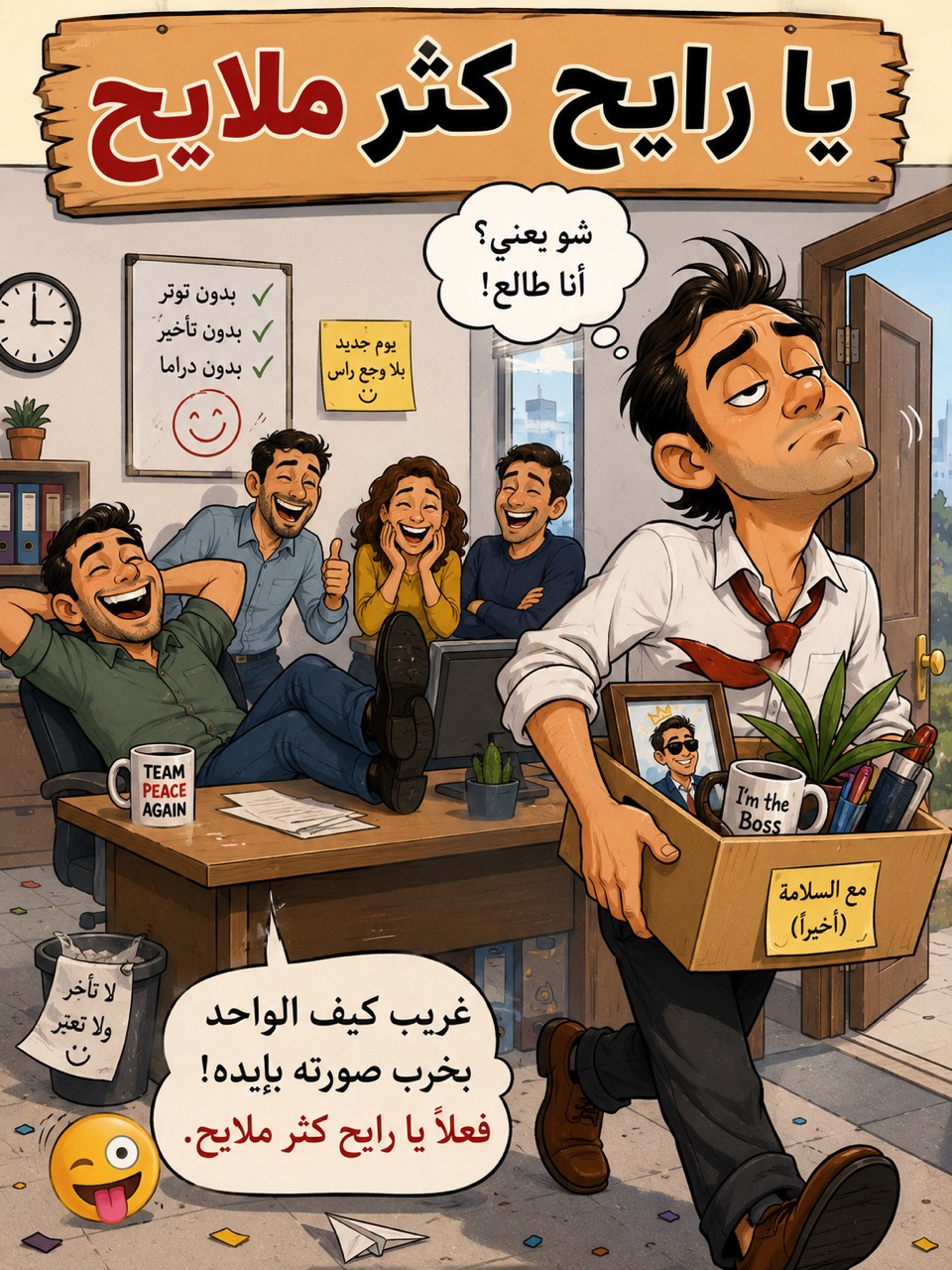
يا رايح،،،كثّر ملايح/اللهجة الفلسطينية
كان في موظف اسمه فادي، اشتغل بالشركة خمس سنين. الكل كان يحبه، لأنه خفيف دم ومحترم. لما لقى شغل جديد براتب أعلى، قرر يترك. الناس توقعوا إنه يعمل عزيمة صغيرة أو يودّعهم بذوق. بس فجأة، آخر أسبوع إله بالشغل انقلب شخص ثاني. صار يتأخر، ويرد بوقاحة: “شو يعني؟ أصلًا أنا طالع.” وإذا حدا طلب منه شغلة، يحكي: “دبّروا حالكم.” حتى الملفات تركها مخربطة بدون ما يشرح لحدا. بآخر يوم، كان متوقع الكل يودعه بحرارة. بس الغريب؟ ولا حدا اهتم فيه. أخذ أغراضه وطلع، والموظفين أول ما سكر الباب إرتاحو منه. واحد منهم قال: “غريب كيف الواحد ممكن يخرب صورته بإيده. فعلًا يا رايح كثّر ملايح.” المثل هاد بينحكى لمّا شخص يكون بده يترك مكان ويبعد.. وبدل ما يعمل مواقف طيبة ومنيحة عشان الناس تذكره بالخير، صار يعمل مواقف ناقصة وسيئة للناس.
As you leave, leave behind good deeds (Palestinian dialect) There was an employee named Fadi who had worked at a company for five years. Everyone liked him because he was friendly, easygoing, and respectful. When he found a new job with a higher salary, he decided to leave. People expected him to organize a small farewell gathering or at least say goodbye politely. But suddenly, during his last week at work, he became a completely different person. He started showing up late and responding rudely: “So what? I’m leaving anyway.” And whenever someone asked him for help, he would say: “Figure it out yourselves.” He even left his files disorganized without explaining anything to anyone. On his last day, he expected everyone to give him a warm farewell. But strangely enough… Nobody seemed to care. He packed up his things and left, and the moment the door closed behind him, the employees felt relieved. One of them said: “It’s strange how a person can ruin their own reputation with their own hands. Truly, as you leave, leave behind good deeds.” This proverb is used when someone is about to leave a place or move on, and instead of leaving people with good memories and kind impressions, they create unnecessary problems and bad experiences. The saying reminds people to leave on good terms so that others will remember them fondly after they are gone.