
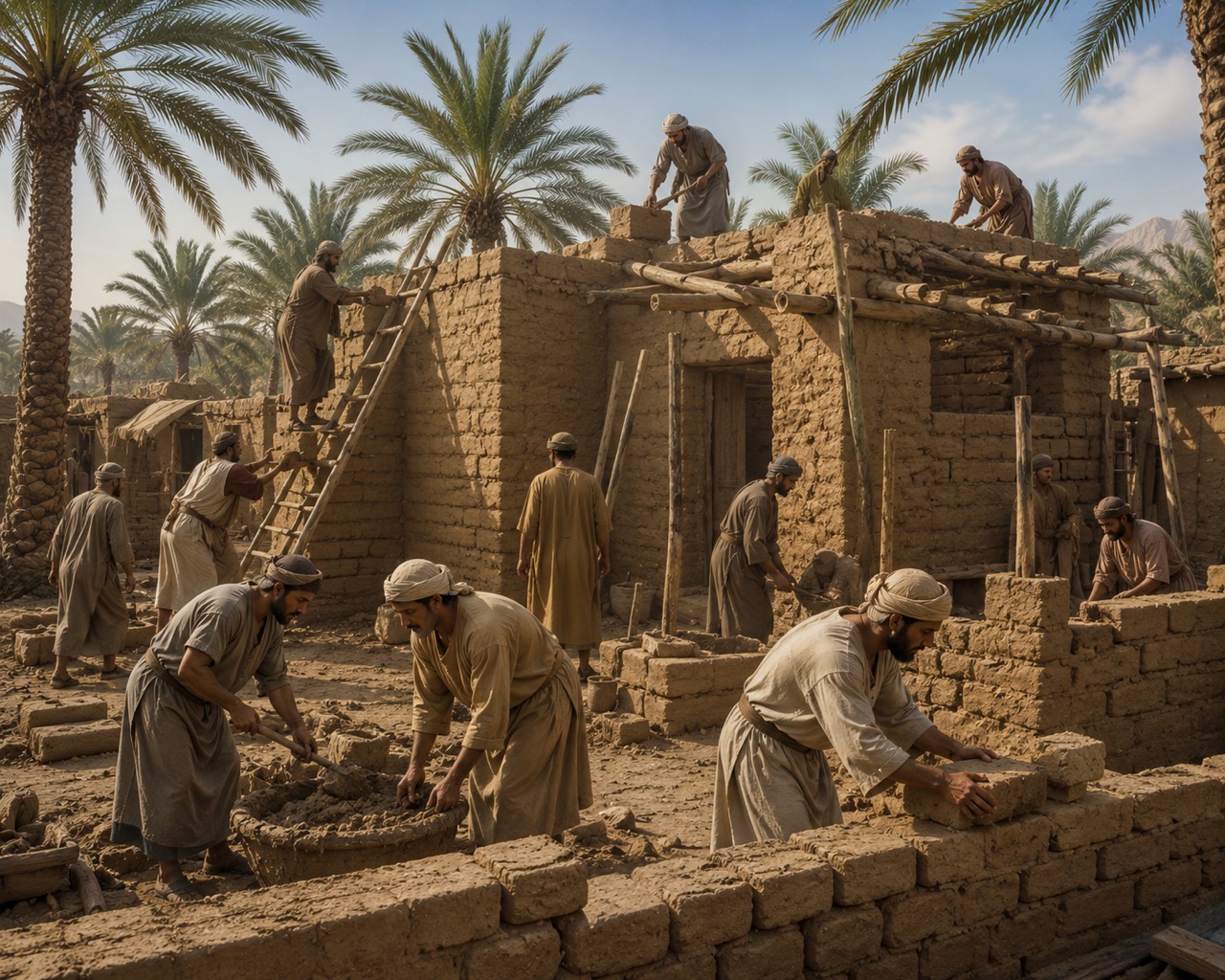
بناء المسجد النبوي
ماذا فعل رسول الله في اليوم الأول من وصوله إلى المدينة المنورة بعد أن إستراح من عناء السفر؟ أهل المدينة كانوا أقسام: - مؤمنين صادقين - منافقين بالخفاء - يهود( ثلاث قبائل من اليهود تسكن المدينة: قينقاع وقريظة والنضير ) الكل ينتظر ماذا سوف يفعل رسول الله عليه السلام عندما هاجر إلى المدينة فالبعض يتوقع أن يجهز جيش لغزو مكة والبعض يتوقع أن يخرج ويعلن خطاب العرش ويعلن سياسة الدولة والبعض يتوقع أن تصدر التعينات مين رئيس الوزراء مين نائبه إذا غاب الجميع يتسائل ما هو أول عمل سيقوم به رسول الله وقد خرج صلى الله عليه وسلم من مكة وقد ترك زوجته سودة وعائشة وترك بناته الأربعة زينب ، ورقية ، وأم كلثوم ، وفاطمة وأبو بكر ترك بناته وزوجته في مكة ماذا فعل صلى الله عليه وسلم في اليوم الثاني ؟؟ فأول عمل قام به صلى الله عليه وسلم هو حلّ مشاكل المدينة فإن الرسول صلى الله عليه وسلم استطاع في فترة قياسية أن يجعل المجتمع الاسلامي مجتمع شديد التماسك كيف استطاع صلى الله عليه وسلم تحقيق هذا، وكيف تغلب على كل هذه المشاكل ؟ فقام بثلاثة امور ١_ بناء المسجد ٢_ تشريع الأخوة بين المهاجرين والأنصار ٣_ وضع وثيقة المدينة واليوم نتحدث كيف بني المسجد النبوي خرج صلى الله عليه وسلم على الصحابة وأخذ رمح من يد واحد منهم ، وإقترب إلى موقع الناقة ، ثم غرس الرمح في المكان الذي بركت (جلست) فيه الناقة ثم قال: هنا نبني المسجد إن شاء الله أول عمل كان هو بناء المسجد ثم قال :_ لمن هذا المكان ؟؟ قالوا: _ لغلامين يتيمين هم في كفالة فلان فقال :_ أين الغلامين وأين الكفيل ؟ فلما حضروا وكان الغلامين واحد عمره ١٢ والثاني ١٣ عام .. فتحدث النبي للغلامين وللوكيل عليهما أننا نريد أن نبني مسجد في هذا المكان حيث بركت الناقة فكم تريدون ثمن هذه الأرض ؟؟ فقالوا :_ الله أكبر هي لك يا رسول الله من غير ثمن بيت لله ومنزل لك قال :_لا يكون إلا بالثمن ( ما في قرار إستملاك بدون أن يأخذوا حق الأرض) فطلبوا الثمن فدفع النبي صلى الله عليه وسلم من مال أبي بكر ثمن تلك الأرض وأذن ببناء المسجد كانت الخطوة الأولى هي بناء المسجد، وببناء المسجد استطاع تذويب الخلافات بين الأوس والخزرج، واستطاع تذويب الخلافات بين طبقات المجتمع كان للمسجد دور عميق حيث كان مقر (مكان) الحكم و الشورى والمعاهدات و القضاء و استقبال الوفود و واعلان الافراح ، ومكان للترفيه ، ومكان لتربية الاطفال ، ومداواة المرضى ، ومأوى الفقراء وعابري السبيل قال صلى الله عليه وسلم هنا المسجد إن شاء الله يا معشر المهاجرين يا معشر الأنصار … حتى إقتربوا وإجتمعوا إليه ، فقال فلتتآخوا (أي من الموآخاة أي يطلب من الأنصار أن يعتبروا المهاجرين أخوان لهم.. في دين الله أخوين أخوين) قام عليه السلام ببناء المسجد النبوي بنفسه خلع ردائه صلى الله عليه وسلم ، وأخذ المعول (أداة بناء) وشرع (بدأ) بالعمل كانوا يستعملون قديمًا الطوب الترابي لذلك كان بناء متواضع بسيط إرتفاع المسجد على طول الرجل أو يزيد عنه قليلا أعمدته من جذوع النخل وسقفه من ورق النخيل لكن هذا المسجد خرج منه رجال دوّخوا أعظم دولتين في زمانهم {{ كسرى وقيصر }} لم يكن المسجد للصلاة فقط بل تعلم فيه الصحابة دينهم فكان أشرف وأرقى جامعة عرفها الإنسان على هذه الأرض …خرج منه رجال أصبحوا يفوقون العالم كله بالأخلاق والسلوك و من هذا المسجد تخرجت السرايا والكتائب وفيه تعلّم الصحابة الجهاد وهذا نص الشهادة من القران {{ وَالسَّابِقُونَ الْأَوَّلُونَ مِنَ الْمُهَاجِرِينَ وَالْأَنصَارِ وَالَّذِينَ اتَّبَعُوهُم بِإِحْسَانٍ رَّضِيَ اللَّهُ عَنْهُمْ وَرَضُوا عَنْهُ وَأَعَدَّ لَهُمْ جَنَّاتٍ تَجْرِي تَحْتَهَا الْأَنْهَارُ خَالِدِينَ فِيهَا أَبَدًا ۚ ذَٰلِكَ الْفَوْزُ الْعَظِيمُ }} وعند بناء المسجد تتجلى النبوءات على نبينا صلى الله عليه وسلم ونأخذ منها مثال كان عمار بن ياسر (الذي قتل أبو جهل أبوه وأمه تحت التعذيب بسبب اسلامهم) عمار الذي قال عنه النبي صلى الله عليه وسلم {{ مُلئَ عمار إيماناً إلى مشاشه }} إي امتلأ بالايمان وفاض حتى وصل لمشاشه أي لرؤوس عظامه كل ذرة بجسده امتلأت ايمان ووصلت للذروة كان عمار رضي الله عنه يعمل مع الصحابة وكان هناك موقف غضب فيه النبي صلى الله عليه وسلم لأجل عمار النبي لا يتعامل مع الناس على حسب أموالهم ولا على حسب نسبهم…ولكن كان يعامل الصحابة على منهج الله عزوجل {{ إن أكرمكم عند الله أتقاكم إن الله عليم خبير }} كان عمار يعمل معهم ببناء المسجد يحفر ، يحمل الطوب ، يضرب الأرض بالمعول (أداة بناء) ، يعجن الطين كان أخو النبي صلى الله عليه ، من الرضاعة الصحابي الجليل {{عثمان بن مظعون }} رضي الله عنه من الأوائل الذي اسلموا وكان ترتيبه ١٣ ممن اسلموا واول رجل مات في المدينة من المسلمين ، ودفن كان عثمان بن مظعون رجل أنيق يحب الأناقة ثوبه نظيف ، فكان إذا لمس ثوبه التراب أزاحه بيده وكان إذا حمل شيء يبعده عن ثوبه كي لا يتسخ كان عمار يردد شعر (لكنه لم يكن يقصد عثمان بن مظعون رضي الله عنهما فقال في شعره : لا يستوي من يعمر المساجدا ...يدأب فيها قائما وقاعدا ومن يرى عن التراب حائدا .. قالها رضي الله عنه .. ولم يكن قد لاحظ ما يفعله عثمان بن مظعون وأخذ يردد هذه الأبيات وكانوا يرددوا الشعر وهم يعملون بالبناء يشجعون بعض على العمل فلما قال هذه الأبيات عمار، سمعه عثمان بن مظعون ، وظن أن عمار يقصده وكان بيده جريد (قطعة) من نخل فقال لعمار :_ يا إبن سمية من تقصد ؟ والله إن كررتها لأضربن وجهك بهذا الجريد (قطعة) وسمع النبي عليه السلام كلام عثمان بن مظعون فغضب النبي غضباً لم نراه من قبل قط ثم قال مُوَجِهًا الكلام لأخيه في الرضاعة عثمان بن مظعون "إن عمار جلدة ما بين عيني وأنفي …وإذا بلغ الرجل منه هذا فقد أبلغ " يعني أنّه يقول لعثمان إذا ضرب عمّار في وجهه ، فإنّه كأنه ضرب النبي ما بين عينه وأنفه ثم مضى صلى الله عليه وسلم يعمل وهو مغضب فجاء عدد من الصحابة إلى عمار وقالوا :_ يا عمار لقد غضب من أجلك رسول الله صلى الله عليه وسلم ، ونخشى أن ينزل فينا قرآن فقال عمار :_أنا أسترضيه لكم فذهب إلى النبي صلى الله عليه وسلم وقال مُمازِحًا رسول الله :_ يا رسول الله مالي ولأصحابك فقال له :_ مالك ولهم ؟ قال :_ يريدون قتلي قال :_ كيف ؟ فقال عمار :_ يحمل كل رجل منهم لبنة لبنة (أي طوبة) وإذا جئت حملوا علي لبنتين فضحك النبي صلى الله عليه وسلم لأنه علم أن هذا أسلوب مُراضاة لأن عمار رضي الله عنه هو الذي كان يحمل لبنتين (طوبتين) لا أحد يجبره فضحك صلى الله عليه وسلم وأخذ ينفض التراب من على شعر عمار وهو يضحك ثم أخذ بيده وطاف به بين الذين يعملون في صحن المسجد ويقول :_ إن أصحابي لا يقتلونك يا عمار إنما تقتلك الفئة الباغية تدعوهم إلى الحق ويدعونك إلى النار ويسمع الصحابة هذا الكلام من المهاجرين والأنصار الذين يعملون في بناء المسجد ويترقبوا يا تُرَى من الذي سيبتليه الله في قتل عمار؟؟ وأخذوا يترقبوا نبوءة النبي بشهادة النبي أنه باغي (كافر) عمار يدعوه إلى الحق وهو يدعوه إلى النار ، من هو ؟؟ وتمضي الغزوات والسرايا كلها وعمار لم يُقْتَل ويرحل النبي عن هذه الدار (أي يموت) وعمار لم يُقْتَل ويليه أبو بكر ثم عمر ثم عثمان وعمار لم يُقْتَل حتى جاءت خلافة الإمام علي بن أبي طالب رضي الله عنه ووقعت فتنة معاوية وإلتقى الجيشان في معركة {{ صفّين }} ونظر الناس وإذا عمار في جيش علي بن أبي طالب وأخذ عمار يناديهم يا أصحاب معاوية نحن أصحاب محمد رسول الله قاتلناكم من قبل على تَنْزيله ( أي على القرآن ) واليوم نقاتلكم على تأويله ، لقد تأولتم القرآن في غير محله .. أنا عمار بن ياسر… وكان عمره 80 عام يقول أصحابه كان يقفز من تل إلى تل ، ويقفز من حصان إلى حصان ويضرب بالسيف ويرمي بالنبال ويرمي بالرمح وهو ينادي بهذا النداء فقال معاوية لعمرو بن العاص قائد جيشه ومستشاره هل عندك دواء لهذه المصيبة ؟؟ عمار يلهب الجيش كلما بردت المعركة ألهبها ولكلماته تأثير على نفوس جندنا قال عمرو بن العاص :_ لا عليك… فأرسل عمرو رجلين يتسللوا خلال الجند حتى إذا وصلوا إلى عند عمار قتلوه غدراً فسقط عمار فلما سقط عمار شهيداً إلتفت أصحاب النبي صلى الله عليه وسلم وكان عدد كبير منهم في جيش علي قالوا :_ هذا عمار قد قُتِل ، وكان فيهم من شَهِد بناء المسجد وسمع كلام النبي صلى الله عليه وسلم {{إن أصحابي لا يقتلونك يا عمار إنما تقتلك الفئة الباغية .. تدعوهم إلى الحق ويدعونك إلى النار }} فقال الصحابة:_ الله أكبر ، الله اكبر ، الله اكبر هذه نبوءة رسول الله تبين لنا اليوم إننا على الحق ، وإنهم على الباطل فصاح الناس كلهم… علي هو على الحق ومعاوية هو الباغي فإنسحب ثلث جيش معاوية رضي الله عنه وإنضم إلى جيش علي رضي الله عنه فقال معاوية …ويحك يا عمرو كنا بمصيبة وأصبحنا بمصيبتين رضي الله عن صحابة رسول الله اجمعين إنها نبوءة رسول الله محمد صلى الله عليه وسلم ألم يخبرنا وهو الصادق الامين أن الدجال سيصل الى اطراف المدينة المنورة ويقف على جبل سلع ، فينظر الى المدينة فيقول {{ أَتَرَوْنَ هَذَا الْقَصْرَ الأَبْيَضَ، هَذَا مَسْجِدُ أَحْمَدَ }} وقد مُنَعْتُ ان ادخلها كيف كان المسجد النبوي في عهده صلى الله عليه وسلم ، وكيف اصبح الآن كالقصر الابيض؟ من الذي اخبره ؟ إنها النبؤة وفي مواضِع كثيرة، تتحلّى نبوءة سيدنا محمد عليه السلام في وصف الحال الذي صُرْنا إليه: {{ يُصْبِحُ الرَّجُلُ فِيهَا مُؤْمِنًا وَيُمْسِي كَافِرًا }} {{ حَتَّى يَصِيرَ النَّاسُ إِلَى فُسْطَاطَيْنِ ، فُسْطَاطِ إِيمَانٍ لَا نِفَاقَ فِيهِ وَفُسْطَاطِ نِفَاقٍ لَا إِيمَانَ فِيهِ }} {{ فَإِذَا كَانَ ذَاكُمْ فَانْتَظِرُوا الدَّجَّالَ مِنْ يَوْمِهِ أَوْ مِنْ غَدِهِ }}
The Building of the Prophet’s Mosque What did the Messenger of Allah ﷺ do on the first days after arriving in Madinah? The people of Madinah were divided into several groups: * Sincere believers * Hypocrites who concealed their true beliefs * Jews (three major Jewish tribes lived in Madinah: Banū Qaynuqāʿ, Banū Qurayẓah, and Banū Naḍīr) Everyone was waiting to see what the Messenger of Allah ﷺ would do after emigrating to Madinah. Some expected him to prepare an army to march against Makkah. Others expected him to deliver a grand political address announcing the policies of the new state. Others expected official appointments: Who would be the chief minister? Who would govern in his absence? Everyone wondered: What would be the very first action of the Messenger of Allah ﷺ? He had left Makkah behind, leaving: * His wife Sawdah * ʿĀ’ishah * His daughters Zaynab, Ruqayyah, Umm Kulthūm, and Fāṭimah Abū Bakr had also left behind his wife and daughters in Makkah. So what did the Prophet ﷺ do on the very next day? The first thing he did was begin solving the problems of Madinah. The Messenger of Allah ﷺ was able, within an astonishingly short period of time, to transform the Muslim community into a society of remarkable unity and cohesion. How did he achieve this? How did he overcome all these challenges? He established three major foundations: 1. Building the Mosque 2. Instituting Brotherhood between the Muhājirūn (Emigrants) and the Anṣār (Helpers) 3. Drafting the Constitution of Madinah Today we will discuss how the Prophet’s Mosque was built. The Messenger of Allah ﷺ came out to the Companions, took a spear from one of them, approached the place where his camel had knelt, and planted the spear into the ground. Then he said: “Here, Allah willing, we shall build the mosque.” The very first project was the construction of the mosque. Then he asked: “To whom does this land belong?” They replied: “It belongs to two orphan boys who are under the guardianship of so-and-so.” The Prophet ﷺ said: “Where are the two boys and their guardian?” When they came—one being twelve years old and the other thirteen—the Prophet ﷺ spoke to them and to their guardian: “We wish to build a mosque on this land where the camel knelt. How much do you want for it?” They replied: “Allāhu Akbar! It is yours, O Messenger of Allah, without payment. It is for the House of Allah and for your residence.” The Prophet ﷺ responded: “It will only be taken for a price.” (There would be no appropriation of property without the owners receiving their rightful compensation.) A price was agreed upon, and the Messenger of Allah ﷺ paid for the land using money from Abū Bakr, then gave permission for the mosque to be built. The first step was the construction of the mosque. Through the mosque, the Prophet ﷺ succeeded in dissolving the tensions between the Aws and the Khazraj. He also bridged the divisions between different social classes. The mosque played a profound role. It served as: * The seat of government * A council chamber for consultation (shūrā) * A place for treaties and agreements * A court of justice * A reception hall for delegations * A place for announcing celebrations * A center for recreation * A school for educating children * A place for treating the sick * A shelter for the poor and travelers The Prophet ﷺ said: “Here shall be the mosque, Allah willing.” Then he called out: “O Muhājirūn! O Anṣār!” They gathered around him. Then he said: “Become brothers with one another.” (Meaning: establish bonds of brotherhood; let the Anṣār regard the Muhājirūn as their brothers in the religion of Allah.) The Messenger of Allah ﷺ personally participated in building the mosque. He removed his cloak, took up a pickaxe (miʿwal – a digging and construction tool), and began working. In those days they used mud bricks, so the structure was simple and modest. * Its height was approximately that of a man, or slightly higher. * Its columns were made from palm trunks. * Its roof was made from palm branches and leaves. Yet from this mosque emerged men who would shake the foundations of the two greatest empires of their age: Kisrā (the Persian Emperor) and Qaysar (the Byzantine Emperor). This mosque was not merely a place of prayer. The Companions learned their religion there. It became the noblest and most refined university humanity had ever known. From it emerged men whose character and conduct surpassed that of the entire world around them. Military expeditions and battalions were organized from this mosque. And within it, the Companions learned the principles of jihād. The Qur’an itself bears witness to their virtue: “And the first forerunners among the Muhājirūn and the Anṣār and those who followed them with excellence—Allah is pleased with them and they are pleased with Him. And He has prepared for them gardens beneath which rivers flow, wherein they will abide forever. That is the supreme success.” (Qur’an 9:100) During the Construction: The Story of ʿAmmār ibn Yāsir During the building of the mosque, signs of the Prophet’s ﷺ prophethood became manifest. One example concerns the noble Companion ʿAmmār ibn Yāsir—the son of Yāsir and Sumayyah, both of whom had been tortured to death by Abū Jahl because of their Islam. The Prophet ﷺ said about him: “ʿAmmār has been filled with faith up to his mashāsh.” (Mashāsh: the ends of the bones, meaning that faith had filled every part of his body and reached its utmost limit.) During the construction of the mosque, manifestations of the Prophet’s ﷺ prophecies became evident. One example involved the noble Companion ʿAmmār ibn Yāsir رضي الله عنه. This was the same ʿAmmār whose father and mother had been tortured and killed by Abū Jahl because of their acceptance of Islam. The Messenger of Allah ﷺ said about him: “ʿAmmār has been filled with faith up to his mashāsh.” (Mashāsh: the extremities of the bones. The meaning is that faith had completely filled him until it reached the furthest parts of his body. Every particle of his being was saturated with faith.) ʿAmmār رضي الله عنه worked alongside the Companions in building the mosque. He dug, carried bricks, struck the earth with the pickaxe, and mixed the mud. Among the workers was the noble Companion ʿUthmān ibn Maẓʿūn رضي الله عنه, who was also the Prophet’s foster-brother through nursing. He was among the earliest converts to Islam—the thirteenth person to embrace the faith—and would later become the first Muslim to die and be buried in Madinah. ʿUthmān ibn Maẓʿūn was known for his neatness and love of cleanliness. His clothes were always immaculate. Whenever dust touched his garment, he brushed it away. When carrying something, he would hold it away from his clothing so that it would not become soiled. Meanwhile, ʿAmmār was reciting verses of poetry while working. He was not directing them at anyone in particular. He said: “Not equal are those who build the mosques, laboring in them standing and sitting, and those who keep themselves away from the dust.” The workers often recited poetry while building, encouraging one another in their labor. When ʿAmmār repeated these lines, ʿUthmān ibn Maẓʿūn heard him and thought that the verses were aimed at him personally. In his hand was a palm branch. He said: “O son of Sumayyah! Whom are you referring to? By Allah, if you repeat that, I will strike your face with this branch.” The Messenger of Allah ﷺ overheard what ʿUthmān had said. He became angry in a manner the Companions had rarely seen before. Addressing his foster-brother ʿUthmān ibn Maẓʿūn, he said: “Indeed, ʿAmmār is the skin between my eyes and my nose; and when a man reaches that point, he has gone too far.” Meaning: if someone were to strike ʿAmmār in the face, it would be as though he had struck the Prophet ﷺ himself between his eyes and nose. The Prophet ﷺ then returned to work, still visibly upset. Some of the Companions approached ʿAmmār and said: “O ʿAmmār, the Messenger of Allah ﷺ became angry because of you, and we fear that revelation may come down concerning us.” ʿAmmār replied: “I will seek to please him on your behalf.” He went to the Prophet ﷺ and jokingly said: “O Messenger of Allah, what is wrong between me and your Companions?” The Prophet ﷺ asked: “And what is wrong between you and them?” ʿAmmār replied: “They want to kill me!” The Prophet ﷺ smiled and asked: “How so?” ʿAmmār answered: “Each of them carries one brick, but whenever I come along, they load me with two!” The Prophet ﷺ laughed. He knew that this was merely ʿAmmār’s playful way of restoring harmony. In reality, no one had forced him to carry two bricks; he did so willingly out of zeal and devotion. The Messenger of Allah ﷺ laughed, then began brushing the dust from ʿAmmār’s hair with his blessed hand. Then he took ʿAmmār by the hand and walked with him among the workers in the courtyard of the mosque, saying: “My Companions will not kill you, O ʿAmmār. Rather, you will be killed by the rebellious faction (al-fi’ah al-bāghiyah). You will be calling them to the truth, while they will be calling you to the Fire.” The Muhājirūn and Anṣār who were working on the mosque heard these words. They began wondering: Who would be the one whom Allah would test with the killing of ʿAmmār? Who was this future rebellious party that the Prophet ﷺ had spoken of? Years passed. Campaigns and expeditions came and went. Yet ʿAmmār was not killed. The Messenger of Allah ﷺ passed away, and ʿAmmār was still alive. Then came the caliphate of Abū Bakr. Still alive. Then the caliphate of ʿUmar. Still alive. Then the caliphate of ʿUthmān. Still alive. Finally came the caliphate of ʿAlī ibn Abī Ṭālib رضي الله عنه. The conflict between ʿAlī and Muʿāwiyah erupted, and the two armies met at the Battle of Ṣiffīn. The people looked and saw that ʿAmmār was fighting in the army of ʿAlī. Despite being around eighty years old, he moved energetically across the battlefield. His companions said that he leapt from hill to hill, from horse to horse, wielding his sword, shooting arrows, and throwing spears. All the while he proclaimed: “O followers of Muʿāwiyah! We are the companions of Muhammad, the Messenger of Allah. We fought you before for its revelation (tanzīlih)” (meaning: for the Qur’an itself), “and today we fight you over its interpretation (ta’wīlih). You have interpreted the Qur’an in a manner other than its proper place. I am ʿAmmār ibn Yāsir!” Muʿāwiyah saw the effect that ʿAmmār’s words were having on the soldiers. Whenever the battle began to lose intensity, ʿAmmār’s speeches reignited it. Muʿāwiyah turned to ʿAmr ibn al-ʿĀṣ, his commander and adviser, and said: “Do you have a remedy for this problem? ʿAmmār inflames the army every time the battle begins to cool, and his words deeply affect our men.” ʿAmr replied: “Leave it to me.” According to this narration, he then sent two men who slipped through the ranks until they reached ʿAmmār and killed him unexpectedly. When ʿAmmār fell as a martyr, many of the Prophet’s Companions who were with ʿAlī remembered the words they had heard decades earlier while building the mosque: “My Companions will not kill you, O ʿAmmār. Rather, the rebellious faction will kill you. You call them to the truth, and they call you to the Fire.” The Companions cried out: “Allāhu Akbar! Allāhu Akbar! Allāhu Akbar!” They saw in this event the fulfillment of the Prophet’s ﷺ prophecy. Many concluded that this confirmed they were on the side of truth in that conflict. The narration states that large numbers then left Muʿāwiyah’s army and joined the army of ʿAlī. The narrator concludes: “May Allah be pleased with all of the Companions of the Messenger of Allah.” The story is then presented as one of the many prophecies of Muhammad ﷺ that later came to pass. Other prophetic traditions concerns future events, including narrations about the Dajjāl (Antichrist), the future appearance of the Prophet’s Mosque, and signs that would occur near the end of time. Did he not tell us, while he was the Truthful and Trustworthy one, that the Dajjāl (Antichrist) would reach the outskirts of Madinah? That he would stand upon Mount Salaʿ, look toward Madinah, and say: “Do you see this white palace? This is the Mosque of Aḥmad.” And that he would say: “I have been prevented from entering it.” How was the Prophet’s Mosque during the lifetime of the Messenger of Allah ﷺ, and how has it become today like a white palace? Who informed him of that? It is prophethood. The text then continues: In many places, the prophecies of our master Muhammad ﷺ are manifested in descriptions of the condition to which we have come. Among them are his words: “A man will begin the day as a believer and end it as a disbeliever.” And: “Until the people become divided into two camps: a camp of faith in which there is no hypocrisy, and a camp of hypocrisy in which there is no faith.” And: “When that occurs, then await the Dajjāl that day or the next.”