
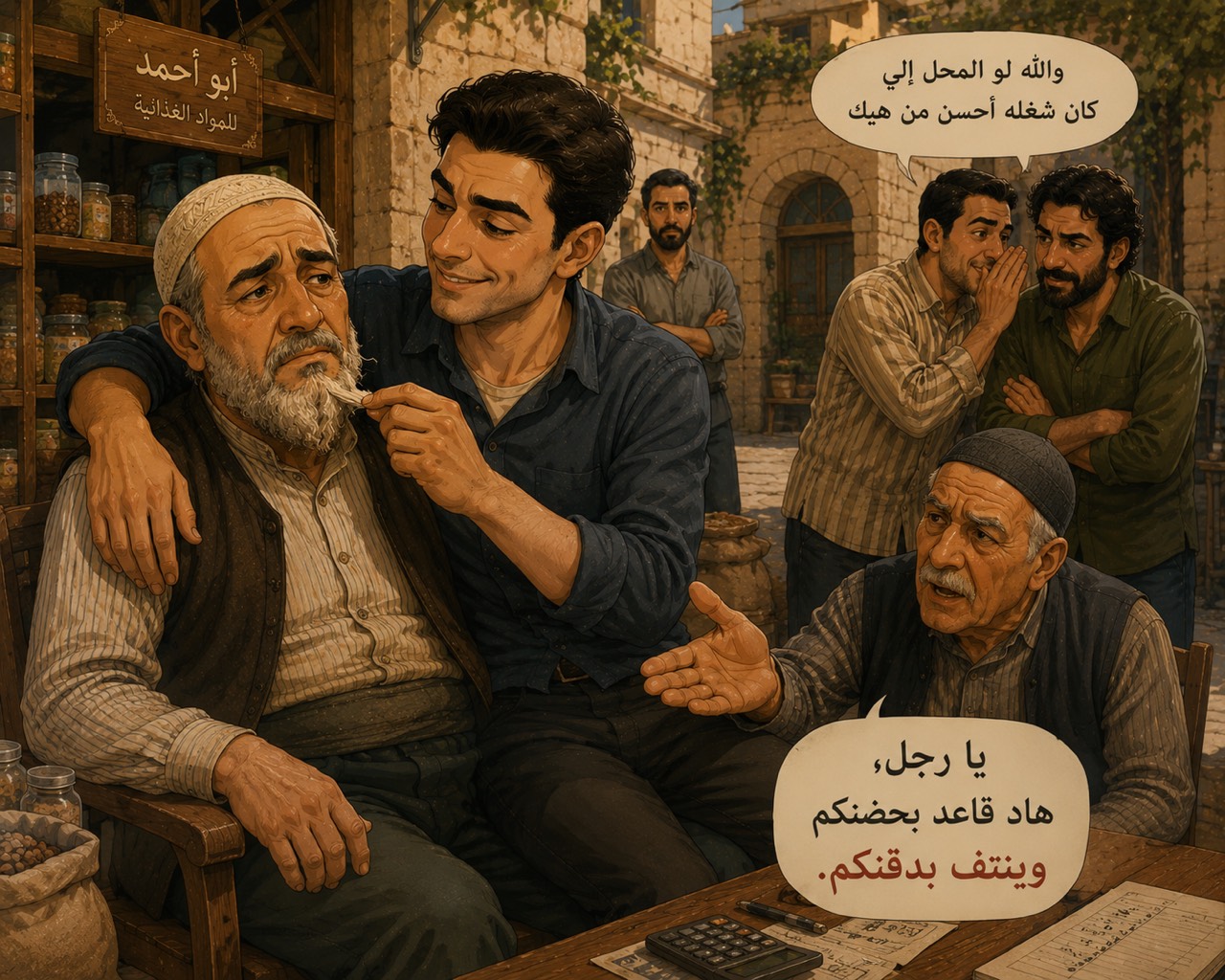
قاعد بحضنّا وبينتف بدقنّا
كان في شب، إجا عالمدينة يدور على شغل وما كان بيعرف حدا غير خاله أبو أحمد. أبو أحمد فتحله باب بيته وقال: “إنت ابن أختي، البيت بيتك.” سكنُّه عنده، وطعماه وشرّبه وحتى شغّله بالمحل تبعه. الشب بالبداية كان محترم ومُمْتَن. بس مع الوقت، صار يتغيّر. صار يحكي للزبائن: “والله لو المحل إلي كان شغله أحسن من هيك.” وصار ينقل حكي البيت للناس برا. وإذا حدا مدح أبو أحمد، يحاول يقلّل منه ويحكي: “لا مكبّرين الموضوع أكثر من اللازم.” مرّة، أبو أحمد سمع إنه هو قاعد بيحكي عنه كلام مش منيح بالحارة. ما صدّق بالأول. بس بعدها اكتشف إنه كمان هو بيحاول يسحب الزبائن لعنده ويشوّه سُمعِة المحل. انصدم أبو أحمد وقال: “بعد كل اللي عملناه معك، بيطلع منك هيك؟” وقتها تدخّل جارهم أبو العبد وقال: “يا رجل، هاد قاعد بحضكم وبينتف بدقنكم.” سكت الشب وما عرف شو يرد. لأنه عرف إن الناس كلها صارت شايفة إنه بدل ما يُرُد المعروف، كان يسيء للناس اللي وقفوا معه. المثل “قاعد بحضنا وبينتف بدقنا” بنحكيه عن شخص بنساعده وبنكرمه و بنوقف معه، بس هو بيقابل المعروف بالإساءة والأذى بدل الشكر والوفاء * حضنا: يعني القصد الرعاية والاهتمام والقرب. * ينتف بدقنا: يعني القصد الأذى والإساءة لصاحب الفضل عليه.
“He’s sitting in our lap while plucking our beard.” (Palestinian–Jordanian dialect) There was a young man who came to the city looking for work. The only person he knew there was his uncle, Abu Ahmad. Abu Ahmad welcomed him into his home and said: “You’re my nephew. My home is your home.” He let him stay with him, fed him, took care of him, and even gave him a job in his shop. At first, the young man was respectful and grateful. But as time passed, he began to change. He started telling customers: “Honestly, if this shop were mine, I’d run it much better than this.” He also began sharing private family matters with people outside the house. And whenever someone praised Abu Ahmad, he would try to downplay it and say: “They’re exaggerating. He’s not that special.” One day, Abu Ahmad heard that the young man had been speaking badly about him around the neighborhood. At first, he didn’t believe it. But later, he discovered that the young man was also trying to attract customers away from the shop and damage its reputation. Abu Ahmad was shocked and said: “After everything we’ve done for you, this is how you repay us?” At that moment, their neighbor Abu Al-Abd stepped in and said: “Man, he’s sitting in your lap while plucking your beard.” The young man fell silent and didn’t know what to say. Because he realized that everyone could see that instead of repaying kindness, he had been hurting the very people who had supported him. The proverb “He’s sitting in our lap while plucking our beard” is used to describe someone whom we help, support, honor, and care for, but who repays that kindness with harm and disrespect instead of gratitude and loyalty. * “Sitting in our lap” is a metaphor for receiving care, support, protection, and closeness. * “Plucking our beard” is a metaphor for hurting, insulting, or betraying the person who helped them.