
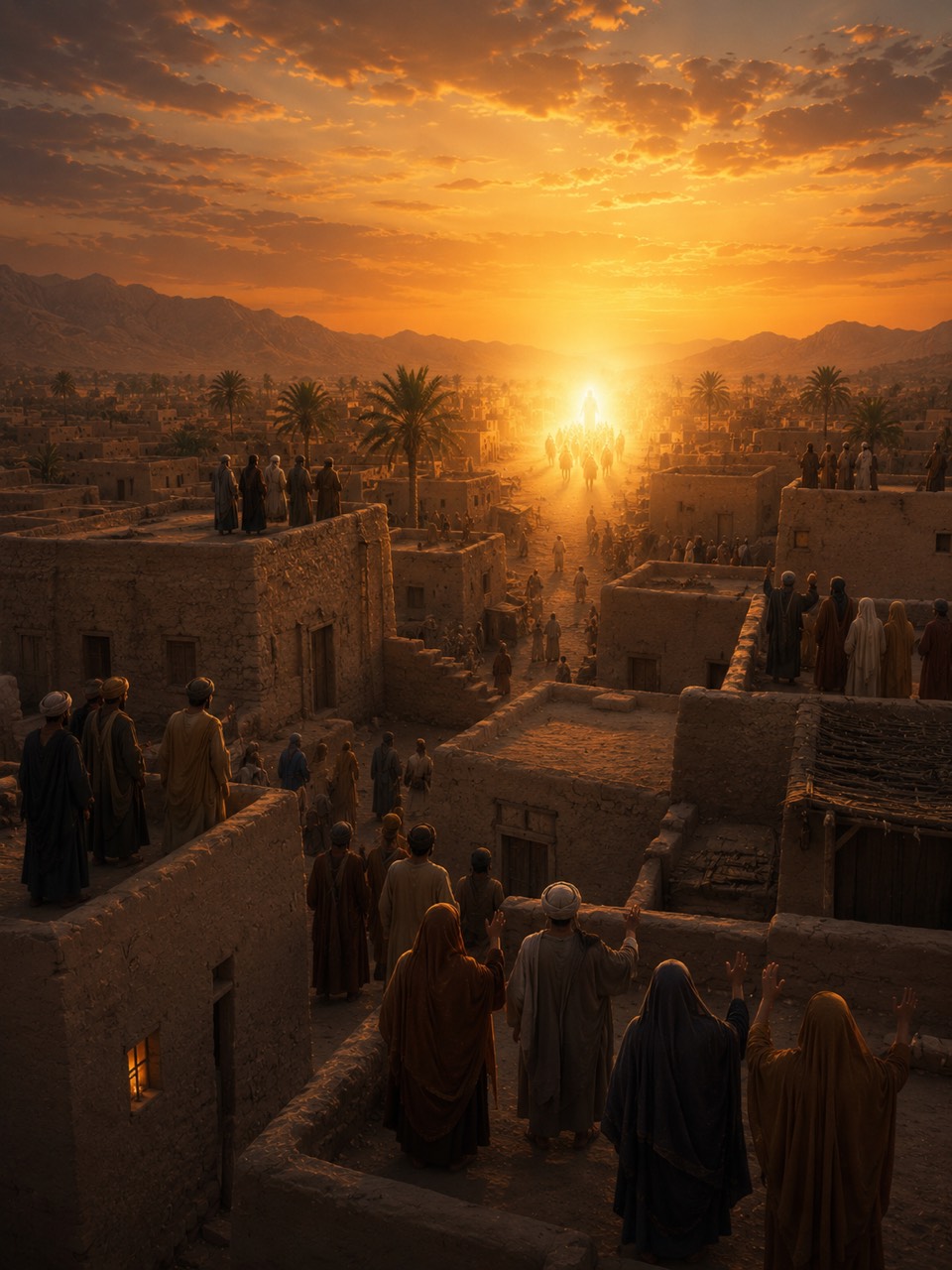
استقبال اهل المدينة للنبي عليه السلام
عندما وصل النبي صلى الله عليه وسلم الى المدينة ، لا احد يستطيع ان يصف ذلك الإستقبال الكبير والحب الذي لَقِيَه رسول الله من أهل المدينة من الأنصار فكانوا أنصار الدعوة ، ولُقِبوا بالأنصار الكل كان ينتظر باشتياق لرسول الله صلى الله عليه وسلم {{ المهاجرين والأنصار }} حتى يستقبلونه عليه السلام فعند دخوله المدينة بعد عناء (١٣ عام في مكة ) وكم تحمل صلى الله عليه وسلم في مكة ، والحصار ، والطائف ، وأذى قريش ، واستهزاء ، وتشويه اعلامي ، حتى صار اسمه ساحر مكة ، كم أُذِيَ صلى الله عليه وسلم في دعوته الى الله الأنصار (أهل المدينة ) لم يروا رسول الله بحياتهم… فقط سمعوا عنه وآمنوا به… سمعوا عن طفولته ، عن غار حراء ، عن دار الأرقم ( أول مَقَر للدعوة للإسلام) ، سمعوا عن رحلته بالاسراء والمعراج ، عرفوا انه احب الخلق الى الله وهو الآن قادمٌ إليهم و سوف يستقبلونه ويرونه في المدينة، كل حي فيه عشيرة من الأنصار كلهم خرجوا وضجت طرقات المدينة ، كلها بالناس رجال وشباب وأطفال وشيوخ وأسياد كلهم خرجوا من بيوتهم مشتاقين لرؤية وجهه صلى الله عليه ولقد تهيأت المدينة ، لهذا اللقاء قبل قدومه صلى الله عليه وسلم لم يبقى بيت من بيوت اهل المدينة رجال ونساء ، إلا وقد اسلموا ، ولكنهم لم يروه وكان هؤلاء الذين أسلموا ولم يروا النبي صلى الله عليه وسلم بأشد الشوق إلى رؤيته وايضا الذين رأوه وبايعوه ، كانوا اشد شوقا لرؤيته فلما سمعوا انه خرج من قباء ، متجه إليهم عاشت المدينة أفراحها العظيمة هذا رسول الله صلى الله عليه وسلم على أبوابها ،يوشك أن يدخلها خرجت المدينة برجالها ، ونسائها ، وولدانها لإستقبال النبي صلى الله عليه وسلم يتلهفون للنظر إليه وأحاط به أخواله من بني النجار، ورجال آخرون من المهاجرين والأنصار بناقته {{ القصواء }} وبأيديهم سيوفهم تحميه من كل من تُسَوِّل له نفسه أن يصيبه بأذى وأبو بكر خلفه على الناقة فلما أطَلَّ عليهم، ورأوا من بعيد صاح الغلمان ، والاطفال صاحوا بأعلى صوتهم الله أكبر .. الله أكبر جاء رسول الله الله اكبر هذا محمد رسول الله قد أطل علينا الله اكبر هذا محمد رسول الله حتى ان العوائق (الكبيرات في العمر) فوق البيوت يتراءينه (يحاوِلنَ رؤيته) و يقلن أين هو فلما أقبل صلى الله عليه وسلم وأطلّ عليهم يقول أنس رضي الله عنه عن المدينة {{ أضاء منها كل شيء }} من نور وجهه صلى الله عليه وسلم يقول البراء {{ما رأيت أهل المدينة فرحوا بشيء كفرحهم برسول الله }} والرسول صلى الله عليه وسلم على ناقته بين تلك الحشود والصحابة ٥٠٠ رحل حوله يحيطون به إحاطة السوار بالمعصم حاملين سلاحهم تعظيم وإجلال له والناس من حوله وبدأ السرور في وجهه وهو يرى هذه القلوب المؤمنة والوجوه المشرقة المستبشرة تستقبله حتى كأن وجهه القمر فأخذ النبي صلى الله عليه وسلم ، يمشي بين الجموع وكانت عشائر {{ الأوس والخزرج}} تقف على أبواب البيوت على جانبي الطريق تنتظر رسول الله صلى الله عليه وسلم وتستقبله فرحة مستبشرة وكان رئيس كل عشيرة، و ربّ (مسؤول) كل بيت يطمع أن يقبل رسول الله ضيافته فجاء رجال العشائر إليه يأخذون زمام الناقة ويقولون : يا رسول الله إنزل فينا نحن أهل العز نحن أهل الكرم وكلهم يريدون أن يكون النبي ضيفهم ، والرسول صلى الله عليه وسلم يقول لهم واصِفًا ناقته: "دعوها (أي اتركوها) فإنها مُسَيَّرة (أي مُرشَدة وتعلم أين سوف تذهب) ، خلّو سبيلها فإنها مأمورة ويرخي زمام الناقة لا يمسكه ، دعوها إنها مأمورة" ( أي أن الله يأمرها أين تبرك ،حيث يريد هو ، أن يكون منزلي لا أنا الذي أختار لماذا ؟؟؟؟ لأن النبي صلى الله عليه وسلم يعلم الحساسية التى بين {{ الأوس والخزرج }} فمن مكارم أخلاقه صلى الله عليه وسلم ومن أجل تأليف قلوبهم فلو إختار عائلة أو قبيلة على قبيلة وبينهم حروب ودماء لكانوا قالوا إختار الرسول هذه القبيلة علينا ويبقى في نفوسهم شيء ولكن من سوف يعترض على إختيار الله للناقة ؟؟ ترك رسول الله زمام الناقة تذهب حيث أمرها الله، فمازال على ظهرها صلى الله عليه وسلم وقد أردف معه (تَبِعَهُ) على الناقة أبو بكر من قباء إلى المدينة وما زال على ظهرها حتى تجاوزت هذه الطريق كلها فما زالت تمشي حتى أتت إلى موقع مسجده المعروف الآن مشت الناقة إلى {{ مربد تمر }} لغلامين يتيمين من بني النجار (مربد التمر هي الأرض السهلة عندما يقطف التمر عن الشجر يوضع بهذه الأرض لغرض التجفيف حتى لا يكون التمر رطبًا) كان مربد للتمر وإلى جانبه أرض فيها مقبرة قديمة وحول الأرض قليل من البيوت ،، وإذا بالناقة تمشي إلى هذا الموقع ، ثم وقفت ونظرت برأسها يمين وشمال ثم بركت في موقع منبره الموجود في مسجده الآن يقول الصحابة رضي الله عنهم إتخذ صلى الله عليه وسلم منبره على مَبْرَك الناقة ( أي حيث بَرَكَت/ جلست الناقة) وبقي النبي جالس على ظهرها ثم قامت الناقة فطافت جولة ، وهي حدود المسجد الذي بناه الرسول والصحابة …..وكأنها ترسم لهم مخطط المسجد ثم رجعت إلى موقعها الأول فبركت فيه (جلست فيه) فلما بركت هذه المرة يقول الصحابة : {{ فتحلحلت }} ( أي هزت جسدها وتمكنت من الجلسة ) ثم {{ أرزمت }} ( أي أخرجت صوتها ) ثم مدت عنقها إلى الأرض وإستراحت ولم تعد تتحرك فعلم النبي أن المنزل ها هنا فقال :_ ها هنا المنزل إن شاء الله وعجب الصحابة ها هنا المنزل أرض صحراء جانبها مقبرة أين سينزل الرسول ثم وقف وقال : أي دور (بيت) أهلنا أقرب إلى هذا المكان؟؟! قال أبو أيوب الأنصاري أنا يا رسول الله فهذا الباب الذي أمامك هو باب داري فقال له صلى الله عليه وسلم :_ إحمل متاعنا إليه فنزل صلى الله عليه وسلم في دار أبي أيوب فقال له بعض الناس:_ تنزل عندنا يا رسول الله ،فإن بيوتنا أوسع فجاء {{ أسعد بن زرارة }} أحد النقباء الإثنى عشر وسيد الأنصار في ذلك الوقت قال :_ يا رسول الله فاز بها أبو أيوب ، فهل تأذن لي أن تكون ناقتك في ضيافتي وقال له: لك ذلك فأخذ ناقته القصواء ، وجعلها ضيف في داره يخدمها وإذا إحتاج النبي إليها يحضرها له أسعد بن زرارة سيد قومه ، ويعتبره شرف بين قومه أن ناقة النبي في داره فنزل النبي في دار أبي أيوب دار أبو أيوب تتكون من غرفتين عبارة عن طابقين فأراد أبو أيوب أن يستضيف النبي في الطابق الثاني فرفض النبي صلى الله عليه وسلم إلا أن ينزل في الطابق الأسفل وقال له :_ لك بيتك ، فهذا أسهل وأرفق علينا ، وعلى من يأتينا ضيف من الناس فنزل النبي في الطابق الأسفل وكان أبو أيوب كل يوم يُلِحُ على الرسول ويقول :_ يا رسول الله بأبي أنت وأمي ، نخاف من مشينا أن يتساقط عليك شيء من تراب أو في الليل أن نتحرك فنزعجك إصعد للطابق الثاني فيقول له النبي :_ لا لك بيتك يا أبا أيوب حتى جاءت ليلة باردة فإنكسرت جرة الماء الفخارة من يد زوجة أبو أيوب فأسرع أبو أيوب وزوجته يجففوا الماء في البطانية التي يتغطوا بها لأن السقف ليس من إسمنت بل من قصب وعليه طين فلو شرب السقف الماء لنزل على الرسول صلى الله عليه وسلم لذلك جففوا الماء بالغطاء وناموا تلك الليلة بلا غطاء يرجفان من البرد وسبحان الله فقد أعْلَم الله نبيه عن حال أبو أيوب تلك الليلة فلما كان الصباح قال :_ كيف كانت ليلتكم يا أبا أيوب فقال له :_وقع من أمرنا كذا وكذا فقال له صلى الله عليه وسلم - نصعد نحن إلى الأعلى وتنزلوا أنتم إلى الأسفل لأنه وجد بها مشقة عليهم وهو صلى الله عليه وسلم الذي وصفه الله {{بالمؤمنين رؤوف رحيم }} يقول أبو أيوب:_ كنا نرسل للنبي صلى الله عليه وسلم كل ليلة عشائه فإذا رد (أرجع) القصعة (يعني الصحن ) اللي أكل منه كنّا نلمس مواضع أصابعه فنأكل من مكانها تبركاً قال أبو أيوب :_وفي يوم من الأيام رد (أرجع) القصعة (الصحن) وإذا ليس فيها أثر [[ أي لم يأكل من الصحن ولا لقمة ]] يقول أبو أيوب :_ففزعت (خفت) وقال للنبي: " فإنا كنا نلتمس أثر أصابعك أنا وزوجتي فنأكل منه تبركاً " و التبرك هو طلب حصول الخير بمقاربة وملامسة شيء مبارك فسكت النبي ولم يرد على أبو أيوب رسول الله عبد من عباد الله ، ومن آدم وآدم من تراب لا نعبد إلا الله ولا نسأل إلا الله ولا نتوكل إلا على الله أمضى النبي في دار أبي أيوب في حديث البخاري سبعة أشهر حتى تم بناء المسجد وحجرات أزواجه صلى الله عليه وسلم كان أبو أيوب يحب جدا الجهاد ، وشهد جميع المشاهد (المعارك) مع النبي صلى الله عليه وسلم ولما حدث القتال بين علي ومعاوية كان ابو ايوب يقف في صف علي رضي الله عنه ضد معاوية ومع ذلك بعد مقتل علي رضي الله عنه واستقر الأمر لمعاوية و كان ابوي ايوب في جيش معاوية الذي توجه لفتح القسطنطينية ( اي اسطنبول تركيا ) وهذا موقف عظيم جدا لأنه يحارب من أجل الله تعالى ولا يحارب من أجل علي أو معاوية وكان عمره تجاوز ٩٠ عام رضي الله عنه ومرض أبو أيوب الأنصاري وهو في حصار {{القسطنطينية }} فطلب أن يدفن في أقرب مكان للعدو فمشوا بجنازته حتى دفنوه عند أسوار القسطنطينية ، وظل قبره مطمورا حتى فتح القسطنطينية بعد ذلك بمئات السنين، فبنوا على قبره مسجدا، موجود الى الآن واسمه مسجد {{ أيوب سلطان }}
The People of Madinah Welcome the Prophet (peace be upon him) When the Prophet Muhammad (peace be upon him) arrived in Madinah, no one could truly describe the immense welcome and love he received from the people of Madinah, the Ansar (Helpers), who became known by that title because they supported the Islamic mission. Everyone was eagerly awaiting the Messenger of Allah (peace be upon him)—both the Muhajirun (Emigrants) and the Ansar—to receive him. After thirteen difficult years in Makkah, after enduring persecution, the boycott, the ordeal of Ta’if, the harm and mockery of Quraysh, and a relentless campaign of defamation that even led people to call him “the sorcerer of Makkah,” he finally approached Madinah. The Ansar had never seen the Prophet in their lives; they had only heard about him and believed in him. They had heard stories of his childhood, of the Cave of Hira, of Dar al-Arqam (the first center of Islamic preaching), and of his Night Journey and Ascension (Isra and Mi’raj). They knew that he was the most beloved of Allah’s creation—and now he was coming to them. They would finally see him with their own eyes. Every neighborhood and clan of the Ansar poured into the streets. Madinah was filled with men, women, children, elders, and tribal leaders, all leaving their homes, longing to catch a glimpse of him. The city had been preparing for this moment long before his arrival. Almost every household in Madinah had embraced Islam, yet most had never met the Prophet. Those who had accepted Islam without seeing him longed intensely for his arrival, and those who had met him previously and pledged allegiance to him longed even more to see him again. When word spread that he had left Quba and was heading toward Madinah, the city erupted in joy. The Messenger of Allah (peace be upon him) was at its gates. Men, women, and children came out to welcome him, eager to look upon him. Surrounding him were his maternal relatives from Banu al-Najjar, along with other Muhajirun and Ansar, gathered around his camel, Al-Qaswa, carrying their swords to protect him from anyone who might wish him harm. Abu Bakr rode behind him. When they finally saw him approaching from a distance, the children and young boys shouted at the top of their voices: “Allahu Akbar! Allahu Akbar! The Messenger of Allah has come! Allahu Akbar! Muhammad, the Messenger of Allah, has appeared before us!” Even the elderly women stood atop their rooftops, trying to catch a glimpse of him and asking, “Where is he?” As he approached them, Anas ibn Malik (may Allah be pleased with him) said: “Everything in Madinah became illuminated by the light of his face.” Al-Bara’ ibn Azib (may Allah be pleased with him) said: “I never saw the people of Madinah rejoice over anything as much as they rejoiced over the Messenger of Allah.” The Prophet (peace be upon him) rode his camel through the crowds, while around five hundred companions surrounded him in a protective circle. They carried their weapons out of honor, reverence, and respect for him. The people gathered around him, and happiness could be seen on his blessed face as he looked upon these faithful hearts and radiant faces welcoming him. As he traveled through the city, the clans of Aws and Khazraj stood at the doors of their homes on both sides of the road, joyfully greeting him. Every tribal chief and head of household hoped that the Prophet would choose to stay as their guest. Representatives from the clans came forward, taking hold of the camel’s reins and saying: “O Messenger of Allah, stay with us! We are people of honor and generosity.” Each group wanted the Prophet as its guest. But he replied, describing his camel: “Leave her alone, for she is guided. Let her go her way, for she is commanded.” He loosened the reins and allowed the camel to proceed freely. Why did he do this? The Prophet understood the sensitivities that still existed between Aws and Khazraj. Out of his noble character and his desire to unite their hearts, he did not wish to choose one family or tribe over another. Given their long history of conflict, such a choice might have left resentment in some hearts. But who could object to the choice of Allah? So the Prophet let the camel go wherever Allah directed it. The camel continued walking until it reached the site where the Prophet’s Mosque (Al-Masjid an-Nabawi) stands today. It stopped at a date-drying yard belonging to two orphan boys from Banu al-Najjar. Nearby was an old cemetery, and only a few houses surrounded the area. The camel stopped, looked around, then knelt down at the very spot where the Prophet’s pulpit would later stand. The companions later said that the Prophet’s pulpit was built at the exact place where the camel first knelt. The Prophet remained seated on the camel. Then the camel rose again and walked around the boundaries of what would become the mosque, as though tracing its outline. Afterward, it returned to the original spot and knelt down once more. This time, it settled firmly, made a sound, stretched out its neck, and rested completely. The Prophet knew that this was where he would stay. He said: “Here, if Allah wills, shall be our dwelling place.” The companions were astonished. It was simply an open piece of land beside a cemetery. Where would the Prophet stay? Then he asked: “Which of our relatives lives closest to this place?” Abu Ayyub al-Ansari replied: “I do, O Messenger of Allah. The door before you is the door of my house.” The Prophet said: “Take our belongings there.” Thus, the Prophet stayed as a guest in the house of Abu Ayyub al-Ansari. Some people suggested: “Stay with us, O Messenger of Allah. Our homes are larger.” At that moment, As’ad ibn Zurarah, one of the leaders of the Ansar, said: “Abu Ayyub has won this honor.” He then asked permission to care for the Prophet’s camel, Al-Qaswa, and the Prophet agreed. Abu Ayyub’s house had two levels. He wanted the Prophet to stay upstairs, but the Prophet preferred the lower floor because it was more convenient for receiving visitors. Every day Abu Ayyub would respectfully insist: “O Messenger of Allah, we fear that dust may fall upon you from above, or that our movements at night may disturb you. Please move upstairs.” But the Prophet would answer: “Leave your house to you, Abu Ayyub.” One cold night, a water jar accidentally broke in the upper floor. Fearing that the water would seep through the ceiling and drip onto the Prophet below, Abu Ayyub and his wife used their blanket to absorb all the water. They spent the night shivering without a cover. The next morning, the Prophet said: “How was your night, Abu Ayyub?” Abu Ayyub explained what had happened. The Prophet then said: “We will move upstairs, and you may stay downstairs.” He did so because he saw the hardship it caused them. Allah described him as: “Kind and merciful toward the believers.” Abu Ayyub later said: “Every evening we would send the Prophet his meal. When the dish was returned, my wife and I would look for the places where his fingers had touched the food and eat from those places.” On one occasion the dish returned untouched. Concerned, Abu Ayyub asked the Prophet about it. The Prophet did not respond to the remark. The Prophet Muhammad (peace be upon him) remained a servant of Allah, and Muslims worship Allah alone, seek help from Allah alone, and place their trust in Allah alone. According to a narration in Sahih al-Bukhari, the Prophet remained in Abu Ayyub’s house for about seven months until the Prophet’s Mosque and the living quarters of his wives were completed. Abu Ayyub loved striving in the path of Allah and participated in all the major campaigns alongside the Prophet. Years later, after the Prophet’s passing, he continued to serve the Muslim community. Even in old age—when he was over ninety years old—he joined the expedition against Constantinople. During the siege, he fell ill and requested that he be buried as close as possible to the enemy’s walls. His companions carried out his wish and buried him there. Centuries later, after the city was conquered, a mosque was built near his grave. It remains a well-known landmark today, known as Eyüp Sultan Mosque.