
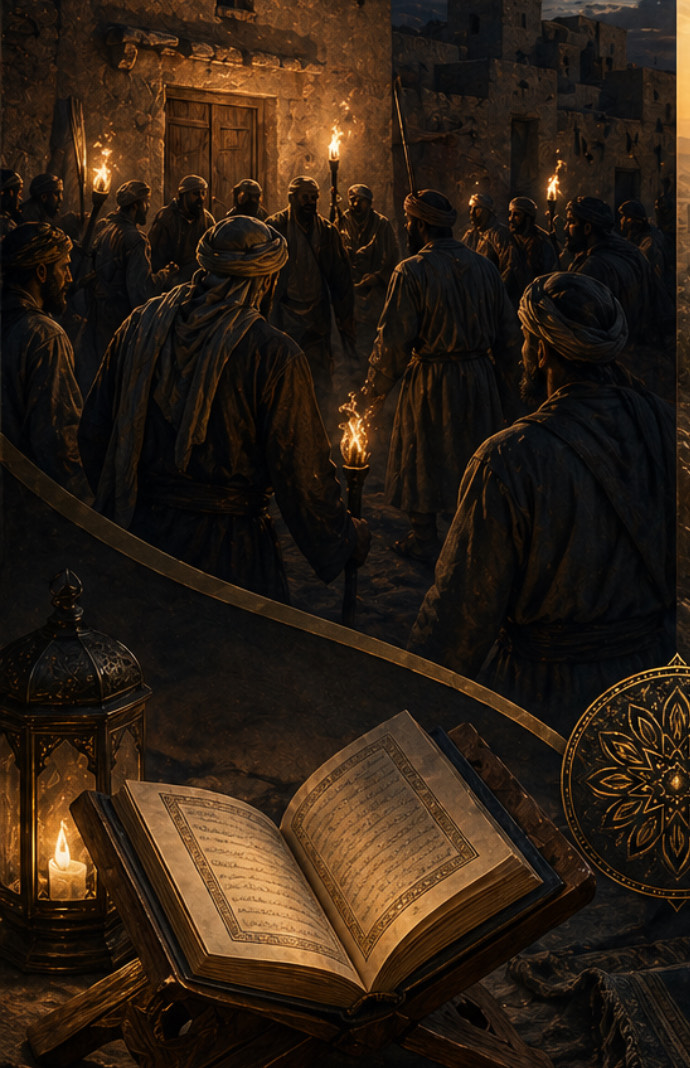
حصار بيت النبي محمد صلى الله عليه وسلم
جاء فتيان (شباب)قريش ، كما إتفقوا ينهالون (يأتون) من كل مكان إلى دار النبي صلى الله عليه وسلم وأحاطوا بالدار كل مسلم بدأ يستغرب ويسأل لماذا لم يأذن (يأمر) الله لنبيه عليه السلام بالخروج قبل أن تحاصر داره هذا الحصار ؟ يأتون فيحاصرون الدار ولماذا لم يخرج وقت الظهر لماذا لم يخرج العصر ؟ لماذا لم يدعو الله ان يأتيه بالبراق كما حدث في رحلة الإسراء ويحمل البراق الرسول من مكة للمدينة ؟ الجواب لو خرج قبل أن تحاصر الدار ، لما كانت تصلح الهجرة وهذا درس لكل المسلمين ولو جاء البراق وحمله ، فأين القدوة لنا في ذلك ؟؟ وأين الدروس التى نتعلم منها في هذه الرحلة العظيمة ؟؟ دار النبي عليه السلام محاصرة من كل جوانبها بسيوف مُشَرَّعة مستعدة للقتال وبعد أن أُحْكِمَ (اشتدّ) الحصار يأتي جبريل ويقول للنبي :_ أخرج الآن يتعجب النبي: أخرج الآن ؟! بعد الحصار كيف يخرج النبي الآن يا جبريل ؟؟ وهذا درس للمسلمين أنّ من يتوكل على الله لن يخيبه الله قال له جبريل :_ يا محمد خذ حفنة من تراب وإقرأ عليها صدر (مَطْلَع/بداية) سورة ياسين بسم الله الرحمن الرحيم {{ يس (1) وَالْقُرْآنِ الْحَكِيمِ (2) إِنَّكَ لَمِنَ الْمُرْسَلِينَ (3) عَلَى صِرَاطٍ مُسْتَقِيمٍ (4) تَنْزِيلَ الْعَزِيزِ الرَّحِيمِ (5) لِتُنْذِرَ قَوْمًا مَا أُنْذِرَ آبَاؤُهُمْ فَهُمْ غَافِلُونَ (6) لَقَدْ حَقَّ الْقَوْلُ عَلَى أَكْثَرِهِمْ فَهُمْ لَا يُؤْمِنُونَ (7) إِنَّا جَعَلْنَا فِي أَعْنَاقِهِمْ أَغْلَالًا فَهِيَ إِلَى الْأَذْقَانِ فَهُمْ مُقْمَحُونَ (8) وَجَعَلْنَا مِنْ بَيْنِ أَيْدِيهِمْ سَدًّا وَمِنْ خَلْفِهِمْ سَدًّا فَأَغْشَيْنَاهُمْ فَهُمْ لَا يُبْصِرُونَ }} والسر هنا كان في هذه الآية {{ وَجَعَلْنَا مِنْ بَيْنِ أَيْدِيهِمْ سَدًّا وَمِنْ خَلْفِهِمْ سَدًّا فَأَغْشَيْنَاهُمْ فَهُمْ لَا يُبْصِرُونَ }} إقرأها يا محمد ، على حفنة التراب، ثم أخرج وضع التراب على رؤوسهم فإنه لن يراك أحد كان يمكن أن يخرج فيضع جبريل جناحه عليه فلا يراه أحد .. ولكن ليعلمنا الله التوكل عليه مع الأخذ بالأسباب والاستعانة بالقران الكريم … لكن القرآن بحاجة إلى قلب مفتوح وليس مقفول كان إيمان النبي كامل ، أيقن أنه لن يراه أحد ولن يسمعوه عندما أخذ صلى الله عليه وسلم حفنة التراب ، وأراد الخروج قَدَّر الله وكل شيء عنده بمقدار لما أخذ الرسول التراب بيده ، وأراد أن يخرج من باب بيته فقال ابو جهل ، يريد ان يسَلّي فتيان (شباب) قريش ، حتى ما يزهقوا ويناموا ويشير لهم الى بيت النبي ( ويقصد هنا أن بعد ساعات سوف يخرج لصلاة الصبح وسوف يقتلوه ويقطّعوه بسيوفهم) قال ابو جهل لهم :_ يزعم محمد هذا أنه إن آمنتم به وصدقتموه ، بعثتم بعد موتكم وكان لكم جنان كجنان الأردن والشام وإن أنتم لم تؤمنوا به ، ولن تصدقوه بعثتم بعد موتكم وكانت لكم نار ذات لظى تحرقون بها فضحكوا ضحك الفتيان وكان صلى الله عليه وسلم يفتح باب بيته كي يخرج منه..لكنّه لم يخرج متَسَلِّلبل بل خرج قائما على قدميه ثم خرج ووضع التراب على رؤوسهم واحد واحد فما ترك منهم فتى إلا ووضع التراب على رأسه وقبل أن يخرج صلى الله عليه وسلم كان قد قال لعلي رضي الله عنه أن يبقى في بيته وينام في فراشه لأنّهم ينظرون من خلل (شقوق) الباب الباب في ذلك الوقت كان ألواح خشب مجمعة بعضها على بعض وفيها شقوق ولأن الدار فيها سراج (ضوء) وفي الخارج ما في ضوء فالخارج يرى الذي بالداخل قال عليه السلام لعليّ رضي الله عنه : إنهم ينظرون من خلال الباب فعليك أن تشغلهم عني ساعة أخذ النبي بالأسباب و أحسن التوكل على الله وطلب منه إذا كان الفجر و علموا أنك عليّ أن يردّ الودائع (الأمانات) للناس ويلحق به إلى يثرب (المدينة المنورة)….
The Siege of the Prophet’s House The young men of Quraysh gathered, as they had planned, coming from every direction until they surrounded the house of the Prophet. They stood outside, armed with drawn swords, ready to strike. At that moment, some Muslims might wonder: Why did God not permit His Prophet to leave before the house was surrounded? Why did he not leave earlier in the day—at noon or in the afternoon? Why did he not pray for a miraculous escape, like the heavenly steed that carried him during the Night Journey, to take him from Makkah to Madinah? The Wisdom Behind the Timing The answer is profound. If he had left before the siege, the migration would not have carried the same meaning or lessons. And if he had been carried away miraculously, where would the example be for us? Where would the lessons of reliance, patience, and planning be? A Moment of Complete Trust The house was now fully surrounded. The danger was real and immediate. At that critical moment, Gabriel came and said: “Now, O Muhammad, leave.” The Prophet was astonished: “Leave now? After the siege?” How could he possibly leave while surrounded? This is where the lesson becomes clear: whoever truly relies on God will never be abandoned. The Divine Instruction Gabriel instructed him: “Take a handful of dust and recite the opening of Chapter Ya-Sin over it.” The passage speaks of a barrier placed before and behind those who deny the truth, leaving them unable to see. The essence of the instruction was this: Recite these words over the dust, then go out and cast it upon their heads—none of them will see you. Reliance with Action God could have made the Prophet invisible instantly. Gabriel could have shielded him with his wings. But this was meant to teach a greater lesson: True reliance on God must be accompanied by action and effort. And the Qur’an is a means of protection—but only for a heart that is open and receptive. The Prophet’s faith was complete. He was certain that no one would see him or hear him. The Miraculous Escape The Prophet took a handful of dust and approached the door of his house. At that very moment, Abu Jahl was speaking to the young men of Quraysh, trying to entertain them so they would not grow tired or fall asleep. He pointed toward the house and mocked the Prophet’s message: “He claims that if you believe in him, after death you will be given gardens like those of fertile lands. But if you reject him, you will face a blazing fire.” The young men laughed. Walking Through Them Unseen Meanwhile, the Prophet opened the door. He did not sneak out. He walked out calmly, upright, with complete confidence. Then, one by one, he placed dust on their heads—every single one of them—while they remained unaware. Not a single one saw him. Ali’s Role Before leaving, the Prophet had instructed Ali to remain in his bed. The attackers were watching through the cracks of the wooden door, as light from inside made it possible for them to see in. Ali lay in the Prophet’s place to distract them and buy time. Trust and Responsibility The Prophet also instructed Ali: “When morning comes and they discover that you are not me, return the trusts that people left with me, then follow me to Yathrib.” Even in the moment of danger, the Prophet did not forget the trusts entrusted to him. A Timeless Lesson In this moment, we see: * Perfect reliance on God * Careful planning and taking practical steps * Courage in the face of danger * Fulfillment of trust even under threat This was not just an escape—it was a lesson for all generations.