
إجا يكَحِّلها عماها -لهجة أردنية
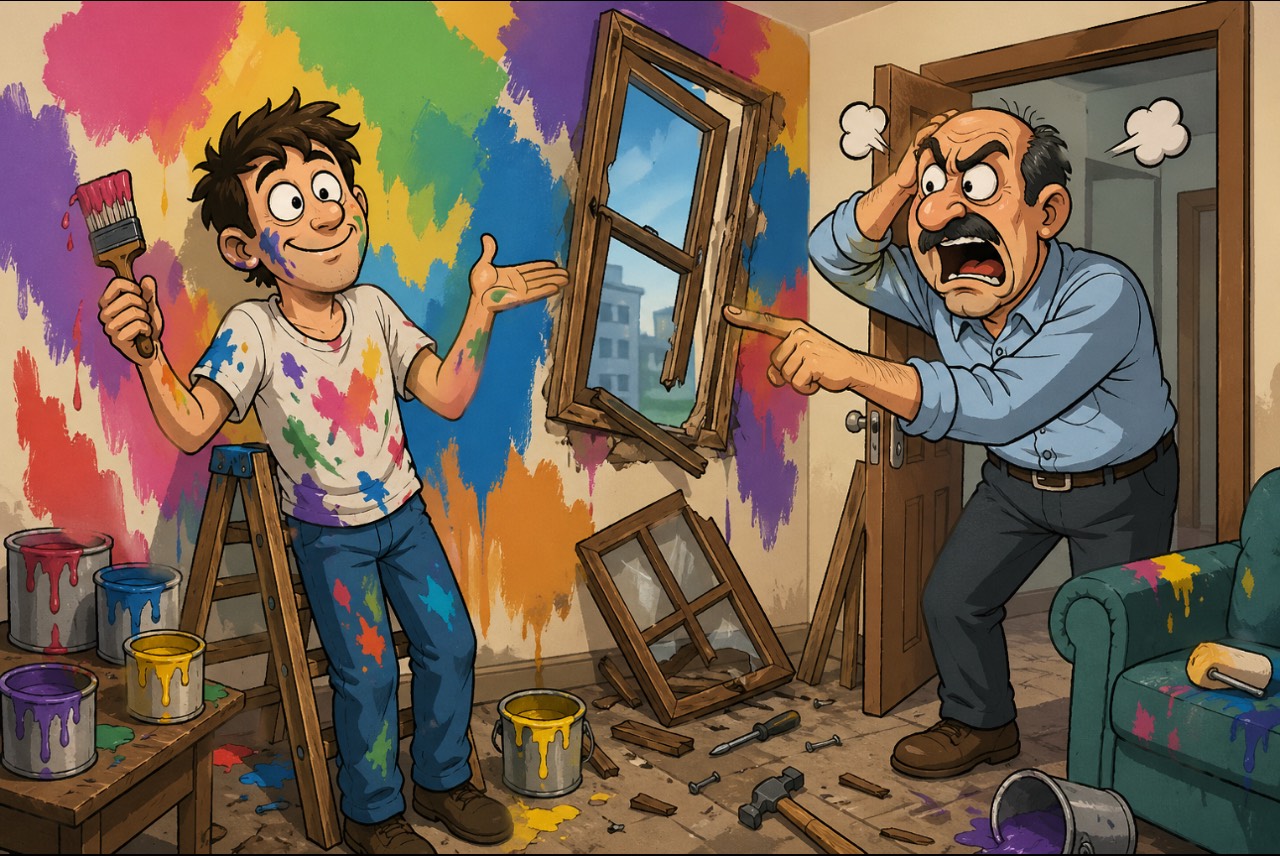
كان في مرة شب اسمه كريم، ساكن ببيت قديم مع أهله. البيت كان بده شوية تصليحات بسيطة: دهان، و تزبيط الشبابيك. قال كريم: “أنا بصلّح البيت لحالي، مش لازم ندفع مصاري لعامل.” أمه حكتله: “يا ابني، اسأل مجرّب ولا تسأل طبيب… خلي أهل الشغل يشتغلوا.” بس كريم أصرّ بدوش يجيب عامل وبده يشتغله بإيده. بلّش يدهّن الحيطان، بس اختار ألوان غريبة وملهاش دخل ببعض. وبالشبابيك حاول يصلّحها، فكّها وما عرف يركّبها صح. رجع أبوه من الشغل، وشاف المصيبة وقال: “شو عملت يا زلمة؟! إجيت تكحّلها عميتها!” كريم حكى بخجل: “كنت بدي أظبطها…” رد عليه أبوه: “اللي ما إله فيها، ما يمدش إيده عليها.” هاد المثل بينقال لما الشخص يحاول يصلّح أو يزبّط إشي، بس بدل ما يزبطه بخربه أكثر.
The proverb says: “He came to fix it but ended up ruining it,” and it means: Once there was a young man named Karim who lived with his family in an old house. The house needed some simple repairs, like painting and fixing the windows. Karim said: “I will fix the house myself. We don’t need to pay a worker.” His mother told him: “My son, ask someone experienced—leave the work to professionals.” But Karim insisted on not hiring a worker and decided to do it himself. He started painting the walls, but he chose strange and mismatched colors. When he tried to fix the windows, he removed them but didn’t know how to reinstall them properly. His father came back from work, saw the situation, and said: “What did you do, man?! You came to improve it, but you ruined it!” Karim replied shyly: “I was trying to fix it…” His father said: “If you’re not skilled in something, don’t interfere with it.” This proverb is used when someone tries to fix or improve something, but instead makes it worse.