
Lالحمار والنهر العميق
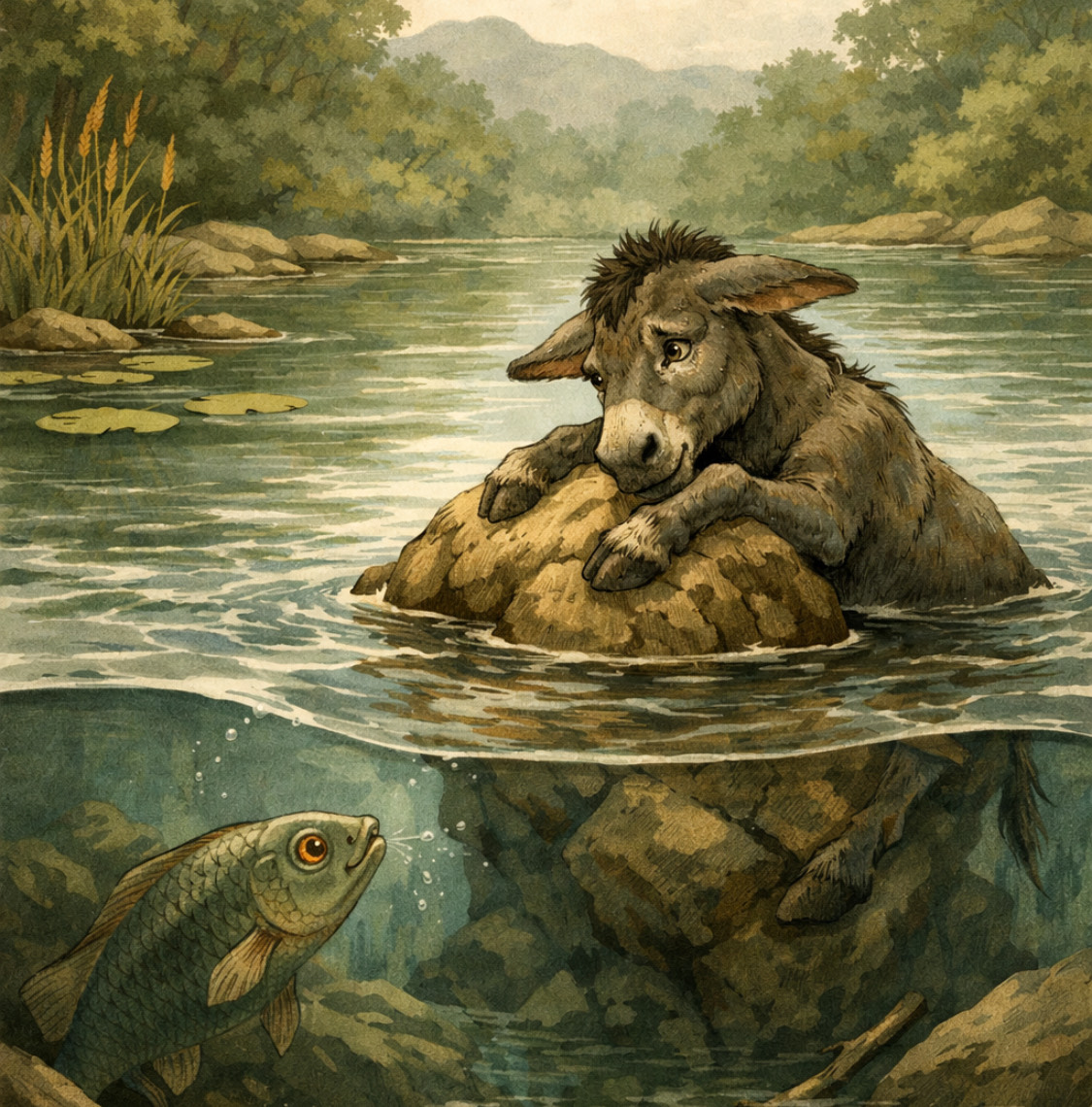
قالوا: كان في القرية حمارٌ يحمل الأثقال كل يوم، ويفخر بقوته، ويعيّر غيره بالضعف. وكان بجانب القرية نهرٌ عميق، هادئ السطح، لا يُسمع له صوت، لكن من دخله بلا حذر غرق. قال الحمار يومًا ساخرًا: ما هذا النهر؟ لا هدير له ولا حركة، لو كان خطرًا لأظهر ذلك. فضحكت بعض الحيوانات، وحذّره بعضها، فلم يسمع. دخل الحمار النهر، مطمئنًا لقوته، فزلّت قدمه، وكاد يغرق لولا أن تشبّث بصخرة وبقي حتى أُنقذ. أما السمكة التي تعيش في النهر، فكانت تسبح كل يوم، لا تتباهى بقوتها، ولا تسخر من هدوئه. فلما خرج الحمار مصدوما، قالت السمكة: ليس كل ما يصمت آمنًا، ولا كل ما يعلو صوته خطرًا. ومنذ ذلك اليوم، صاروا يقولون: احذر من الاستهانة بما لا تعرف، فالهلاك كثيرًا يأتي من حيث نظن السلامة. العبرة: القوة بلا فطنة تورد صاحبها المهالك، والحكمة تبدأ حين نعترف بحدودنا
They say: In a village there lived a donkey who carried heavy loads every day, boasted of his strength, and mocked others for their weakness. Beside the village there was a deep river, calm on the surface, silent and still, yet whoever entered it without caution would drown. One day the donkey said mockingly: “What kind of river is this? It has no roar and no movement. If it were dangerous, it would surely show it.” Some animals laughed, others warned him, but he did not listen. The donkey entered the river, confident in his strength. His foot slipped, and he nearly drowned, had he not clung to a rock and remained there until he was rescued. As for the fish that lived in the river, it swam every day, never boasting of its strength, nor mocking the river’s calm. When the donkey emerged in shame, the fish said: “Not everything that is silent is safe, and not everything that is loud is dangerous.” From that day on, they would say: “Beware of underestimating what you do not know, for destruction often comes from where we assume safety.” ⸻ Moral: Strength without wisdom leads its owner to ruin, and wisdom begins when we acknowledge our limits.