
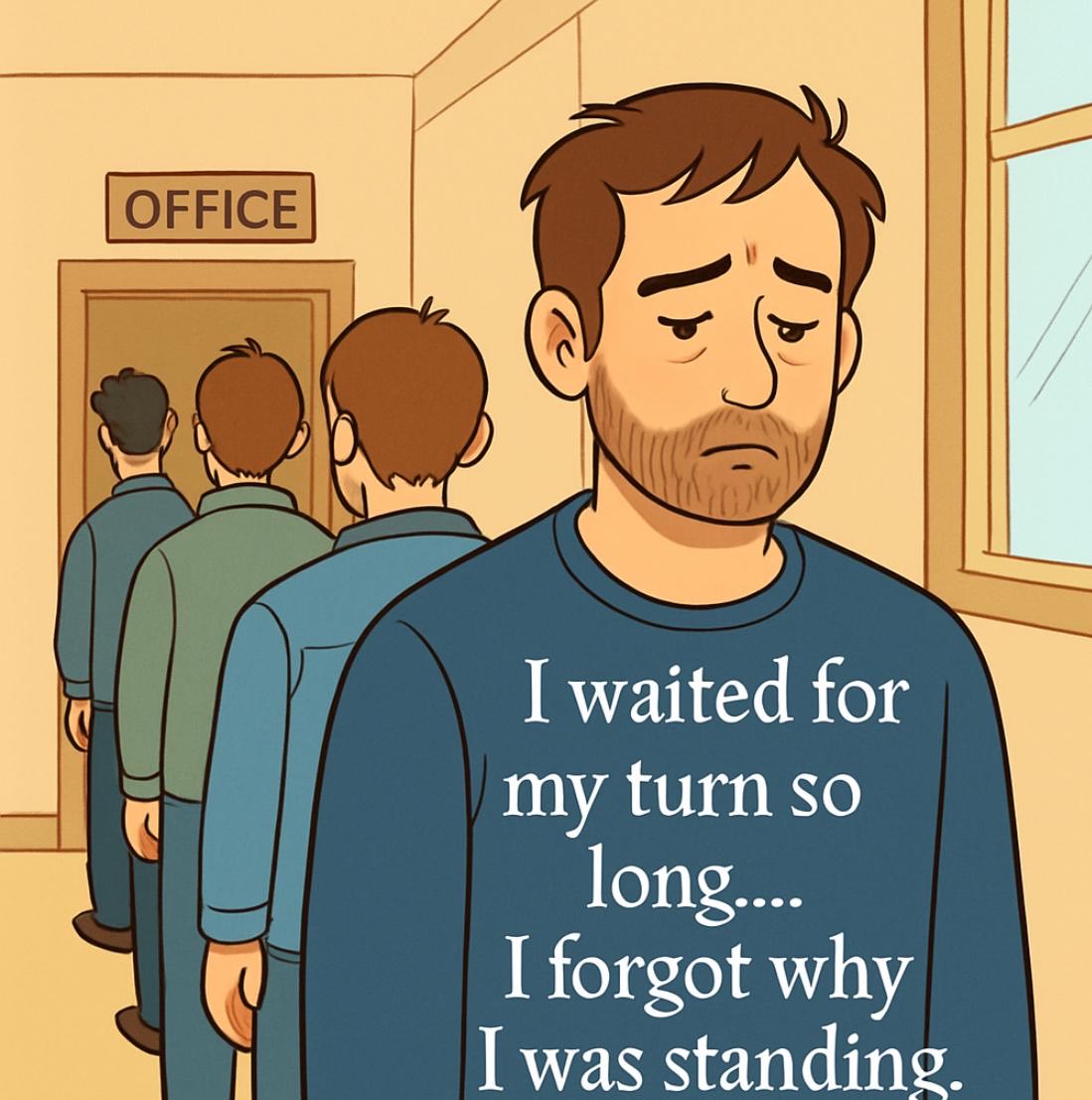
اخر الطابور
كان يقف دائمًا في آخر الطابور. آخر من يُسأل، آخر من يُلاحظ، وآخر من يُختار. لم يشتكِ يومًا. كان يقول: «الدور يأتي» ويبتسم. في العمل، كان ينجز ما يعجز عنه غيره، ثم يُنسب النجاح لغيره. في البيت، كان يطمئن الجميع أنه بخير، ثم ينام مثقلاً بالأسئلة. وفي تلك الليلة… كتب رسالة قصيرة، وضعها في جيبه، وخرج. في الصباح، اجتمع الناس مذهولين. قالوا: «لم نرَ عليه حزنًا» «كان يضحك دائمًا» «لم يطلب مساعدة». وحين فُتحت الرسالة، كانت جملة واحدة فقط: «انتظرت دوري طويلًا… حتى نسيتُ لماذا كنتُ واقفًا» حينها فهموا الحقيقة القاسية: أن بعض الناس لا يموتون فجأة، بل ينتهون بصمت… لأنهم تعلّموا أن يكونوا دائمًا في آخر الطابور. العبرة الصادمة: انتبه لمن لا يزاحم، لمن لا يرفع صوته، فأحيانًا… أكثر من يحتاج النجاة هو من أقنع نفسه أنه لا يحتاج أحدًا.
The Last in Line He always stood at the end of the line. The last to be asked, the last to be noticed, the last to be chosen. He never complained. He would smile and say, “My turn will come.” At work, he carried burdens others avoided, then watched the credit go to someone else. At home, he reassured everyone he was fine, then went to bed heavier than he had arrived. One night, he wrote a short note, slipped it into his pocket, and left. By morning, people were shocked. They said: “He never looked sad.” “He was always smiling.” “He never asked for help.” When they finally read the note, it contained only one sentence: “I waited for my turn so long… I forgot why I was standing.” That was when they understood the truth too late: Some people don’t disappear suddenly. They fade quietly, after spending a lifetime convincing themselves that waiting is the same as living. The harsh truth: Watch the quiet ones. The ones who don’t push, don’t complain, don’t ask. Sometimes, the person who seems strongest is already breaking— silently.